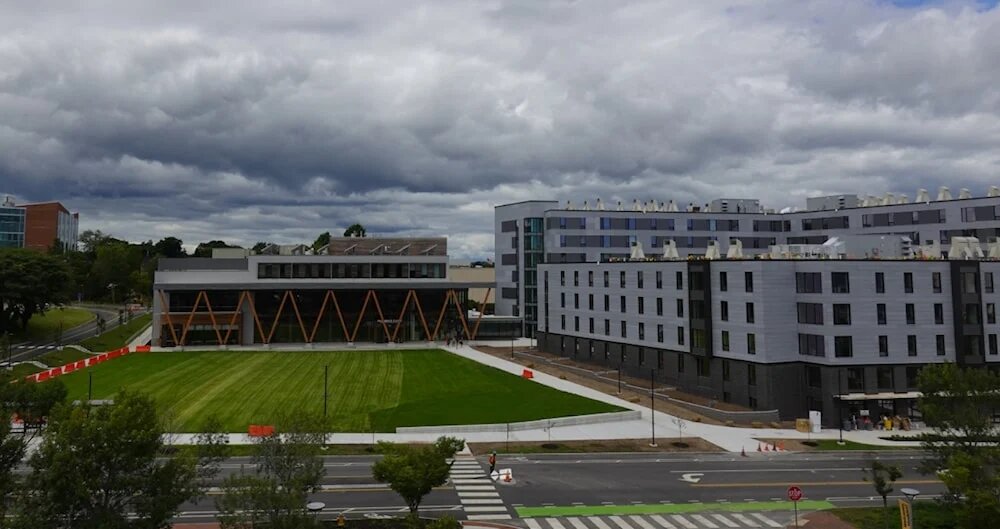

TEHRAN, Feb. 26 (MNA) – The University of Southern Maine has withdrawn permission to use a campus venue for a conference centered on Palestine, just days before it was scheduled to begin.
The event, titled “Consequence of Palestine,” had drawn more than 300 registrants and was organized by the Maine Coalition for Palestine, Maine Voices for Palestinian Rights, and the university’s department of criminology and sociology. It was expected to feature virtual remarks by Francesca Albanese, the United Nations special rapporteur for the occupied Palestinian territories, who has been under US sanctions since last yea, Al-Mayadeen reported.
University officials said the decision was based on federal sanctions law. Samantha Warren, chief external and governmental affairs officer for the University of Maine system, told The Guardian in an email that “hosting a conference that is being actively promoted as including a speaker sanctioned by the US government would put our public university in violation of federal law”. She said organizers should have obtained authorization from the Treasury Department before proceeding.
Sanctions regulations prohibit US entities from providing “any goods or services” to individuals designated under sanctions regimes. Violations can carry severe penalties, including heavy fines and potential prison time. However, legal scholars argue that the scope of what constitutes a “service” remains ambiguous.
In December, the Treasury Department’s Office of Foreign Assets Control (OFAC) clarified in correspondence with the Middle East Studies Association that “no authorization” was required to include Albanese in an academic event, provided that she did not receive payment, reimbursement, or “training or assistance”. That clarification emerged after concerns were raised about the impact of sanctions on academic exchange.
Xiangnong Wang, a staff attorney at the Knight First Amendment Institute who had sought clarification from OFAC, said the cancellation reflects broader concerns about the chilling impact of sanctions on constitutionally protected speech. “It’s very concerning that sanctions continue to have such a broad deterrent effect on speech that is undoubtedly protected by the First Amendment,” he said.
Organizers said they were caught off guard by the abrupt cancellation. Abigail Fuller, a sociology professor involved in planning the conference, stressed the constitutional implications of the decision. “We’re a public university; the university system is subject to First Amendment laws,” she said. “We feel we have a very, very strong case that they are suppressing our free speech.”
MNA