
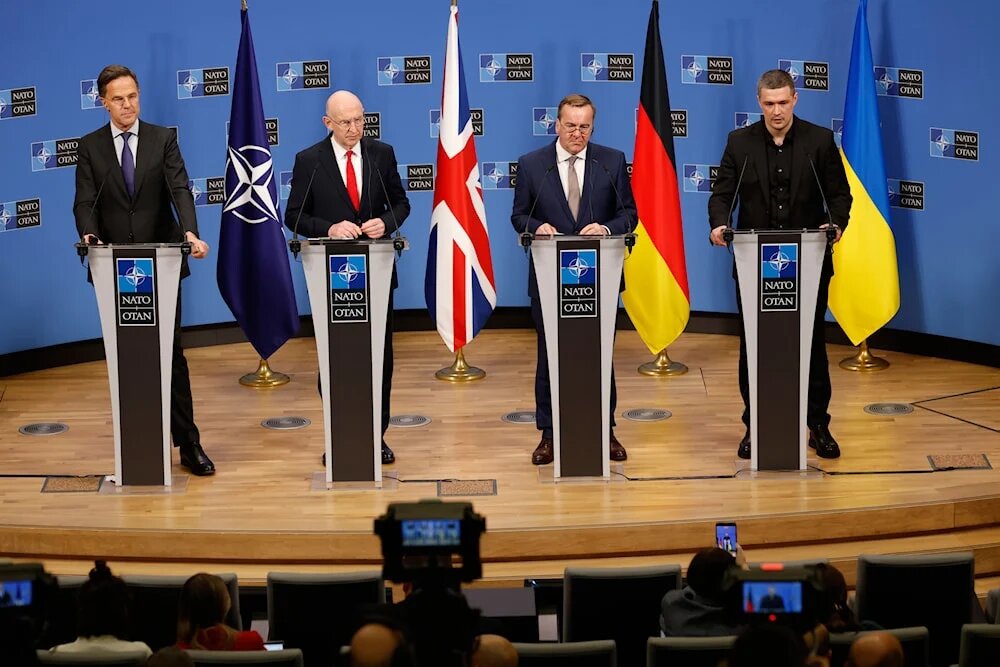

The contributions received by the Department of Defense from August 2025 through the first quarter of fiscal year 2026 mark a structural shift in how Western support for Kiev is being financed, with Washington increasingly pressing European allies to shoulder the burden, a report by Al-Mayadeen said, citing the eighth report of the Special Inspector General for Operation Atlantic Resolve (OAR), submitted to Congress.
The shift reflects a broader reorientation of US security priorities. The Trump administration’s 2025 National Security Strategy redirected focus toward the Western Hemisphere, while pushing NATO partners to take the lead in confronting Russia.
The new allied funding mechanism, established jointly by the US and NATO, allows member states to directly finance the purchase of US weapons and materiel for Ukraine. Meanwhile, direct US appropriations have fallen sharply. Only $3.92 billion in FY 2025 funds and approximately $220 million in FY 2026 appropriations have been made available for Ukraine assistance, a steep decline from the multi-billion-dollar packages that characterized earlier phases of the conflict.
Since the beginning of the war in Ukraine in February 2022, Congress has approved a cumulative $187.8 billion in aid to Kiev, though $64.5 billion remains undisbursed.
On the battlefield, the report paints a picture of grinding but inconclusive attrition. Russian forces captured approximately 1,865 square miles of Ukrainian territory in 2025, roughly 1% of the country’s landmass. Moscow now holds around 20% of Ukraine’s territory, a roughly 3% gain since December 2024.
Russian long-range strikes on Ukrainian population centers and critical infrastructure intensified over the reporting period, rising 44.5% compared to the previous six months.
Attacks concentrated heavily around Kiev, straining Ukrainian air defense systems and deepening reliance on foreign-donated interceptors, even as the Ukrainian Armed Forces managed to intercept most incoming missiles and drones.
On the diplomatic front, senior US officials held multiple high-level engagements with both Russian and Ukrainian counterparts in pursuit of a “durable and sustainable” peace agreement. No ceasefire or peace deal was reached, nonetheless.
The report, however, which covers two quarters due to the 2025 federal government shutdown, also flagged oversight concerns, recommending that military services reevaluate certain Ukraine-related contracts for cost reasonableness and that US agencies establish clearer targets for sanctions and export controls on Russia.
MNA