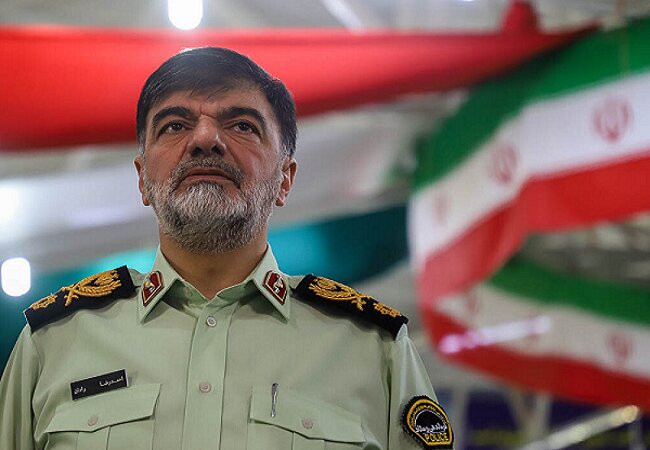
When Major General Seyed Abdolrahim Mousavi, Chief of Staff of the Armed Forces, warns Donald Trump that entering into a war with Iran would be an unforgettable lesson for him, these words are more than mere verbal warning; they reflect a multilayered deterrence doctrine that has taken shape over recent decades based on field experience and technological advancement, transforming the geography of tension from a single point into a vital global region.
Major General Mousavi’s recent remarks, delivered in response to renewed threats by US President Donald Trump, once again cast a red light on the profound shifts in the military balance of the Persian Gulf region. This explicit warning—that Trump would be prevented from “bullying” on the world stage—is not simply a political statement, but the product of a strategic calculation rooted in Iran’s real capabilities and deterrence strategy.

Iran Today: From Dispersed Defense to Combined Offensive
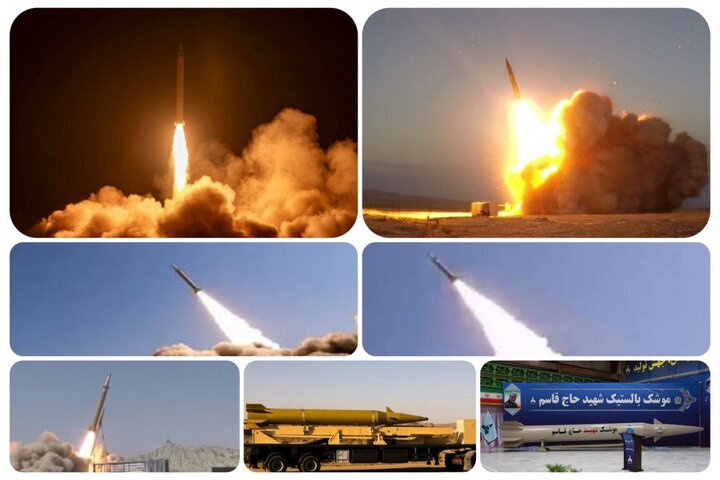
Contrary to the 1990s and early 2000s, today’s Iran possesses a multidimensional defensive-offensive structure. International reports, including those by the Wall Street Journal and the Associated Press, confirm Iran’s extensive missile and drone capabilities even after the 12-day war with the Israeli regime. Iran continues to hold vast stockpiles of ballistic missiles, anti-ship cruise missiles, and thousands of suicide and reconnaissance drones that can, in a coordinated and combined manner, target both maritime and land objectives.

These capabilities are not merely for display. Military analysts believe that by employing such weapons in a conflict scenario, Iran would be capable of rendering advanced U.S. bases in the region, many of which are located less than 1,000 kilometers from Iran’s borders, highly vulnerable.
Deterrence Strategy
Senior military and security officials of the country have repeatedly declared that any action against Iran could escalate into a regional war. This approach transforms any confrontation from a “limited war” into a global crisis. Any attack on Iran would no longer be confined to a military operation at a single geographic point; it could directly affect vital global energy and trade routes through which millions of barrels of oil pass daily.

Conclusion: A Lesson for a New Era
Major General Mousavi’s warning is, in reality, a declaration marking the end of the era of “consequence-free attacks” on countries in the region. Through strategic investment in indigenous technologies and the development of an allied resistance network, Iran has altered the equations in such a way that any direct confrontation would impose costs beyond the tolerance of any party involved. In this complex game, the “lesson-giving battle” may be precisely what prevents war rather than ignites it.
MNA