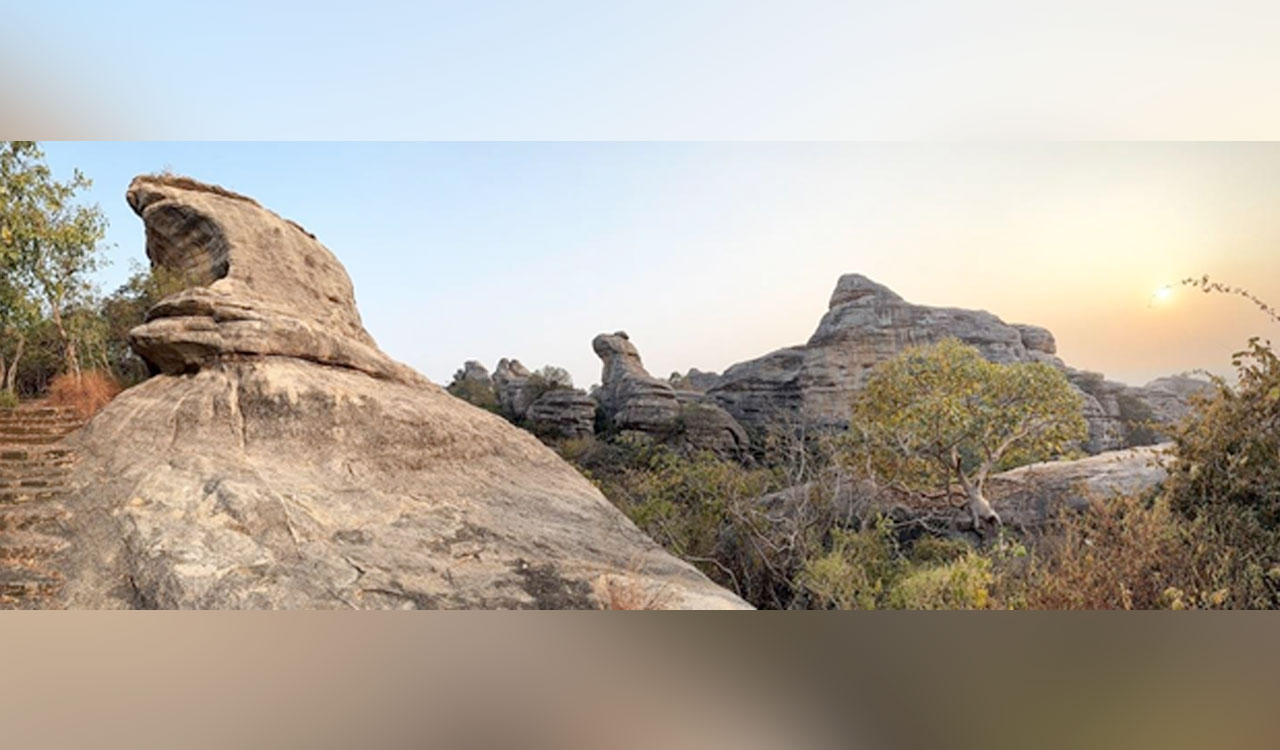
Located in Jayashankar Bhupalpally district, about 50 km from Warangal, this underrated treasure blends mesolithic petroglyphs, towering sandstone arches, caves, and rolling hillocks into a spectacular escape for nature lovers and history enthusiasts alike
Published Date – 15 February 2026, 01:09 AM
By Amar Veluri
It was around 4 pm, and the mist of the Deccan winter lent a gauzy softness to the landscape. The sun hovered above the lush green paddy fields, glowing like a ripe orange against the western sky. I climbed the steep slopes of Pandavula Gutta, and turned left onto a beaten path, eager to discover what lay ahead.
As I passed through clusters of rock formations, something in the distance caught my eye. An arch! My excitement grew as I approached it. From the front, it resembled a crane with a sturdy body and a delicate arm stretching downward. From the rear, it looked like the head of a giant platypus. From the side, it bore a striking resemblance to the Delicate Arch in Arches National Park, Utah.
Perched atop a towering sandstone mountain and surrounded by a pantheon of rocks in varied shapes and sizes, this natural arch felt like a window into a panorama of nature. I lay back beneath it and gazed at the ceiling. At first, it appeared like the hood of a giant king cobra glaring at me suspiciously. Then, it shifted into a perplexed human face, and finally, it seemed to echo the alien visage from Spielberg’s E.T.
I am so glad I stumbled upon this hidden gem, which is perhaps the most underrated attraction in Telangana. It is nestled in the Jayashankar Bhupalpally district, about 50 km from Warangal (coincidentally, the late Prof Jayashankar, whom I had the privilege of knowing personally, played a profound role in shaping my career). Pandavula Gutta is a thriving ecosystem of lush foliage, rugged rocks, and rolling hillocks. I am certain it conceals many secrets yet to be discovered, both above and beneath the ground; what has been revealed so far feels like just the tip of the iceberg.
After all, sandstone is nature’s pastel canvas, painted and sculpted by time!
In my opinion, this place feels like a condensed version of countless US National Parks. It boasts its own version of Utah’s Delicate Arch, numerous petroglyphs, a slot canyon reminiscent of Nevada’s Fire Canyon, multiple shallow and deep caves, seasonal waterfalls, and, most importantly, adventurous opportunities for hiking, rock climbing, and camping. A bonus is the infusion of mythological stories woven into each attraction, sparking the imagination and offering a deeper sense of purpose beyond the everyday pursuit of material treasures and identity. Even a once-a-week exploration here provides the perfect blend of exercise to uplift your mood, spirit, and physique.
Here are a few attractions. Thankfully, there are currently no restrictions or special permissions required to photograph the site with a DSLR, except for a nominal fee.
The Delicate Arch
From the front, it resembled a crane with a sturdy body and a delicate arm extending downward. From the rear, it looked like the head of a giant platypus. From the side, it bore a striking resemblance to the Delicate Arch in Arches National Park, Utah, USA. Perched atop a towering sandstone mountain and surrounded by a pantheon of rock formations in varied shapes and sizes, this unique arch served as a window into a panorama of nature; one that is revered and cultivated.
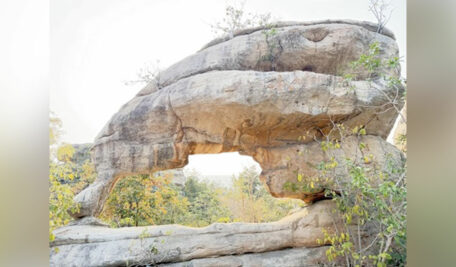
The Delicate Arch – rear view
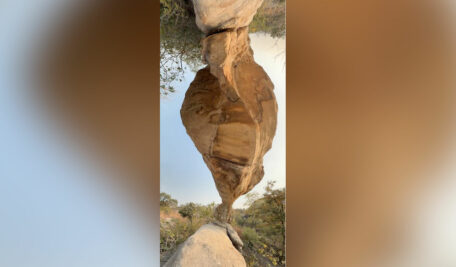
The Delicate Arch – side view
Narrow Cave of the Clouds
Just a few yards from the Delicate Arch, near the edge of the mountain, you climb over a couple of rocks to discover a hidden, narrow cave that opens out toward the vastness of the skies. Comparing it to the caves found in Mesoamerica, one might imagine sacrificial offerings or idols of gods once placed here. Yet I found no such traces. Perhaps they were long ago pilfered by adventurers or treasure hunters. I, however, found a couple of rock art paintings resembling a mongoose or a rat-like animal.
Kunti Devi Cave
Just beyond a small clearing with a rest stop lies a larger, deeper cave known as the Kunti Devi Cave. At first glance, there is nothing overtly magical about it, except for the stone towers tucked away at its far end and a wall painting that I long to believe was created by indigenous people hundreds or even thousands of years ago, perhaps even by the Pandavas themselves. Sadly, unaware of the priceless and timeless value of such artefacts, careless tourists have defaced this precious rock art with their own crude inscriptions and narrations. Viewed from the side, the cave is crowned by a hood-like rock formation, adding to its distinctive character.
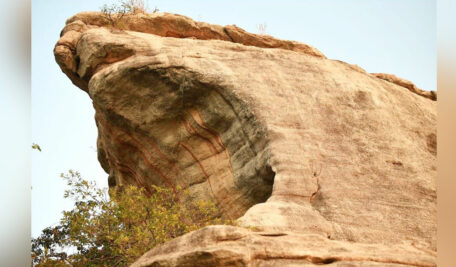
Kunti Devi Cave
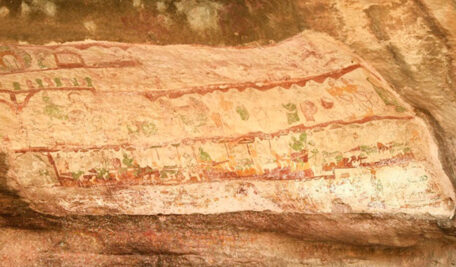
Kunti Devi Cave
Pandavas Cave, a Slot Canyon
After a short hike, you take a sharp turn to the left and find yourself facing towering rocks framing a narrow pathway. Every curve in the stone shifts in shape and colour as the sun drifts across the horizon. This slot canyon bears a striking resemblance to Fire Canyon in Nevada, USA. As you move through the narrows and glance upward, a wave-like opening reveals the expanse of blue sky. I can only imagine how, during rain and thunder, the canyon would reverberate with echoes and channel a sudden flash flood, transforming the place into a magical, yet perilous, spectacle.
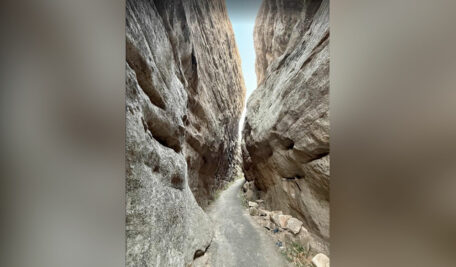
Pandavas Cave, a Slot Canyon
The Nandi Rock
There are countless rock formations surrounding you at every step, creating a breathtaking panorama of shapes and forms. Among them, one particular rock stood out; its contours resembling a Nandi, the sacred bull.
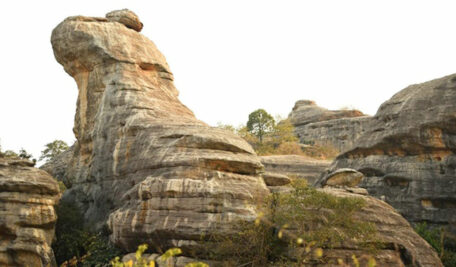
The Nandi Rock
The Face Rock
In the pantheon of shapes surrounding these attractions stands a rock that resembles a face. It immediately brought to mind the Crazy Horse Memorial in South Dakota, USA. For a touch of humour, I imagine that once this hidden gem gains popularity, some wealthy tycoon or powerful leader might be tempted to have their likeness carved into it. Alternatively, someone deeply attuned to Sanatana Dharma might advocate inscribing the faces of mythological gods upon the rock, thereby affirming the sacred name bestowed on this place.
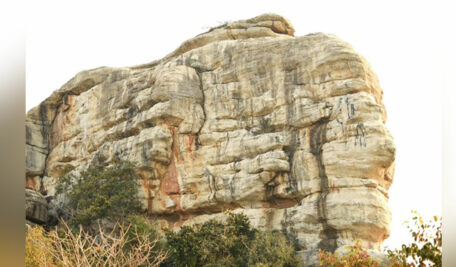
The Face Rock
Alligator Rock
On the way to the Delicate Arch, I came across a fascinating rock formation that resembled a crawling giant alligator, poised as if ready to draw us in for its meal.
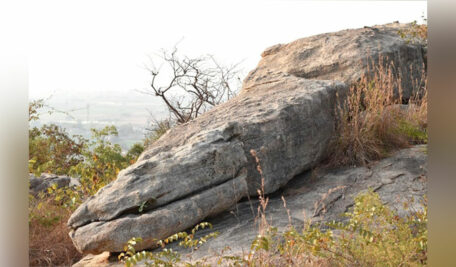
Alligator Rock
Balanced Rock
And then, there is an interesting formation; a single rock precariously balanced atop two others that seem to be pulling apart from each other.
Petroglyphs
This attraction was somewhat difficult to locate. I followed the trail until it ended abruptly, and as darkness began to fall, I searched in vain. Still determined, I discovered a narrow slot opening that led to a banyan tree creeping along the rocks, its roots and branches emerging from the gaps. Familiar with Native American petroglyphs in Mesoamerica, I examined the walls behind the tree and noticed faint paintings. Looking upward along the rock face, I found even more. My heart raced with excitement as I leapt to grab a branch of the banyan tree, set my foot on the rock for firm ground, and slowly climbed upward until I stood face to face with a wall covered in ancient rock art. The paintings depicted a variety of animals and shapes: a tiger, antelopes, lizards, frogs, fish, a turtle, a butterfly, a peacock, a goat, a vessel, boomerangs, and more. I am convinced these works are thousands of years old, reflecting both the creative imagination and the time-locked worldview of the indigenous cultures of this region.
Breath-taking Sunsets
Finally, as I stepped into a clearing beyond the rocks and trees, the western sky greeted me with a brilliant canvas of orange, red, and purple. On the ground, contrasting shades of brown, black, and green provided an amazing perspective. The paddy fields, freshly prepared for cultivation, shimmered as they reflected the radiant colours of the sky.
All in all, Pandavula Gutta is a true paradise for both nature lovers and seekers of spirituality. While humanity restlessly and impatiently pursues its dreams, these Mesolithic sandstone hillocks quietly remind us that far more lies hidden beneath the surface waiting to be discovered, urging us to reflect on the deeper meaning of existence. The ancient rock art itself offers a profound symbol: the boomerang. It warns that whatever we cast into the world will inevitably return with greater force. And when it does, striking us back, we will only sigh and whisper, “If only I had understood it sooner.”