
Amid one of the most complex political and media junctures of recent years, Iran is facing a combination of external pressures and extensive psychological operations whose aim is not merely to influence global public opinion but to weaken internal cohesion and induce a crisis of legitimacy. Repeated threats by American officials, demonstrative military drills, targeted speculation about a military option, and, alongside them, a wave of narrative-building in hostile media can all be analyzed within a single framework. A framework that seeks to present an unstable image of Iran and to entrench the proposition that the country’s political system has been emptied of popular support. However, the field reality and what is happening within the society place a different narrative before fair observers.
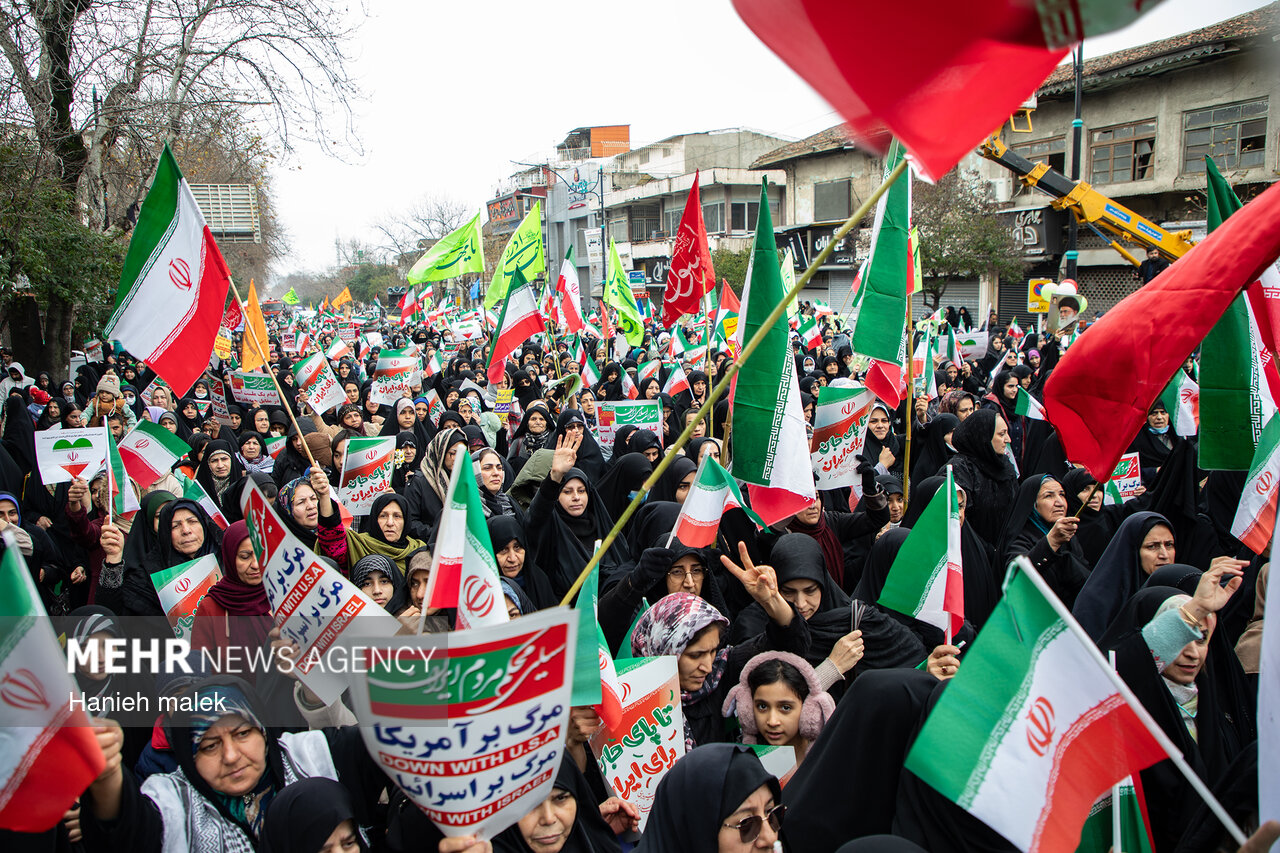
The millions-strong turnout of people in this year’s 22 Bahman march must be understood within this very context. This presence was not merely an annual ceremony or a repetitive ritual. At a time when foreign media were attempting to portray Iran’s social atmosphere as tense and fragmented, the streets filled with crowds in large and small cities, villages, and remote areas presented a tangible image of society’s bond with the country’s political structure. People who, despite grievances and livelihood problems, despite economic pressure resulting from sanctions, and despite the war of narratives, once again demonstrated that they distinguish between criticizing performances and the essence of the system, and at sensitive junctures defend independence and the overall framework of governance.
For years, hostile media have relied on a fixed strategy. They attempt to turn every fffffffdissatisfaction into a crisis of legitimacy and to present every social demand as a sign of imminent collapse. In their narrative, they depict Iranian society as uniformly dissatisfied and on the verge of a complete rupture from the ruling establishment. But the reality of Iranian society is more complex than this oversimplified image. A pluralistic society in which there are both demands and belonging, both criticism and support. Reducing this complexity to a black-and-white narrative indicates political objectives more than a concern for informing.
In such an atmosphere, American threats also acquire a dual function. On the one hand, they are an effort at maximum pressure and at creating fear in public opinion; on the other, they are considered a complement to media operations aimed at inducing Iran’s isolation. But historical experience has shown that external threats have not only failed to weaken the system’s legitimacy but in many junctures, have led to strengthening internal solidarity. The Iranian people have repeatedly shown that in the face of external pressure, they become more sensitive to the country’s independence and do not allow their fate to be determined in the think tanks of foreign powers.
The 22 Bahman march, within this framework, carries a meaning beyond a historical occasion. This presence sent a clear message beyond the borders. A message that Iranian society, despite all challenges, regards its political system as emerging from a popular revolution and considers it part of its collective identity. The images published from this march were not the product of editing rooms but the result of the tangible presence of people who, with different tastes and viewpoints, stood side by side. This reality cannot be denied with a few hashtags or a few biased analytical programs.
In the international arena as well, this message was seen. Many foreign observers who follow developments in Iran know well that political legitimacy is not measured solely by economic indicators. Legitimacy is rooted in the historical, cultural, and identity-based bond between the people and the governing structure. When millions across the country take to the streets on a specific day, this presence itself is an objective data point for analysts. A data point that cannot be ignored or dismissed with simple labeling.
Of course, defending the system’s legitimacy does not mean denying problems. Iranian society faces serious economic and social issues, and the people’s demands are real. But what hostile media overlook is that the existence of demands does not necessarily mean moving beyond the essence of the system. In many countries as well, people criticize the performance of governments, yet this criticism does not lead to the negation of the entirety of the political structure. In Iran too, a significant portion of society distinguishes between criticism and negation, and demonstrates this distinction in its political behavior.
On the other hand, it should be noted that the concept of legitimacy in Iran is not merely a legal or electoral concept. Legitimacy in this country is intertwined with the collective memory of the revolution, with the experience of the imposed war, with resistance against sanctions, and with the sense of independence. A generation that did not experience the revolution has also grown up in an environment where the narrative of independence and steadfastness has been part of its public memory. This historical bond is a factor that superficial media analyses are incapable of comprehending.
Psychological operations against Iran have reached their peak in recent months. From exaggerating internal differences to publishing unconfirmed news about major decisions, all are pursued in line with creating an image of instability. Meanwhile, social networks have become the main arena of this battle. But as experience has shown, although cyberspace is influential, it does not replace social reality. Social reality reveals itself in scenes such as 22 Bahman. A place where individuals appear not behind screens but in the streets and express their choice in a tangible manner.
American military threats, too, more than indicating a definitive resolve for war, are a tool for political bargaining and psychological pressure. Washington knows well that any direct confrontation with Iran would have extensive regional consequences. Nevertheless, the repeated raising of the military option is part of the pressure strategy. In the face of this strategy, internal cohesion is considered Iran’s most important asset. The presence of people in national arenas conveys the message that Iranian society does not become divided in the face of external threats.
In conclusion, it must be said that the legitimacy of Iran’s political system is defined neither by the headlines of hostile media nor by the analyses of foreign think tanks. This legitimacy finds meaning within society and in the political behavior of the people. The millions-strong presence on 22 Bahman is one manifestation of this meaning. It may be possible to debate the level of participation in certain elections or satisfaction with the performance of certain officials, but one cannot deny the fundamental bond between a large segment of society and the political system.
Iran today is exposed to a war of narratives. In this war, every image and every piece of news can become a tool for shaping perceptions. But in the end, what endures is objective reality. A reality that was seen in the streets of Iran’s cities showed that despite all pressures, threats, and attempts to induce despair, the bond between the people and the system remains intact. This bond may require repair and strengthening; it may require reform of certain procedures, but its essence endures, and this endurance is the greatest response to the media war and external threats.
MNA