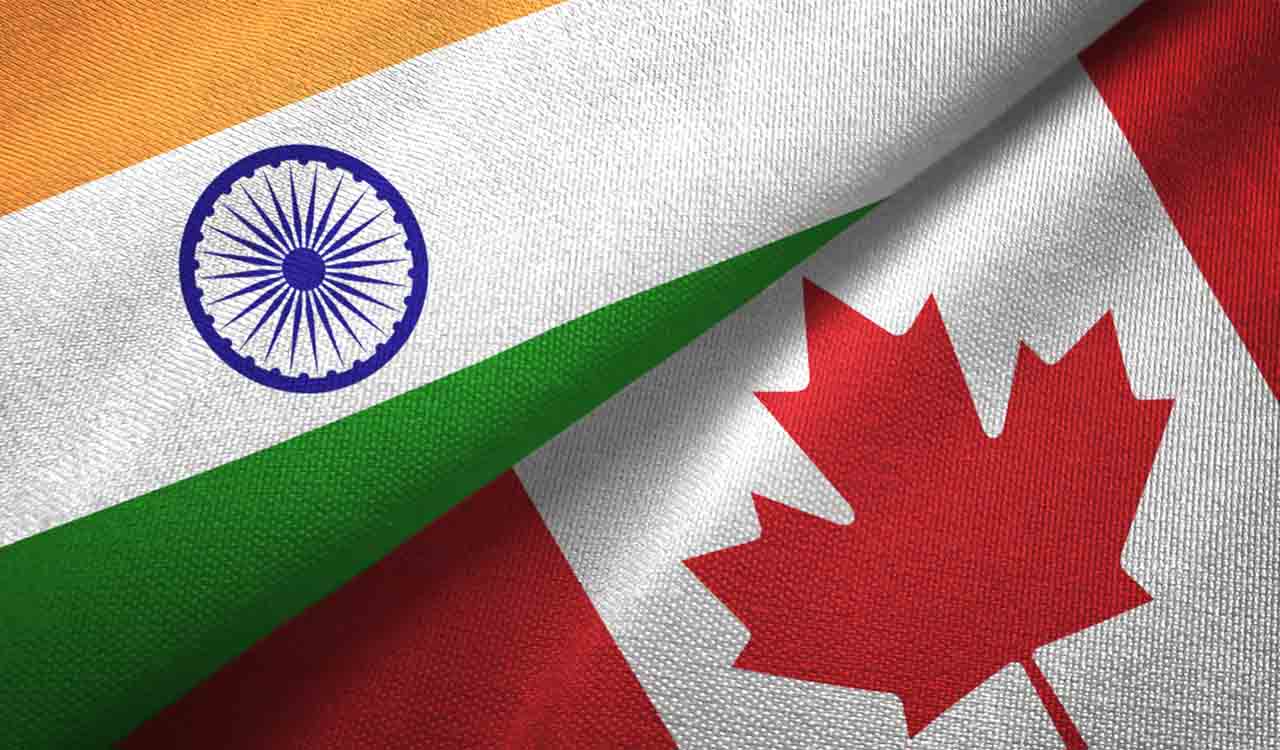
Mark Carney’s pragmatic approach has sent a clear message that anti-India elements cannot misuse Canadian freedoms to malign India
Published Date – 11 February 2026, 09:21 PM
Despite being thriving democracies with shared values, trade interests, and a vibrant diaspora, a sense of unease has long marked the bilateral relations between India and Canada. This was largely due to the hostile policies adopted by the Justin Trudeau administration in the past. The drift started ever since Trudeau took over as the Prime Minister in 2015, and his brazen attempts to please pro-Khalistani elements in his country as a means for political survival led to the gradual deterioration of the bilateral relations. However, things are now changing for the better, following sincere efforts from both sides to reset the ties and restore the traditional friendship. Since his victory in the national election in April last year, Prime Minister Mark Carney has been taking sagacious steps to revive the relations. Carney’s pragmatic approach towards India has helped in sending across an unambiguous message to anti-India elements that they cannot take Canadian freedom for granted to malign India. National Security Adviser Ajit Doval’s recent visit to Ottawa — his first since the diplomatic clash over the killing of Khalistani separatist Hardeep Singh Nijjar — signals that both sides are willing to move from recrimination to pragmatic engagement. This is a welcome departure from the past when Justin Trudeau kept peddling a false narrative of Indian agents’ alleged involvement in the killing of Nijjer, without providing even an iota of evidence. Doval’s visit reflects a thaw in the relations. The agreement to establish security and law enforcement liaison officers in each other’s countries is a significant development.
Such institutional links are not symbolic gestures; they are the nuts and bolts of modern-day security cooperation. Streamlined communication channels and timely information-sharing are essential when dealing with transnational gangs and drug trafficking networks — threats that respect no borders and demand coordinated responses. The upswing in bilateral ties is heartening. Mark Carney is likely to visit India next month, providing yet another opportunity for the two countries to rebuild relations. Apart from signing deals on uranium, energy, minerals, and artificial intelligence, negotiations for a Comprehensive Economic Partnership Agreement are expected to be resumed during his visit. The first signs of a diplomatic thaw had surfaced in August last year with the two countries appointing new high commissioners in Ottawa and Delhi. The re-opening of high-level diplomatic channels ensures continuous engagement so that no dispute will be allowed to escalate into permanent hostility. Mutual trust is a must when sensitive intelligence and law enforcement data are involved. If managed carefully, the renewed dialogue could become a stabilising anchor. India’s concerns over separatist activities being allowed on Canadian soil are non-negotiable. On the other hand, Canada’s stance is shaped by domestic politics, where freedom of expression intersects with radical advocacy. Under these circumstances, the sign of a mature diplomacy lies not in eliminating disagreements but in managing them without letting them harm the entire relationship.