BRS is gaining political momentum in Telangana amid discontent with the Congress government, while analysts argue that winning more Lok Sabha seats could give the party a crucial role in a future alliance government at the Centre.
Updated On – 26 November 2026, 08:37 PM
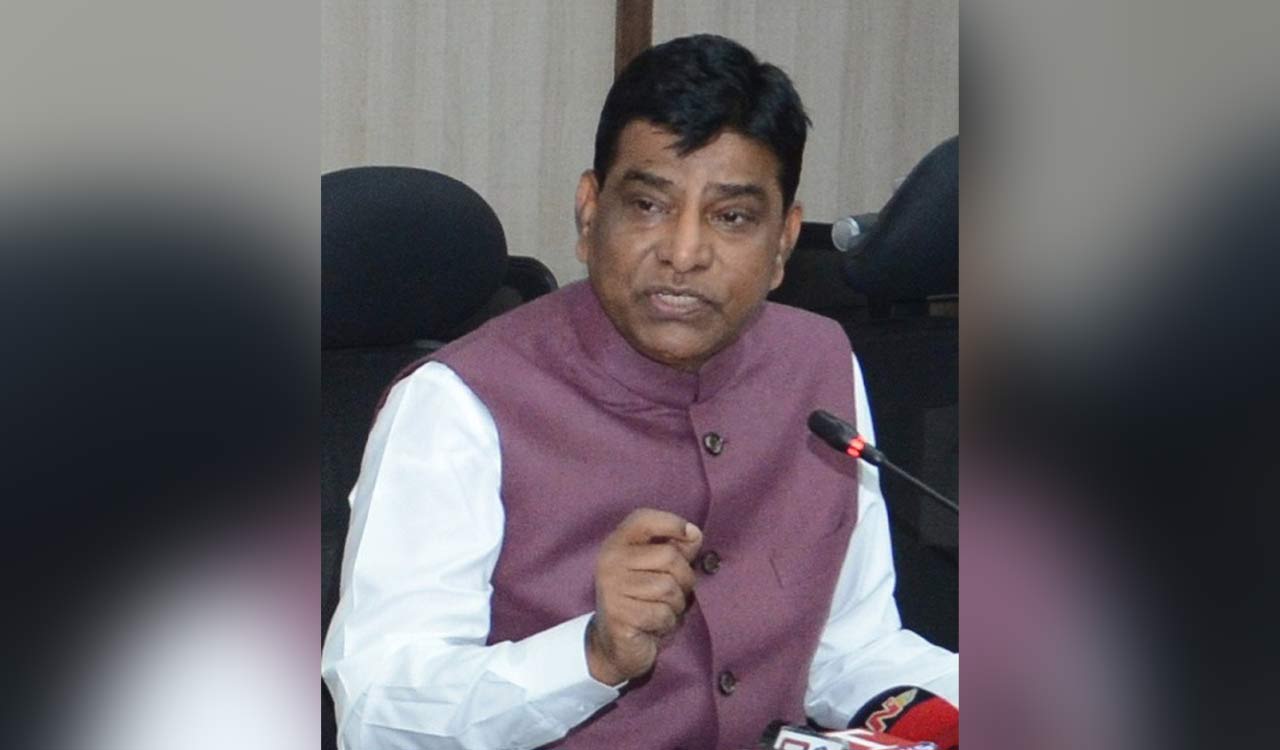
Hyderabad: Chief Minister A Revanth Reddy’s declaration that the Bharat Rashtra Samithi (BRS) was the Congress’ main rival in Telangana reflects a changing political mood in Telangana.
Open dissent among some Congress legislators over lack of funds and government support, along with rising dissatisfaction among farmers, unemployed youth, employees and other sections, indicates that the BRS was steadily gaining momentum ahead of the next Assembly elections.
There is a growing negative feeling among different sections of people about the Congress and the BJP, which despite winning eight Lok Sabha seats each, had failed to secure funds and projects for Telangana from the Central government.
In the 2024 Lok Sabha elections, the BJP failed to secure a simple majority in Lok Sabha, making the support of regional parties like the the Telugu Desam Party (TDP) and Janata Dal (United) crucial for survival of the National Democratic Alliance (NDA) government. Interestingly, both these parties managed to secure adequate financial allocations for their respective States in the Union Budget, along with approvals for various projects.
However, the latest developments including the resignation of Dharmendra Pradhan, delay in introduction of the Delimitation Bill, the controversy surrounding the Chief Election Commissioner Gyanesh Kumar have indicated mounting pressure on the BJP-led NDA government.
In this backdrop, the BJP’s poor performance in the Rajasthan local body elections and its loss of a few MLC seats, including in Prime Minister Narendra Modi’s Varanasi Lok Sabha constituency, had added to these concerns.
Considering these developments, political analysts, psephologists and other experts strongly feel that the BJP will again fail to get the required majority in the Lok Sabha to form the govenment and that there is every possibility of an alliance government at the Centre after the next general elections.
In such a developing situation, the BRS, observers argue, would play a crucial role. It was during the 2024 Lok Sabha elections, BRS president K. Chandrashekhar Rao had predicted that the BJP would fail to secure a simple majority and appealed to voters to elect BRS candidates.
However, voters elected eight Congress and eight BJP MPs from Telangana’s 17 Lok Sabha constituencies. KCR’s warning that choosing a non-BRS MP would be detrimental to the interests of the State have turned true now, political observers point out.
Perhaps, keeping the prevailing situation in view, the BJP seemed to have changed its strategy now. It has quietly been advocatingn the argument of “KCR in Telangana and Modi at the Centre”. This narrative is silently being built in the social media, by some social media influncers, who are known to be BJP sympathisers.
However, people began debating whether such an arrangement would benefit Telangana as despite having 16 MPs from the Congress and BJP, Telangana had derive any benefit, while the allies of the NDA government were knocking off many benefits.
The best example of Telangana being put to loss is the ability of the neighbouring Andhra Pradesh state which had been drawing Krishna and Godavari river waters without any authorisation.
To make matters worse, the Chief Minister Revanth Reddy has openly admitted that he travels to New Delhi every 15 days, but he had so far failed to secure projects and funds for Telangana.
The Congress government drew a blank in getting national project status for the Palamuru-Rangareddy Lift Irrigation Scheme or any other notable project. The State government had submitted several proposals to the Centre during the annual budget process, but none had been considered.
And, all this despite Revanth Reddy referring to the Prime Minister Modi as his “elder brother”. This futile attempt of Revanth Reddy to please PM Modi, is sought to be contrasted with the forthright overtures of the BRS chief K. Chandrashekhar Rao, who had been critical of the Modi government on several issues, including river interlinking, the declining economy, investments and foreign relations during the BRS rule.
Moreover, the BJP government had replicated several welfare and development programmes introduced by the BRS government, including Rythu Bandhu, Rythu Bima and KCR Kits.
Observers point out that during the BRS rule, former Chief Minister Chandrashekhar Rao had convinced the Maharashtra government to cooperate in executing the Kaleshwaram project. His government had also agreed to bear 50 per cent of the land acquisition cost for the Regional Ring Road. These initiatives reflected the BRS government’s vision for the State.
No permanent foes or friends:
True to the axiom that there were no permanent friends or foes in politics, the Dravida Munnetra Kazhagam (DMK), which was once a Congresss ally is now maintaining a safe distance from it. The BJP had distanced itself from the Raj Thackeray-led Shiv Sena, while the Akali Dal in Punjab was moving towards an alliance with the BJP.
In Uttar Pradesh, the Samajwadi Party was handling the political situation cautiously, as it did not want to shoulder the Congress’ failures and was choosing to play safe.
“If Telangana has to get back on the path of development, the BRS should win the maximum number of Lok Sabha seats in the next elections. If an alliance government is formed at the Centre, this will benefit the State,” a political analyst argued.
Irrespective of delimitation of constituencies, simultaneous elections and other factors, the BRS should aim to win as many Lok Sabha seats as possible. The number of seats would play a crucial role in shaping the next Union government, the analyst added.