
India’s counterterrorism strategy shifted towards real-time intelligence-sharing, local police coordination and proactive operations after the 26/11 Mumbai attacks exposed major security and intelligence gaps, officials said.
Published Date – 26 November 2026, 11:34 AM
India’s counterterrorism strategy evolved after the Mumbai 26/11 attacks, officials said.
New Delhi: India’s counterterrorism strategy evolved after the Mumbai 26/11 attacks, with greater emphasis on intelligence-sharing, coordination with local police and proactive operations, officials said.
The 26/11 attacks were among the most audacious attacks India had witnessed, according to the report. A siege of Mumbai lasted nearly 60 hours and led to the deaths of 166 people. Ten Lashkar-e-Taiba terrorists had spread across multiple locations.
The report said several people believed Pakistan should have faced a stronger response for allegedly nurturing and harbouring Lashkar-e-Taiba.
Investigators captured one of the terrorists, Ajmal Kasab, alive. The report said his interrogation helped investigators link the attack to Pakistan.
Despite Kasab’s confession, Pakistan denied any link with the attack and allegedly wiped out traces of his home and family members in Faridkot village in Kara district of Punjab province, the report said.
Officials said the response after the attack may not have met expectations, but several lessons were learnt.
Prime Minister Narendra Modi, after being sworn in in May 2014, vowed to fight terrorism, the report said. This led to the evolution of a kinetic strategy involving a more muscular approach to counterterrorism.
Intelligence gaps
An official said the attacks exposed multiple flaws, including a complete lack of intelligence, ill-equipped Mumbai police personnel, lack of coordination on the ground and delays in bringing the National Security Guard (NSG) to Mumbai from Delhi.
The landing of the 10 terrorists in Mumbai before the attacks remained largely unknown, the report said.
David Headley’s reconnaissance, during which he flew in and out of India from the United States, remained unknown until American agencies alerted Indian security agencies after the attacks, the report said.
Fixing intelligence gaps became a priority. Agencies became more proactive and began coordinating with local police and intelligence agencies, officials said.
Officials said the results of this coordination were visible in operations against terrorists in Jammu and Kashmir and in operations that led to the complete wiping out of the Naxalite (Maoist) movement.
An Intelligence Bureau official said the counterterrorism strategy evolved over 10 years, eventually leading to the unveiling of the PRAHAAR doctrine. The doctrine provides a counterterrorism framework for preventing and responding to a terror attack.
The doctrine addresses these objectives through an intelligence-led proactive framework, the official said. The counterterrorism strategy is based on real-time intelligence-sharing rather than a reactive approach, the official added.
Beyond dossiers
Officials said India’s counterterrorism strategy moved beyond sharing dossiers.
Several dossiers were shared with Pakistan after the Mumbai attacks, but they remained unacted upon, according to the report. The report said the purpose of gathering evidence and handing over dossiers had become futile as Pakistan continued to deny links with terrorism.
The focus shifted to targeting terror networks and destroying their infrastructure, officials said.
One of the most decisive actions followed the 2016 Uri attacks, when the Indian Army carried out a surgical strike, destroying multiple launchpads and terrorist camps in Pakistan-occupied Kashmir (PoK), the report said. PoK was described as a staging ground for outfits including Lashkar-e-Taiba, Jaish-e-Mohammad and Hizbul Mujahideen.
The rules of engagement changed and a new doctrine began taking shape, the report said.
The report said this did not deter Pakistan from carrying out another attack in Pulwama, in which 40 soldiers were killed by a Jaish suicide bomber. The Indian Air Force later carried out the Balakot air strike, destroying a major Jaish facility, according to the report.
The 2025 Pahalgam attack shook the nation as innocent tourists were killed after being identified on the basis of religion, the report said.
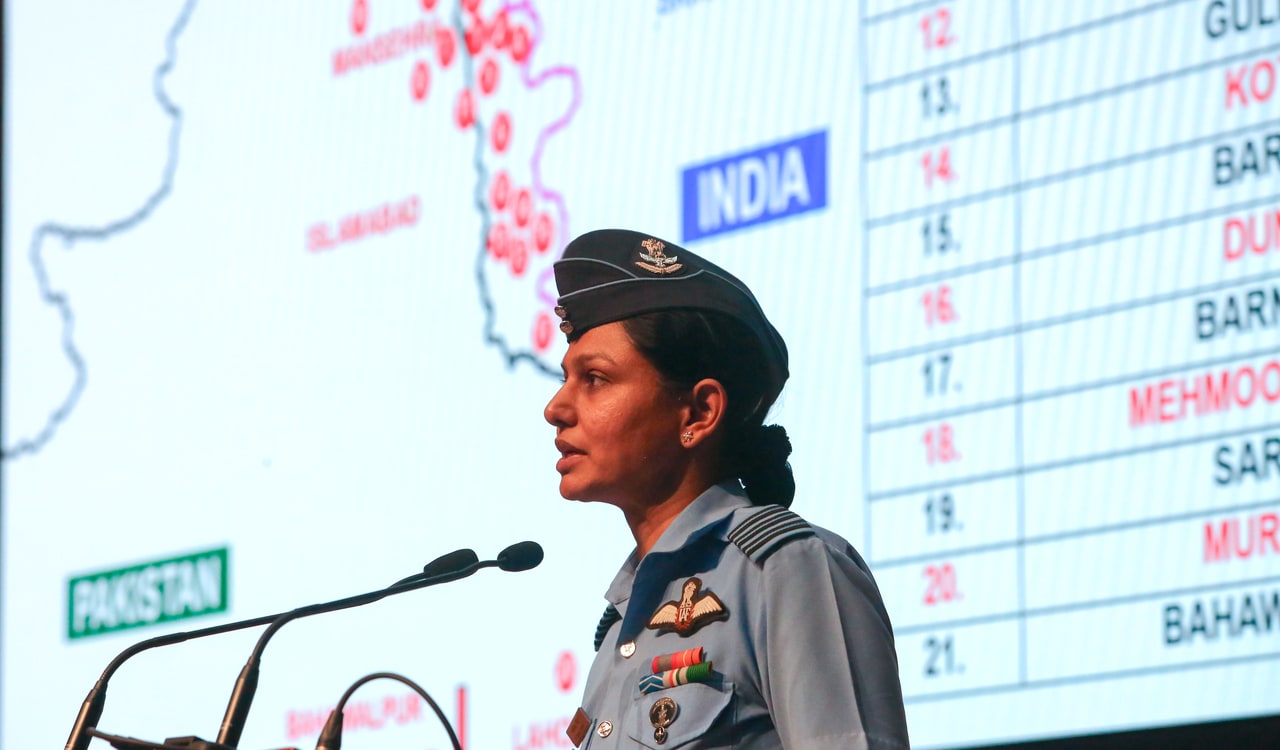
The attack led to Operation Sindoor, during which the Indian armed forces destroyed terrorist camps in PoK and inside Pakistan, according to the report. India said it would treat any act of terror as an act of war and not as a cross-border strike, the report said.
Counterterrorism experts said the biggest lesson India learnt after the Mumbai 26/11 attacks was that fighting terrorism took precedence in national security, particularly in dealing with neighbours such as Pakistan.
After the Mumbai attacks, India witnessed a wave of blasts carried out by the Indian Mujahideen, the report said. After the outfit was wiped out, terrorism shifted largely towards Jammu and Kashmir while the rest of the country remained quiet, according to the report.
The report said the abrogation of Article 370 and the decline of separatism enabled development in Jammu and Kashmir, created jobs and reduced the willingness among youth to take up arms for money.
Although the response came late, the Mumbai 26/11 attacks changed India’s perception of its national security doctrine, the report said. It would be wrong to say the threat had been completely eliminated, it added.
Pakistan continues to back terrorists and is seeking to rebuild networks, an official said. Radicalisation drives have peaked, while disinformation campaigns and honey-trapping incidents have added to the challenge, the official said.
“The fight would go on, but it is more important that India’s resolve remains strong and the doctrine keeps adapting to the new challenges posed by Pakistan and other state as well as non-state actors,” an official said.