
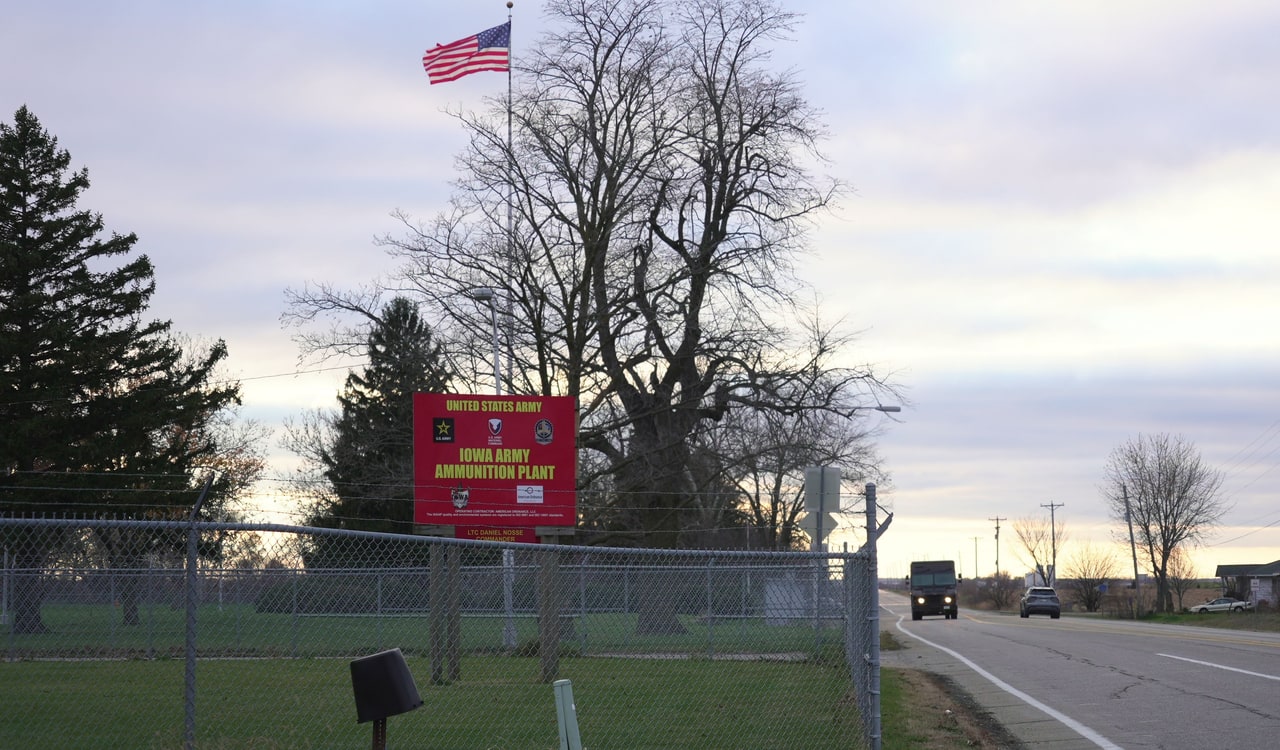
The US Army will detonate 68 barrels of lead azide near Middletown, Iowa, on Wednesday after a federal appeals court upheld an EPA emergency permit with safeguards following environmental and public health concerns.
Updated On – 24 November 2026, 01:29 PM
Washington: The US Army plans to detonate bomb-making chemicals in Iowa on Wednesday morning after receiving approval from a federal appeals court, following a dispute that has caused public concern and drawn an unusual intervention from President Donald Trump.
In a statement late Monday, the Army said it would proceed with the controlled removal of 68 barrels of lead azide in coordination with state, local and federal authorities.
“This is a consensus decision,” acting Army Secretary Adam Telle posted on social media. “Every expert agency agrees, and both Iowa’s current and incoming Governors say the call belongs to the experts.”
A three-judge panel of the 8th US Circuit Court of Appeals said on Monday that the US Environmental Protection Agency (EPA) had adequately incorporated safeguards into an emergency permit to minimise the dispersal of dust. The conditions addressed concerns raised by environmental groups that sued to stop the detonation, the court said.
The court cited barriers around the area where the barrels are stored, weather restrictions, advance public notification, updated air modelling, environmental monitoring and sampling requirements.
The judges said the record showed that the Army had evaluated “a full range” of alternatives, including using other chemicals to neutralise the lead azide and thermal treatment.
Trump, the Army’s commander in chief, said on social media earlier Monday that, in addition to the court’s approval, he wanted Gov.-elect Rob Sand to approve the detonation. Sand, a Democrat who does not take office until January, has said the decision is entirely up to the administration.
The blast was initially planned for Friday
The detonation of the 68 barrels of lead azide was initially planned for last Friday, but the Army has changed the date three times following public concern about potential health and environmental effects. The Army said weather conditions would be most favourable on Wednesday.
Environmentalists sued last week to stop the detonation at the site near Middletown, near the Mississippi River and about 90 miles (140 km) south of Cedar Rapids. The court temporarily halted the permit, prompting the Army to argue that it did not need authorisation because it was an emergency.
An attorney for the environmentalists said their legal challenge concerned the validity of the EPA permit, not the Army’s decision to proceed with the detonation under the emergency provision.
Earthjustice managing attorney Rachel Rintelmann said the lawsuit had alerted the public to the threat.
“Today, the 8th circuit decided to let the Army proceed with its plan, and we respect that decision,” Rintelmann said in a statement Monday. “But the Army created this emergency through neglect, and it owes the people of Iowa more information about the planned detonation and more safeguards for their health.”
Incoming governor seeks action
Sand said in a social media post on Monday that the administration should “make this decision based on the information they have from the people they brought in to do the job months ago and have been on the ground in Middletown for weeks.”
On Sunday, Sand posted that because of previous decisions that had already been made, “No good options exist and the situation is more dangerous and unpredictable than it ever should have been.”
Current Governor Kim Reynolds activated the state emergency management office on Friday. The state also created a dedicated website with information about the operation.
An aircraft carrying Army officials to Iowa departed Joint Base Andrews to support the planned detonation before Trump’s Truth Social post on Monday, two people familiar with the travel arrangements told the AP. They spoke on condition of anonymity because the travel details had not been made public.
Flight tracking websites showed that an Army business jet took off from the base shortly before 1 pm. Trump posted minutes later.
Residents prepare for detonation
Some residents near Middletown have been sealing their windows and doors as a precaution against lead dust that could result from the detonation. Others living farther away raised concerns on social media about the possible path of the plume, depending on wind conditions.
Officials said lead is toxic and recommended that people stay indoors during the detonation and clean outdoor surfaces with water afterwards to limit exposure to lead particles.
Middletown Mayor Rodney Johnson said the detonation must take place “so we can move on with our lives.”
“Improper storage and disposal is where things go wrong,” he said on social media.
Leaders of states bordering Iowa also expressed concern. Missouri Governor Mike Kehoe said state agencies were working to establish additional monitoring of air and water quality, public health and agricultural resources.
“But I want to emphasize: this is a federal operation,” Kehoe said. “The states of Iowa, Missouri and Illinois do not have a say on when this is conducted.”
Army cites risk of uncontrolled explosion
In court filings over the weekend, Army Colonel Aaron Teller, a munitions emergency response specialist, said less liquid inside the barrels made the solution more susceptible to freezing. This increased the sensitivity of crystals that had formed around the inside rim and underside of the lids, he said.
“Even a small amount of friction can break the crystal formation, causing an explosive chain reaction,” Teller said in his declaration to the court.
In March, staff at the Iowa Army Ammunition Plant found several dozen barrels of degraded lead azide, which is used in munitions production. The crystallisation of the material created an unstable and dangerous situation, prompting the Army to assemble experts in munitions chemistry, engineering and environmental safety to develop a plan.
According to EPA documents, alternatives such as neutralising and decomposing the drums’ contents with other chemicals were considered. However, officials said handling the drums would increase the probability of an accidental, fatal detonation.
The environmental groups disagreed, arguing in court filings that other alternatives had not been fully considered.
Officials said the risk of an uncontrolled explosion was increasing, particularly as temperatures fell in the coming days.
Experts see no easy options
Lead azide is “very sensitive” and susceptible to heat, freezing, shock, friction and “all sorts of things that could cause an accidental detonation,” said John Goodpaster, a chemistry professor at Indiana University, Indianapolis. The material is also old, increasing the risk because explosives become more unstable as they age, he said.
The environmental threat caused by lead escaping into the atmosphere added to the challenge, Goodpaster said.
“I do not envy the Army,” Goodpaster said. “They are in a situation where they’ve got a large amount of very dangerous material and not very many good options in terms of trying to dispose of it.”
However, it was impossible to predict when the material could explode on its own, he said.
“The longer we wait, the longer the risk accumulates that they might have an accidental explosion,” Goodpaster said. AP