Economy Minister Madanizadeh says structural customs reforms and a shift to overland routes have stabilized trade.
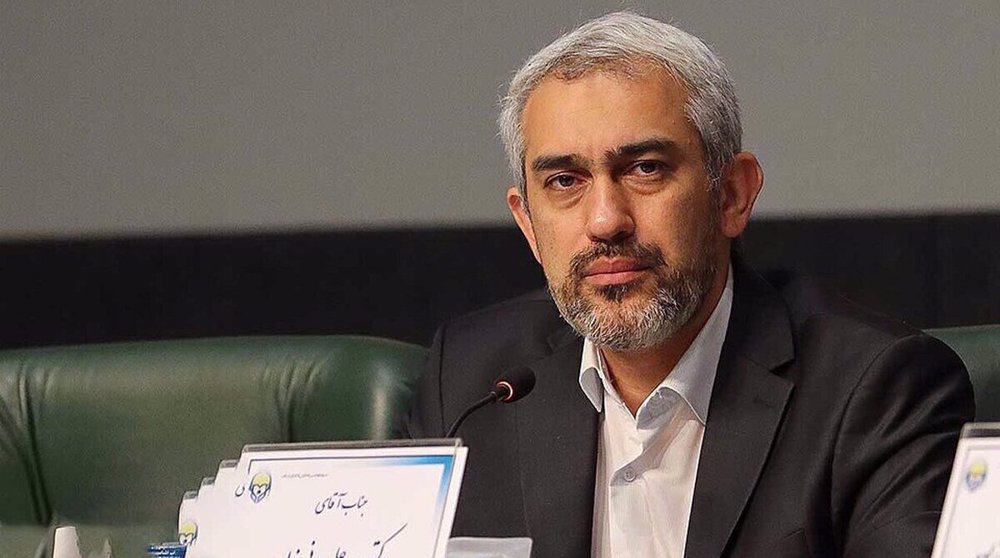
Seyyed Ali Madanizadeh, Iran’s economy minister. (Fille photo)
Iran has reduced the decline in its foreign trade from 35 percent to 20 percent and eliminated heavy truck queues at key border crossings by shifting commercial routes to counter the US naval blockade, the minister of economic affairs and finance said.
Seyed Ali Madanizadeh stated in a televised interview that all of the country’s commercial borders are currently open and facilitating trade, with the exception of one crossing that remains closed for security reasons.
He explained that the naval blockade forced a significant portion of the country’s exports and imports to shift toward northern, eastern, and western land borders, as well as the Caspian Sea route.
“A significant portion of the long truck queues at the borders was due to this shift in trade routes and the lack of preparedness of border infrastructure to handle this volume of exchanges,” Madanizadeh said.
However, he noted that regulatory and infrastructural reforms implemented over the past two to three months have transformed the situation.
The queue of trucks at the Dogharoon border crossing in the east has reached zero, with approximately 1,400 export trucks transiting through the terminal daily.
To prevent borders from becoming storage bottlenecks, the government implemented a “direct transit” project, ensuring that goods pass through border terminals with minimal formalities while comprehensive customs procedures are completed at inland facilities.
Under this system, essential goods equipped with the necessary permits are cleared in one hour, Madanizadeh said.
He added that the average customs clearance time for shipments on the “red route”, goods requiring physical inspection and detailed documentation, has dropped to 73 hours, fulfilling the government’s promise to reduce the process to under three days.
Inflation control and debt market reforms
Addressing macroeconomic stability, the economy minister said structural reforms in the government bond market and strict control over the budget deficit prevented the national inflation rate from crossing the 100 percent threshold.
“The structural reforms in the debt market enabled the proper trading of bonds and prevented them from being converted into the Central Bank’s monetary base,” Madanizadeh said, referring to the practice of monetizing government debt which typically drives severe inflation.
He added that policies aimed at controlling balance sheet growth, implemented in coordination with the Central Bank, further contributed to stabilizing the banking sector and the broader economy.
The Dogharoon border crossing is located in eastern Iran and serves as a primary commercial gateway for trade with Afghanistan.
In Iran’s customs system, the “red route” designates shipments that require physical inspection and rigorous documentation checks due to higher risk assessments, whereas the “green route” allows for immediate electronic clearance.
The United States imposed a naval blockade on Iranian ports, prompting Tehran to accelerate the development of overland trade corridors with neighboring countries and expand commercial shipping across the Caspian Sea to maintain its supply chains and export flows.