The Standard-Bearer of Magnanimity and Loyalty: Why Is Hazrat Abolfazl (AS) a Shared Human and Religious Symbol for Peace?
In today’s tension-filled world, as we seek role models for moral steadfastness, fidelity to one’s word, and selfless service to fellow human beings, our gaze extends beyond geographical—and even sectarian—boundaries. In this context, the figure of Hazrat Abolfazl (AS)—son of Ali ibn Abi Talib (AS)—possesses dimensions that are deeply inspiring and relatable, not only to Muslims but also to followers of other Abrahamic faiths (Christianity and Judaism) who are familiar with concepts such as “self-sacrifice,” “providing water to the thirsty,” and “loyalty to one’s pledge.”
This essay rests upon two pillars: the deep-rooted religious and ethical commonalities that make the character of Abbas (AS) accessible to all, and the truly unique attributes that have rendered him immortal in human history.
1. Religious and Ethical Commonalities: The Universal Language of Faith and Self-Sacrifice: The values embodied by Hazrat Abolfazl (AS) during the event of Ashura are not exclusive to any single group; rather, they are rooted in the shared teachings of all divine prophets:
2. Loyalty to a Pledge (Pact and Integrity): Across all Abrahamic traditions, honoring one’s covenant—and refusing to abandon one’s leader or companions during times of hardship—is considered a profound moral virtue. Abbas (AS) serves as the perfect embodiment of the ethical maxim: “Loyalty is the hallmark of a person of noble essence.” He remained faithful to his pledge to Imam Hussein (AS) until the very last moment.
3. The Sanctity of Life and Water: In religious traditions, water symbolizes divine life and mercy. Providing water to the thirsty is a practice praised in the Torah, the Gospel, and the Quran as a significant righteous deed. Through his mission to provide water, Abbas (AS) brought this shared religious value to life.
4. The Unique Characteristics of Abolfazl (AS): Why is he peerless?
Beyond these shared values, Hazrat Abolfazl (AS) possessed a combination of traits that, when united in a single individual, render him unique and distinguished in history:
Courage Tempered with Ethics and Courtesy: While history has seen many great figures, few—if any—have matched Abolfazl (AS). Despite possessing extraordinary physical strength and bearing the title “Moon of the Banu Hashim” (Qamar Bani Hashim), he remained profoundly committed to ethical conduct, devoted to his leader (wilayat), and entirely free from ostentation. Though he served as the standard-bearer, he never exploited his position for arrogance; his courtesy toward his brother and leader—to the extent that he never addressed him without the utmost respect—has become proverbial in Islamic literature.
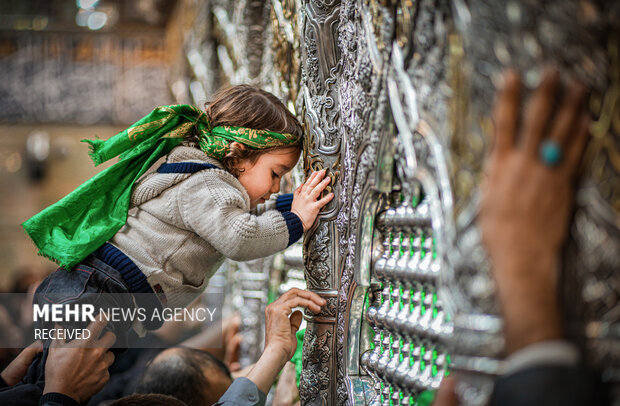
The Unique Title “Bab al-Hawa’ij” (The Universal Gateway of Hope): Among religious figures, few are as widely recognized in popular culture as a “refuge for the distressed and a solver of difficulties.” The title “Bab al-Hawa’ij” (Gateway to the Fulfillment of Needs) is not limited to the Shia community alone; In many regions of the Middle East, Christians and followers of other faiths also turn to him in times of hardship. It is his unique quality to have transcended religious boundaries, becoming a symbol of “unreserved aid to the helpless.”
The tale of devotion and loyalty by the banks of the Euphrates—his refusal to drink water despite his own intense thirst, upon remembering the thirst of his brother and the children in the encampment (as recounted in well-known historical narratives)—represents a singular emotional and moral pinnacle, unmatched in its intensity and beauty anywhere else in history. This moment illustrates the divide between the raw, animalistic instinct for survival and the zenith of human dignity.
5. A Message for Global Peace and Coexistence Among Believers: Today, as we speak of global peace, we require exemplars who demonstrate that power, courage, and self-sacrifice can serve humanity rather than destroy
it.
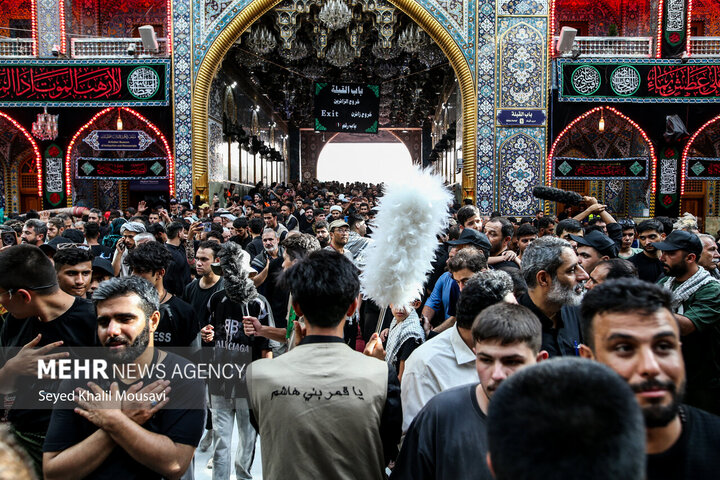
The massive Arbaeen gathering serves as a living manifestation of this very legacy; here, millions of people—diverse in religion, race, and language—draw inspiration from the character of the “Water-Bearer of Karbala” (Saqqa-ye Karbala) and engage in a peaceful movement of mutual service, providing water and hospitality to one another. This event proves that the name and path of Abolfazl al-Abbas (PBUH) possess the capacity to unite hearts across borders within a “culture of peace and altruism.”
Conclusion: Hazrat Abolfazl al-Abbas (PBUH) is not merely a historical hero; He is the living embodiment of shared religious values—such as fidelity to one’s word, generosity, and the defense of the oppressed—complemented by unique qualities like unparalleled courtesy, self-sacrifice rooted in profound affection, and the universal status of Bab al-Hawa’ij (the Gateway to the Fulfillment of Needs). To come to know him is an invitation to a world where courage is employed not for the sake of war, but for the sake of peace, human dignity, and life itself.
MNA