
Iran’s Ambassador to Russia tells Iranian mining and steel executives that all war damage has been repaired by domestic engineers.
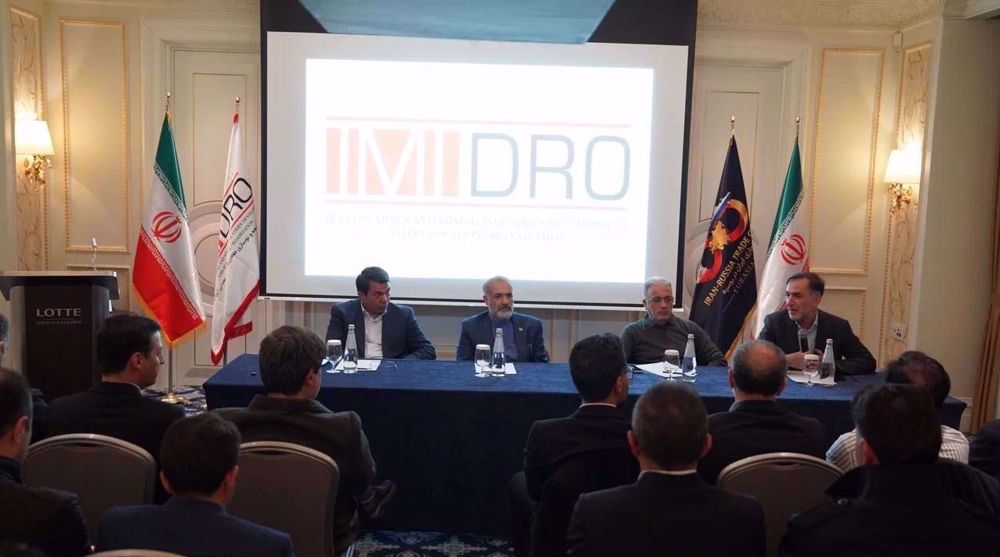
Iran’s Ambassador to Russia Kazem Jalali (center) addresses managers and representatives of Iranian mining, mineral processing and steel companies attending Metal Expo 2026 in St. Petersburg on November 11. (Photo: IRNA)
Iran’s Ambassador to Russia Kazem Jalali said the country’s industries had been rebuilt within seven months of the US and Israeli attacks, and that the speed of the recovery had forced governments around the world to reassess their view of Iran.
Speaking on Wednesday evening to managers and representatives of Iranian mining, mineral processing and steel companies attending Metal Expo 2026 in St. Petersburg, Jalali praised the work carried out by industrial firms to repair damage sustained during the two wars of aggression against the Islamic Republic.
He described the achievements as lasting and a source of pride for every Iranian, saying that within seven months all the destructive effects on these industries had been repaired by capable Iranian engineering personnel, and that the country’s core industrial sectors had returned to their pre-war condition in that short period.
That engineering capability, combined with the resilience of the population and the strength of the armed forces, had prompted countries worldwide, friend and foe alike, to reconsider their assumptions about Iran, he said.
This shift, Jalali argued, had produced a more realistic view of Iran’s position and capabilities in the political and economic arenas of the region and the wider world, and would itself create a foundation for expanding foreign relations and economic and commercial cooperation.
Barriers to Russia ties
At the outset of the meeting, the ambassador outlined the current state of Tehran-Moscow relations and set out the obstacles he said still stand in the way of deeper political and economic ties.
These included insufficient mutual understanding between the two sides, Western opposition and pressure, the dominance of Western frameworks of thinking, language difficulties, limited transport connections, weaknesses in logistics, and customs, banking and monetary problems.
He also said the similar circumstances Iran and Russia face in their dealings with the West represent a further basis for developing bilateral relations.
Jalali stressed the need to complete the North-South transport corridor and to build the Rasht-Astara railway line as quickly as possible.
Projects of this kind, he said, would leave the West unable to pursue hostile objectives such as reducing Iran’s role in regional trade, and would secure the country’s ties with regional states.
Twelve Iranian mining, steel and mineral industry companies were exhibiting at the 32nd Metal Expo in St. Petersburg under a 550-square-meter national pavilion organized by the Iranian Mines and Mining Industries Development and Renovation Organization (IMIDRO). The exhibition runs through November 13.
The Rasht-Astara railway, which Jalali identified as a priority, is the remaining missing link in the International North-South Transport Corridor on the Iranian side.
Iranian officials have said the agreement with Russia has entered its execution phase, with land along the route handed over to the Russian side.


