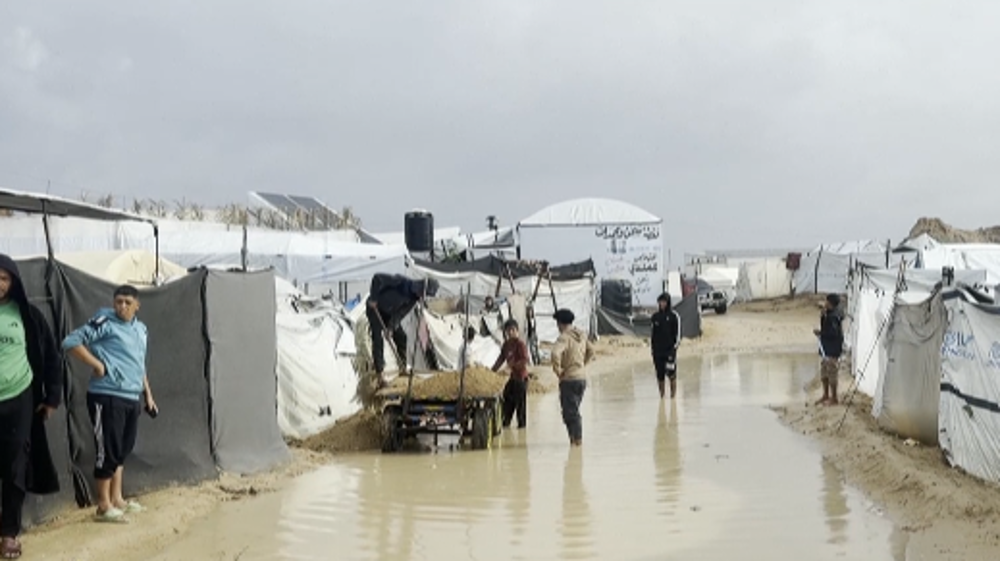
The United Nations Children’s Fund (UNICEF) has warned of the escalating risks threatening the lives of children and displaced people in the Gaza Strip as rains intensify and winter approaches, following the death of a mother and her three children, aged between 4 and 8 years, after a sand dune collapsed on their tent in Deir al-Balah in the central Gaza Strip over the weekend.
The organization said that heavy rains have directly affected more than 106,000 people and caused damage or destruction to shelters, latrines, and residents’ property, while approximately 950,000 displaced people live in flood-prone areas, including 400,000 people, about half of whom reside in sites facing extremely high risks.
This incident comes as displaced families prepare to face their fourth winter under harsh conditions, after years of Israeli war and the worsening humanitarian crisis it has left behind, with approximately 1.7 million displaced people still living in tents, temporary shelters, or damaged buildings that lack adequate protection from floods, cold, and collapses.
The repercussions of the rains are not limited to damaged housing, but also exacerbate the sanitation crisis caused by the war, amid the shutdown of all wastewater treatment plants in the Strip.
In Gaza City, rainwater mixed with sewage threatens to overflow the Sheikh Radwan stormwater drainage basin, where only two of its six pumps are operational, while UNICEF says it has been requesting approval from the Israeli occupation authorities for over a year to bring in the equipment needed to repair the facility.
The organization warned that cold poses an additional threat, particularly to newborns, noting that 11 children died from hypothermia last winter, amid fears that the death toll will rise as cold intensifies and heating and adequate protection are absent.
In response to these conditions, UNICEF and its partners are distributing plastic sheeting, winter clothing, blankets, and hygiene supplies, along with clearing blockages from sewage networks and stormwater drainage basins and placing sandbags to limit the effects of flooding.
However, the organization stressed that these emergency interventions do not represent a sustainable solution, as tents and plastic sheeting do not provide adequate protection from severe storms, while damaged water and sanitation networks continue to endanger children’s health and lives.
UNICEF called on the Israeli occupation authorities to immediately allow the entry of pumps, generators, spare parts, and equipment needed to repair water and sanitation infrastructure, including the Sheikh Radwan stormwater drainage basin and the Sheikh Ajleen wastewater treatment plant.
It also urged the international community to press for the entry of all life-saving humanitarian supplies and equipment and to provide urgent funding of $97.5 million for the winter response being implemented by the organization in the Gaza Strip.
(Source: UNews)