
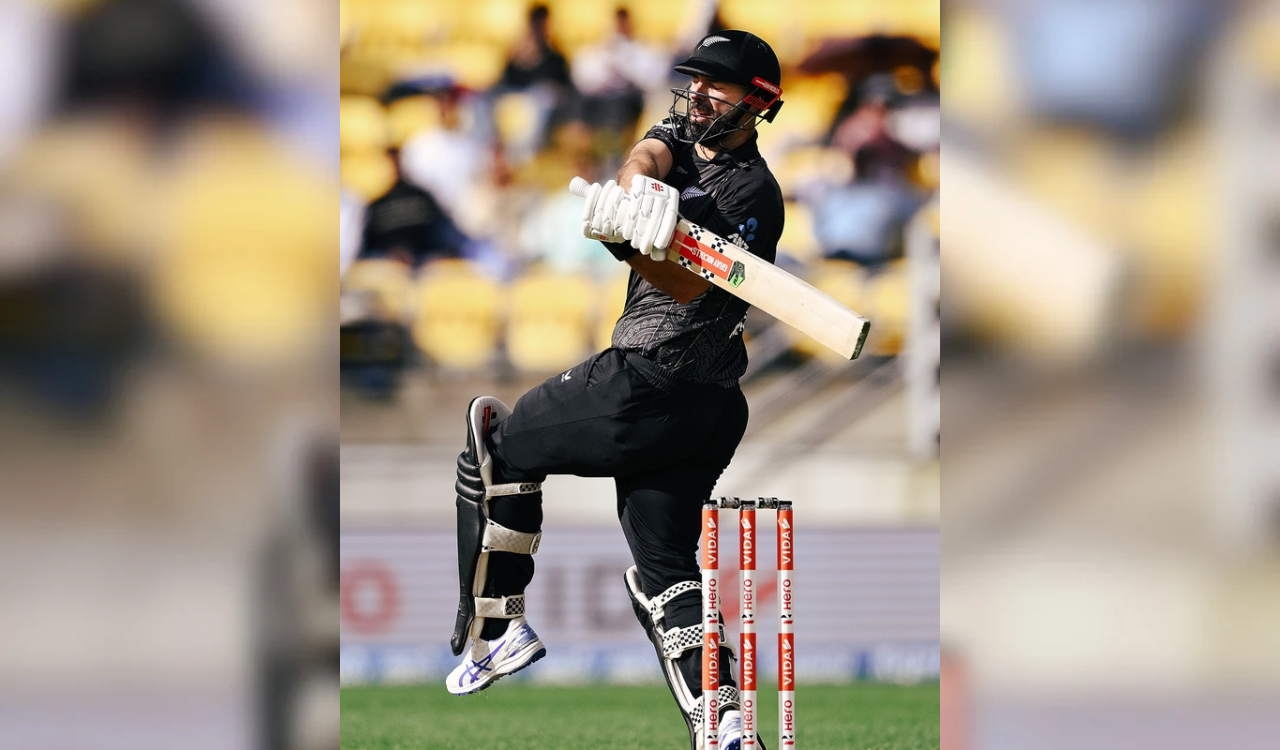
Daryl Mitchell described the Wellington pitch as challenging after New Zealand were bowled out for 134 in the second ODI against India. He cited unpredictable bounce and difficulty rotating strike, but said early wickets could give New Zealand hope.
Published Date – 7 November 2026, 01:38 PM
Wellington: New Zealand batter Daryl Mitchell described the Wellington surface as a difficult one to negotiate after the hosts were bowled out for 134 in the second ODI against India on Saturday, saying the unpredictable bounce and lack of assistance in rotating the strike made batting a testing proposition.
Mitchell, who top-scored with 55 off 104 balls, said the bounce varied considerably, leaving batters uncertain about how the ball would come through. New Zealand managed to put together a total, but the right-hander admitted they had hoped to finish with more runs.
“It’s pretty challenging out there. Obviously, we’d always like a few more, but yeah, it’s like batting on a trampoline at times. We weren’t quite sure what height the ball was going to come through at. We scraped. We tried to do all we could and hopefully something special with the ball and you never know,” Daryl told the broadcasters after NZ were bowled out.
He further pointed to the difficulty of finding gaps and keeping the scoreboard moving, explaining that the nature of the drop-in pitch made it harder for batters to take quick singles.
“All of us found it really hard to rotate the strike as well, and especially being, I guess, a drop-in with no pitches either side. It’s really hard, I guess, to drop and run and it just stops. So you add that to the bounce, sometimes, yeah, the only best option was to try and give it a hoe and see what happens,” he added.
Despite the conditions, Mitchell said he tried to remain committed to his strengths and assess the Indian bowlers’ plans. However, New Zealand struggled to build sustained partnerships, with wickets falling whenever the hosts appeared to be gaining some momentum.
“Yeah, I guess just trying to stick to your strengths, and for me, it was when I kind of tried to get a read on what they were trying to do. I was trying to maximise that, but yeah, obviously we wanted to keep extending partnerships as well, and that was probably the challenge, because every time we felt like we got a partnership, we’d lost the wicket,” the all-rounder stated.
New Zealand’s best stand came through Mitchell and Mitchell Santner, who added 59 runs for the sixth wicket after the hosts had slipped to 53/5. Mitchell’s resistance helped take the total to 134, but he acknowledged that the side had fallen short of the score they wanted to defend.
Looking ahead to the bowling effort, Mitchell felt New Zealand still had an opportunity if they could make early inroads into India’s batting line-up and expose the middle order.
“Yeah, look, there’s plenty there, first and foremost. Obviously, there’s not the run-rate pressure that we would have liked, but yeah, if we can knock off a couple early, get into the middle order, you never know what can happen,” he mentioned.



