Hyderabad researchers have identified two rare MYH7 gene variants associated with hypertrophic cardiomyopathy in patients from Telangana. The findings, published in a leading cardiology journal, could support early diagnosis, precision medicine and family screening for inherited heart disease.
Updated On – 5 November 2026, 07:53 PM
Hyderabad: Researchers from Hyderabad have identified two novel and rare genetic variants in the MYH7 gene, associated with hypertrophic cardiomyopathy, a leading cause of heart failure and sudden cardiac death.
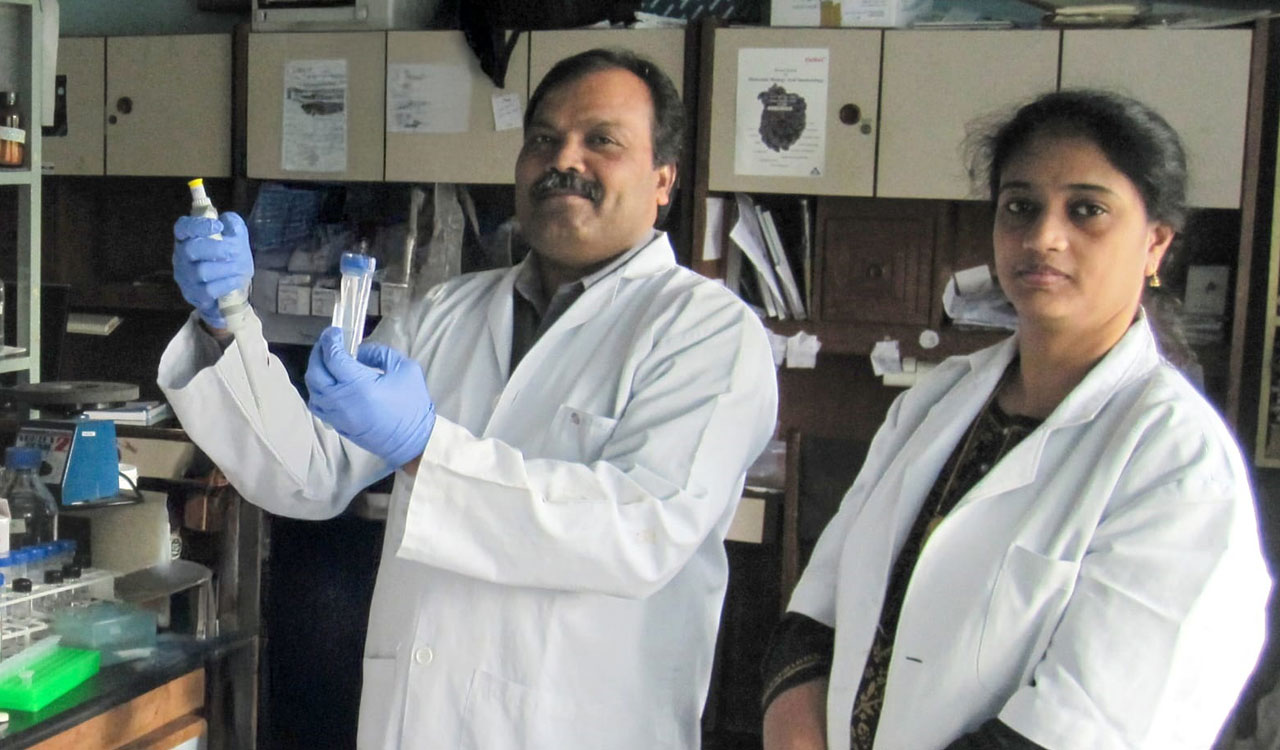
Published in Journal of the American College of Cardiology: Asia (November), the study conducted by Dr Kumarasamy Thangaraj and Dr Deepa Selvi Rani from Centre for Cellular and Molecular Biology (CSIR-CCMB), Dr Pratibha Nallari of Osmania University and Dr Calambur Narasimhan of AIG Hospitals analysed a total of 160 patients from Telangana.
The researchers found that these rare variants, absent in major global population databases, may be specifically enriched (means the variant is concentrated or found at a higher rate) in Indian or South Asian populations, offering a vital pathway for early diagnosis, precision medicine, and family screening.
Dr Deepa Selvi Rani, the lead author of the study, analysed the coding regions of the MYH7 gene in 160 patients with hypertrophic cardiomyopathy and 178 ethnically matched healthy controls from Telangana.
She identified 34 genetic variants, of which two stood out as particularly significant. Both changes occur in highly conserved regions of the myosin protein that are important for its normal function.
“Such alterations may affect the molecular machinery responsible for heart-muscle contraction and contribute to the development of hypertrophic cardiomyopathy,” said Dr Rani.
One of the variants (p.Met684Arg) was identified in a 52-year-old woman with significant thickening of the heart muscle. Her 26-year-old son, who carried the same genetic change, had mild thickening of the heart muscle.
The second variant (p.Leu725Pro) was found in a 58-year-old man with obstructive hypertrophic cardiomyopathy, which can lead to obstruction of blood flow in the heart.
He also had a family history of sudden cardiac death, while his 24-year-old daughter with the same genetic change had mild thickening of the heart muscle. These findings suggest age-dependent disease expression.
Dr Kumarasamy Thangaraj, the senior author of the study, said, “Our findings suggest that these variants are rare and may be enriched in Indian or South Asian populations”.
Dr Vinay Nandicoori, Director, CCMB, said, “The study strengthens our understanding of the genetic basis of hypertrophic cardiomyopathy and supports precision diagnosis and population screening to combat heart ailments in future generations”.