With thousands of lives already lost and the global economy hanging in the balance, the US, Israel, and Iran must give diplomacy a genuine chance to forge a workable middle ground
Published Date – 13 April 2026, 11:49 PM
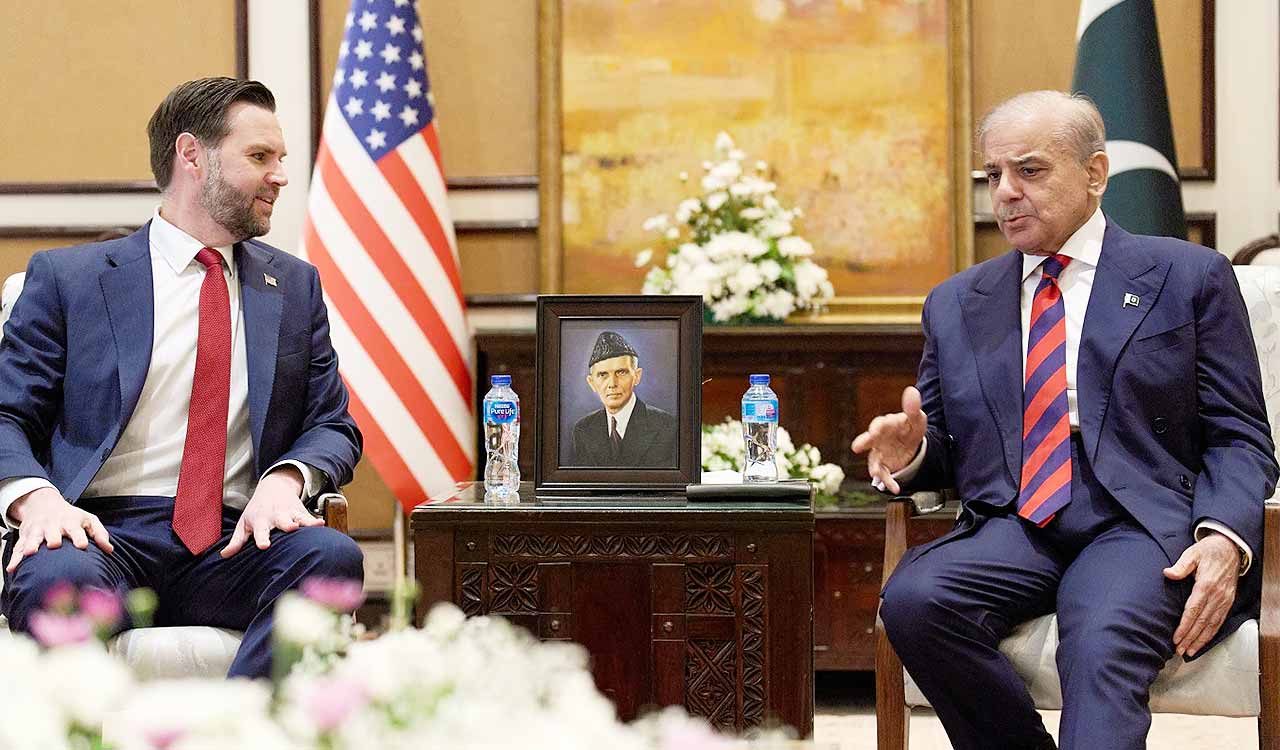
Even the incorrigible optimists were not expecting the United States-Iran peace talks, brokered by Pakistan, to yield any meaningful outcome, given the intransigent positions of the warring sides. Therefore, the collapse of the talks, announced by American Vice President JD Vance after a 21-hour-long marathon of negotiations in Islamabad, came as no surprise to geopolitical observers. The certainty of failure was inbuilt into the exercise. The initiative collapsed under the weight of its own contradictions, with the US insisting on permanent renunciation by Iran of its nuclear ambitions and Iran unrelenting in its own set of demands. Envoys from the two countries sat across from one another for the first direct, high-level engagement since the 1979 Islamic Revolution. Understandably, the stakes were quite high: a fragile ceasefire, a disrupted global oil supply route in the Strait of Hormuz, and a war that had already pulled all the players of the Middle East into it. From the outset, the Islamabad-mediated talks carried the burden of irreconcilable expectations. Washington’s position was shaped by President Donald Trump’s maximalist instincts, demanding nothing short of a structural dismantling of Iran’s nuclear pathway. Tehran, on the other hand, arrived with a litany of grievances and demands: the unfreezing of assets, war reparations, formal control or at least recognised authority over Hormuz transit, and a regionwide ceasefire that extended to Lebanon. The ongoing war has already destabilised global energy markets and aggravated regional tensions.
The failure of peace talks and the resultant jump in oil prices are set to deliver a big jolt to the global economy. For countries like India, which are largely dependent on oil imports to meet their energy requirements, the impact could be more serious as they would face intense pressure on growth and spending. Analysts say up to two million barrels a day of oil could be at risk if shipping through the Strait of Hormuz continues to be disrupted. There are growing fears over a planned US blockade. The Strait, through which roughly 20% of the world’s oil once flowed freely, has become the key battlefield. This has pushed prices higher and increased volatility in energy markets. Higher oil prices feed into transport, food, and other goods, adding to inflation and squeezing household budgets. If oil prices stay high, the central banks of many major countries may have to delay rate cuts. While Trump has threatened a blockade of Iranian ports, Tehran has said any military vessels that approach the shipping route would be dealt with severely. For Washington, any deal must include verifiable guarantees that Tehran will not develop nuclear weapons. Iran, however, views such demands as excessive and politically coercive, especially amid crippling sanctions. With thousands of lives lost and the global economy at stake, the US, Israel, and Iran must give diplomacy a chance to find a middle ground.