
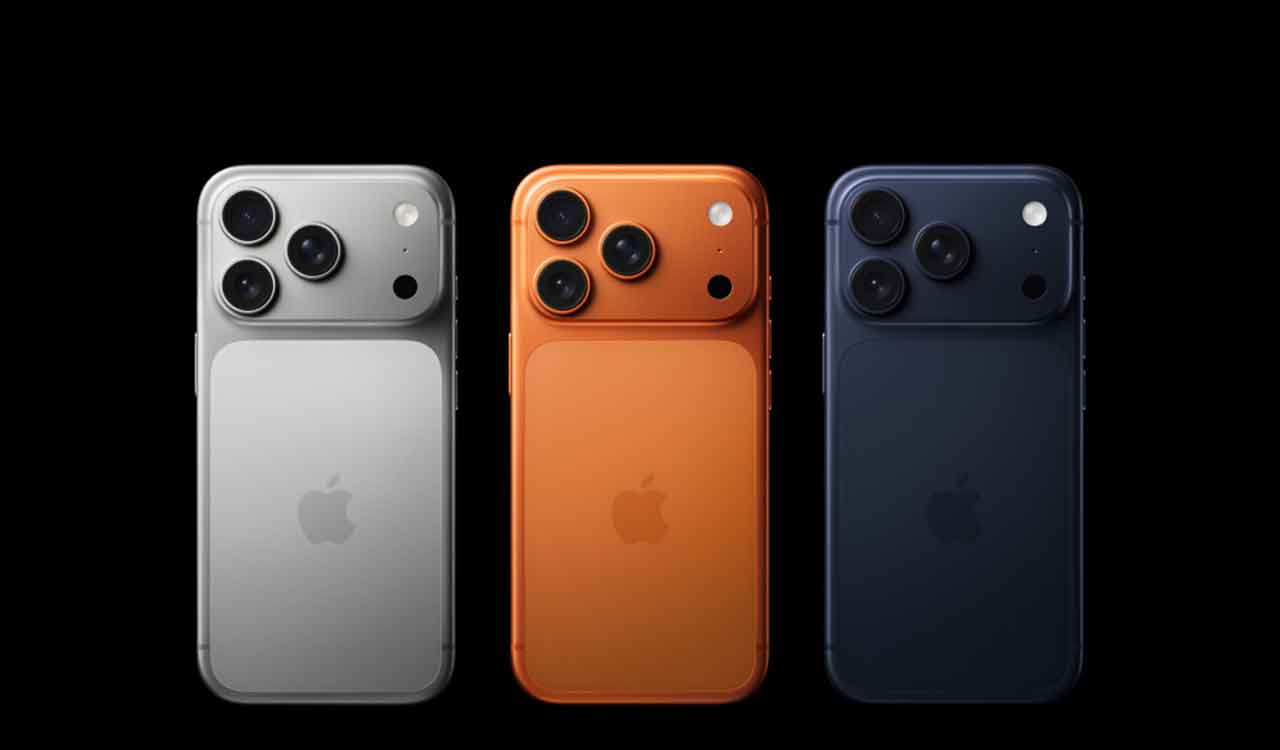
Apple led the global smartphone market in Q1 2026 with a 21 per cent share, driven by strong iPhone demand. However, overall shipments declined due to memory shortages, while Samsung faced pressure despite strong interest in its latest S26 series
Published Date – 10 April 2026, 02:52 PM
New Delhi: Apple led the global smartphone market for the first time in the first quarter (Q1) of any year, achieving 21 per cent market share and 5 per cent YoY growth in Q1 2026, a report showed on Friday.
Apple remains the most insulated brand against the memory crisis due to its ultra-premium positioning and highly integrated supply chain, according to preliminary estimates from Counterpoint Research’s Market Monitor.
Continuous strong demand for the iPhone 17 series and aggressive trade-in programmes, along with ecosystem stickiness, drove overall volume growth despite a softer macro environment.
The brand experienced notably stronger growth in several key Asia-Pacific markets, such as India, China and Japan, highlighting robust demand for iPhones and effective strategies in these high-potential markets.
The global smartphone market remained under pressure in Q1 2026, with shipments declining 6 per cent YoY, driven by the shortage of DRAM and NAND memory components and weaker demand, according to preliminary estimates.
While some regions showed relative stability, overall market sentiment remained cautious as OEMs adjusted their pricing and production strategies, including going in for product delays and fewer launches, and consumers held back on discretionary purchases amid Middle East tensions.
At the same time, some OEMs frontloaded shipments in anticipation of component price hikes and logistics cost escalation, offsetting a greater drop in shipments.
Samsung’s shipments declined in Q1. However, early momentum of the S26 series remained strong, highlighting robust demand for the new hardware and integrated AI features, with the Ultra variant seeing the highest traction, the report mentioned.
To manage rising cost pressures, Samsung further adjusted its product portfolio, streamlining entry-level options and emphasizing higher-tier configurations, effectively raising starting prices while reinforcing the premium positioning of its devices.
The outlook for 2026 remains weak, as the memory crunch may last until late 2027, said the report.
OEMs are expected to prioritise value over volume, configuration updates, cutting low-margin models, and leveraging refurbished devices to retain budget users.