
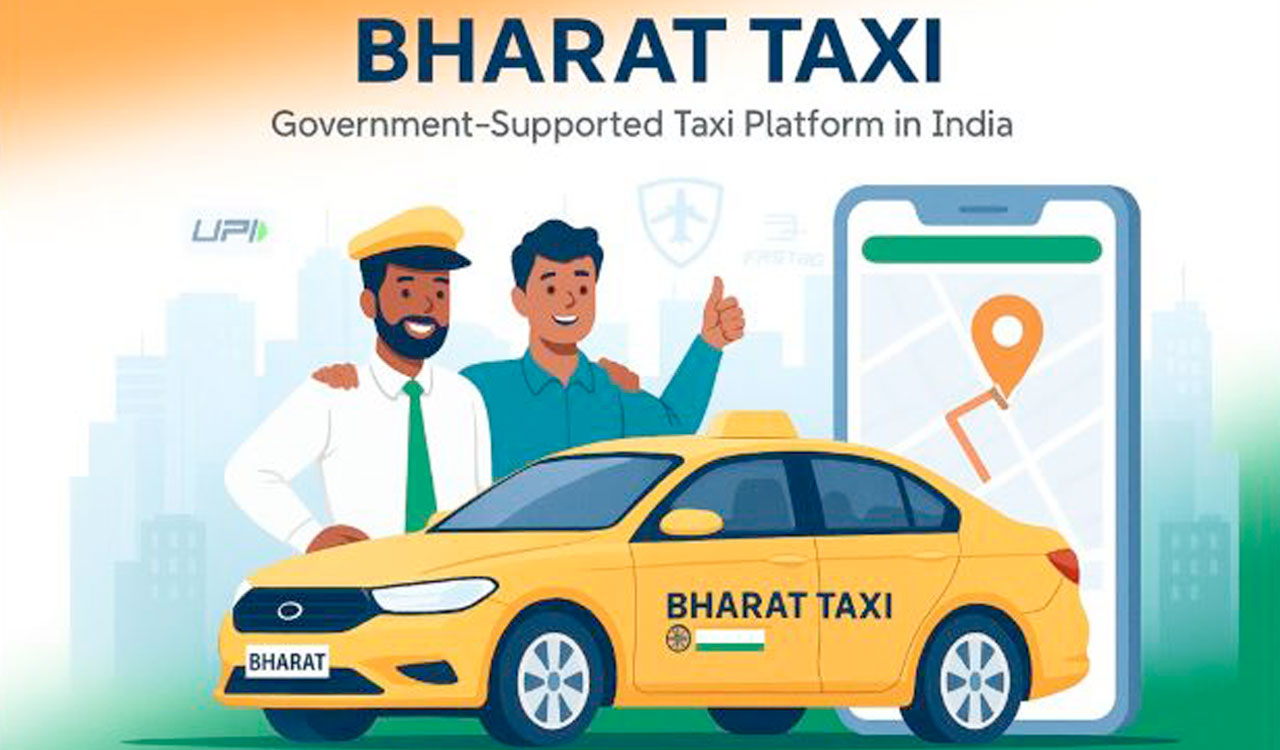
Amit Shah said Bharat Taxi is facing early challenges, including competition from Ola and Uber and resistance to digital adoption. The government-backed platform plans phased expansion while focusing on driver welfare, social security and a zero-commission cooperative model
Published Date – 1 April 2026, 08:36 PM
New Delhi: Cooperation Minister Amit Shah on Wednesday told Parliament that Bharat Taxi — the government-backed cooperative ride-hailing platform — is grappling with early-stage hurdles, including stiff competition from established private aggregators such as Ola and Uber, and resistance to digital adoption among sections of its driver-partner base.
Responding to a query in the Rajya Sabha, Shah said in a written reply that “efforts are being made to address these through welfare and awareness, training, and improved user experience along with e-governance tools”.
Registered under the Multi-State Cooperative Societies Act, 2002, Bharat Taxi was established on June 6, 2025, by eight national-level cooperative institutions and formally launched on February 5 this year.
As of March 23, the platform had onboarded approximately 4.31 lakh driver-partners.
The service is currently operational in Delhi-NCR and three Gujarat cities — Ahmedabad, Rajkot and Surat — with driver onboarding underway in Chandigarh and Lucknow. The government plans to roll out services in phases to Tier 2 and Tier 3 cities, and eventually to district and tehsil levels across the country over the next three years.
Shah said Bharat Taxi has proposed a raft of measures to drive adoption, including city-wise expansion, awareness campaigns and driver onboarding initiatives backed by welfare-oriented provisions.
“The focus remains on ensuring sustainable earnings, social security, and long-term empowerment of driver-partners through cooperative ownership,” he said.
Unlike conventional ride-hailing platforms, Bharat Taxi operates on a subscription-based model under which drivers are members and stakeholders of the cooperative, not merely service providers. The platform’s key differentiators include a zero-commission structure, transparent fare mechanisms, and cooperative governance, all aimed at maximising earnings retention for drivers.
The cooperative also seeks to address long-standing grievances in the gig economy by eliminating commission-based exploitation, promoting participatory decision-making, and providing access to social security benefits, while offering commuters safe and affordable rides.