
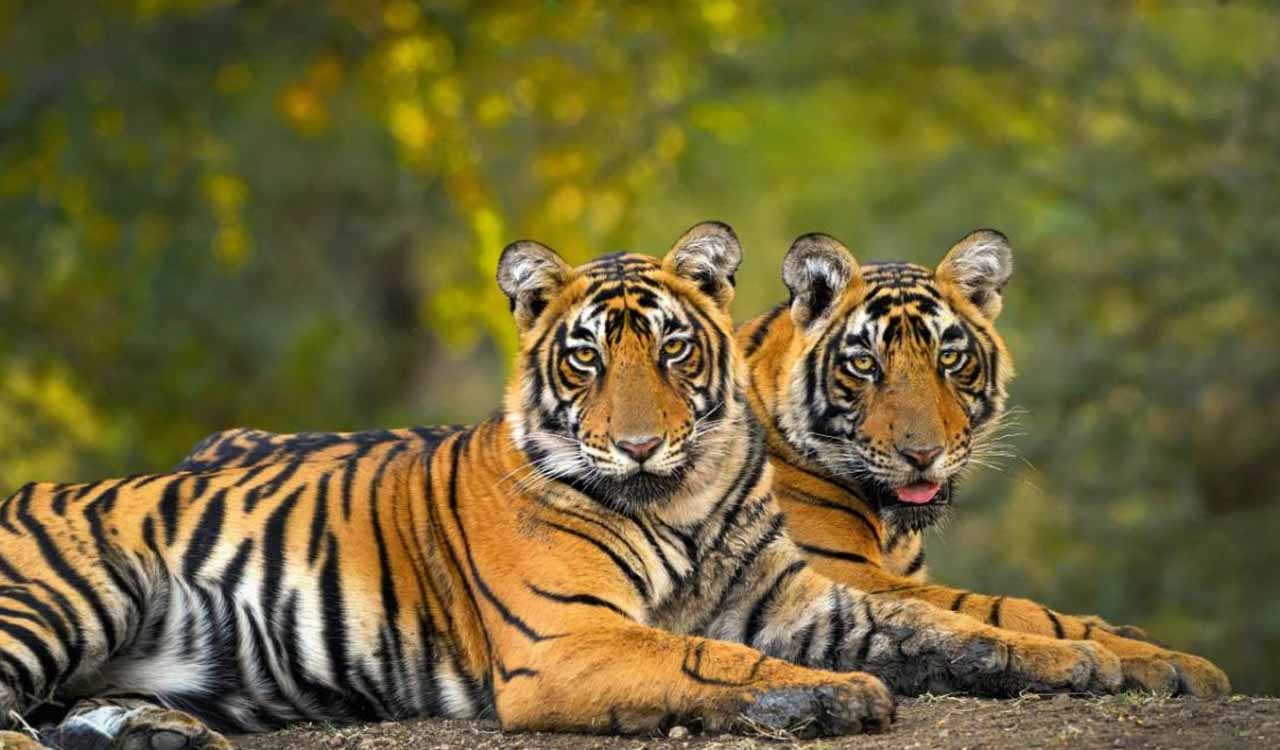
Dr Karan Singh spearheaded the 1972 transition designating the tiger as India’s national animal and chaired the Steering Committee that launched Project Tiger on April 1, 1973, boosting conservation efforts
Published Date – 1 April 2026, 01:11 PM
By Dr R K Chaitanya
Following a 1948 campaign by the Gujarat Natural History Society, the Asiatic lion was initially designated as India’s national animal. However, by the late 1960s, a dramatic shift in policy occurred due to the alarming decline in the Bengal tiger population — estimated to have dropped from roughly 40,000 in 1947 to just 2,000 by 1970.
The First Step
Driven by poaching, habitat loss, and hunting, the crisis prompted action at the 1969 IUCN General Assembly in New Delhi, which called for a global moratorium on killing tigers. Subsequently, India restricted tiger skin exports and enacted a total ban on tiger hunting by July 1970.
This conservation shift was solidified by the Wildlife (Protection) Act of 1972. On November 18, 1972, the Indian Board for Wildlife officially designated the Royal Bengal Tiger as India’s new national animal, replacing the Asiatic lion. The move highlighted the tiger’s presence across 16 States, compared to the lion’s restricted habitat, aiming to raise awareness and bolster conservation efforts. These efforts were further strengthened by the launch of ‘Project Tiger’ on 1st April, 1973.
Dr Karan Singh played a pivotal role in Indian wildlife conservation by spearheading the transition from the lion to the tiger as the national animal in 1972 while serving as Chairman of the Indian Board for Wildlife. With full support from Prime Minister Indira Gandhi, he was appointed as the first Chairman of the Steering Committee for Project Tiger, overseeing its launch on April 1, 1973, at Corbett National Park.
To lead this initiative, Dr Singh selected Kailash Sankhala, a pioneering biologist and dedicated conservationist from Rajasthan. Known as the ‘Tiger Man of India’, Sankhala had championed tiger protection as early as 1956 and brought urgent international attention to the species’ looming extinction by presenting his paper, The Vanishing Tiger, at the 10th IUCN General Assembly in New Delhi. Under the inaugural phase of Project Tiger, nine reserves were established to protect the dwindling population.
Cultural Connections
The tiger holds a profound and multifaceted place in Indian culture. In Hinduism, it is revered as the vehicle of Goddess Durga (and Goddess Kali), representing raw power, bravery, and divine energy (Shakti) that destroys evil. Indigenous and tribal communities in Maharashtra and Goa worship the tiger as Waghoba (or Wagh Dev), a protective deity regarded as the guardian of the forest, often appeased to prevent conflict. Similarly, in Karnataka, the tiger is worshipped as Huliraya (Tiger King), while in parts of Odisha and Bihar, it is revered as Bagheshwar.
Cultural connections run deep, with the Mishmi tribe in Arunachal Pradesh considering the tiger their elder brother, and the Baiga tribe of Central India believing they are descended from the tiger. In the Sundarbans mangrove forest, the myth of Bonbibi (Lady of the Forest) involves managing the power of the tiger, portrayed as Dakshin Rai (Lord of the South). Here, both Hindu and Muslim woodcutters worship Bonbibi for protection from tiger attacks.
Further highlighting its deep-rooted place in local folklore, tiger motifs appear in various forms of Indian art, such as Aipan (Uttarakhand), Gond (Madhya Pradesh), and Kalighat (West Bengal). Festivals like Waghbaras in Maharashtra celebrate the tiger as a protector of cattle and farms.
Triple-function Species
Tigers are considered “triple-function” species, serving simultaneously as keystone, umbrella, and flagship species, making them critical to environmental conservation. As keystone species, tigers maintain ecosystem balance by controlling populations of large and medium-sized herbivores, such as deer, wild boars, wild cattle, rabbits and monkeys. By regulating these populations, tigers prevent overgrazing, allowing forests and vegetation to thrive. They also contribute to the health of prey populations by targeting the weak, sick, or old.
As an umbrella species, the tiger plays a pivotal role in ecosystem protection. Conserving them indirectly safeguards countless other species within their habitat. By leaving behind prey remains, tigers provide essential food for scavengers such as vultures, corvids, hyenas, and jackals, aiding in nutrient recycling. Furthermore, because roughly 30% of Asian elephant populations reside within tiger landscapes, protecting these habitats serves as a critical strategy for conserving elephants.
Tigers facilitate forest regeneration and ensure the functionality of natural carbon vaults. A 2023 study revealed that protecting tigers in Asian forests reduced annual carbon dioxide emissions by roughly 9% compared to scenarios where they were lost. Tiger reserves act as natural sponges that absorb rainwater, recharge groundwater, and protect the banks of major rivers, ensuring water flow critical for irrigation and drinking. These ecosystems guarantee pollinator survival and safeguard biodiversity hotspots.
Consequently, tigers directly and indirectly provide vital services for humans, including clean air, water purification, medicinal plant growth, pollination, and temperature regulation.
Tiger Stronghold
In a triumphant surge for biodiversity, India has cemented its status as the world’s ultimate tiger stronghold. As of March 2026, the nation’s 58 designated tiger reserves, ranging from the Himalayan foothills to the Western Ghats, cover over 84,000 sqkm, protecting nearly 2.3% of the country’s geographical area.
According to the 2022 census released in July 2023, India is home to 3,682 tigers — accounting for nearly 75% of the global wild population —a testament to relentless, science-backed conservation efforts.
The success of this project is deeply rooted in community participation. By engaging local communities in buffer zones through eco-tourism and creating alternative, sustainable livelihoods, Project Tiger has transformed potential conflict into peaceful coexistence. This holistic approach empowers local residents to become stewards of conservation, reducing human-wildlife strife and ensuring a sustainable future.
Project Tiger is not merely about preventing a species from going extinct; it is a critical strategy for ecosystem management and global health. This enduring campaign proves that by protecting the tiger, we secure the forests, safeguard our water, and ensure our own survival.
(The author is Associate Professor, Department of Zoology, Central University of Karnataka)