The latest oil shock presents an opportunity for India to revisit and review its existing ethanol blending programme
Published Date – 26 March 2026, 10:10 PM
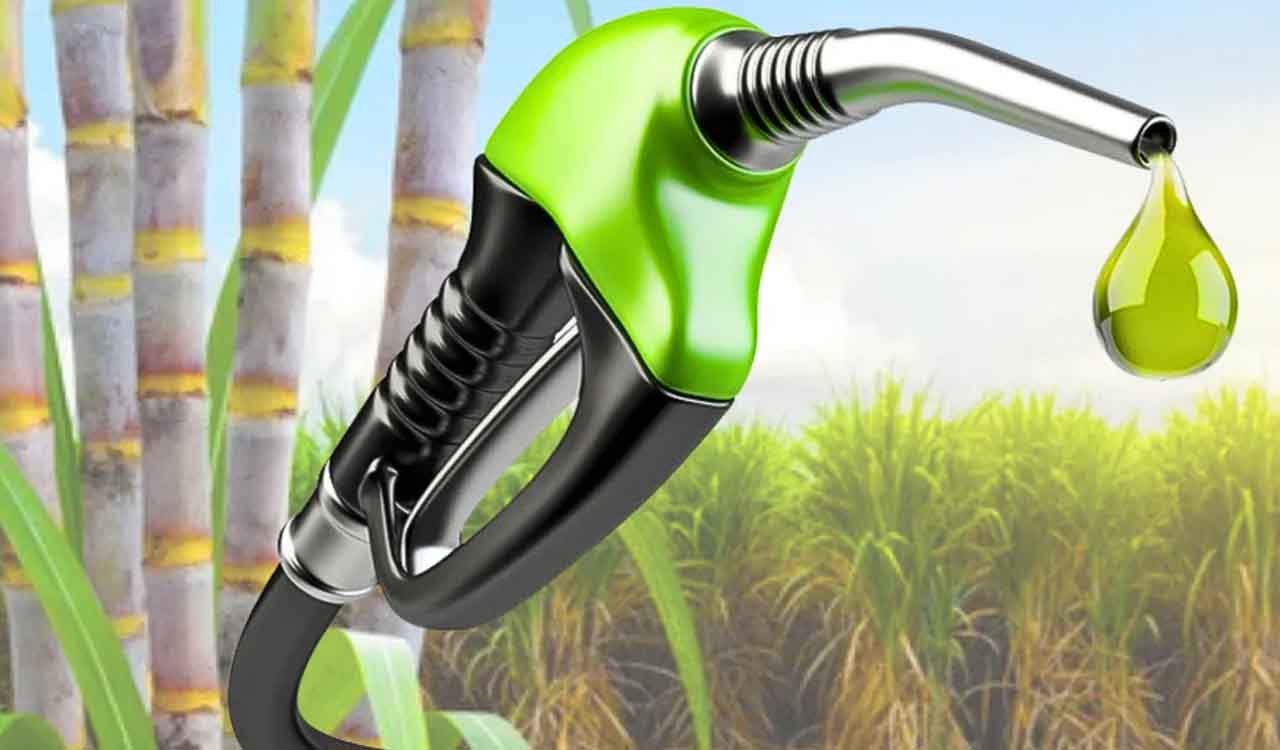
The ongoing war in West Asia has once again exposed India’s vulnerability in the energy sector, as nearly 85% of the country’s crude oil requirements are met through imports. Any disruptions in oil supplies due to global conflicts can trigger shocks at home, as the latest fiasco in the Strait of Hormuz has shown. Though Iran has permitted India-bound ships to pass through the key route for now, things can turn precarious at any moment amid an escalating conflict. It is time India explored alternative solutions to reduce its dependence on imports. One effective way to tackle this crisis is to significantly step up ethanol blending as part of a policy to diversify fuel sources. As a renewable alternative, ethanol can diversify India’s fuel basket while helping reduce the carbon footprint of the transport sector. Ethanol is produced domestically, burns cleaner than conventional petrol, and carries a naturally high-octane rating that improves fuel stability. Over the past decade, India’s ethanol programme has reduced crude imports, saved more than Rs 1.40 lakh crore in foreign exchange, and created new demand for crops such as sugarcane and maize. It has also encouraged investments in rural bio-refining infrastructure and bolstered the link between the energy market and farm output. For an economy exposed to volatile global oil markets, exploring alternative fuel sources makes economic sense. Domestically produced biofuels can curb reliance on imported crude, provide a buffer against supply shocks, and create revenue streams for rural communities.
At present, India is implementing the E20 fuel policy — blending 20% ethanol with fuel. The government must work with the auto industry and oil marketing companies to gradually increase the ethanol blending mandate from 20% to 30% and incentivise the production of flex-fuel vehicles that can run on 100% hydrous ethanol. Fuel stations, too, should have separate dispensing units for E30 and E100 fuels, while the choice should be left to consumers. There is also a need to revisit taxation. Currently, ethanol is covered under the Goods and Services Tax (GST) regime. Ethanol used for blending with petrol attracts 5% GST. But petrol remains outside GST, attracting both Central excise duty and State value-added tax. Both ethanol-blended petrol and pure petrol are treated identically for taxation purposes. All fuels blended with ethanol can be brought under GST. The latest oil shock presents an opportunity for India to revisit and review its existing ethanol blending programme. The government should also nudge companies to provide conversion kits to modify existing vehicles for flex-fuel compatibility and enable them to run on higher ethanol blends. However, India needs further upgrades to its infrastructure before it can accelerate its ethanol blending programme. Biofuel industry leaders are now pushing for measures such as tax reductions, flex-fuel vehicle incentives and carbon credits to stimulate demand and support further expansion of the sector.