US President Donald Trump will travel to China on May 14–15 for a rescheduled summit with President Xi Jinping, following a delay caused by the ongoing Gulf conflict. The White House confirmed that First Lady Melania and Peng Liyuan will also participate in reciprocal visits later this year
Published Date – 26 March 2026, 01:00 AM
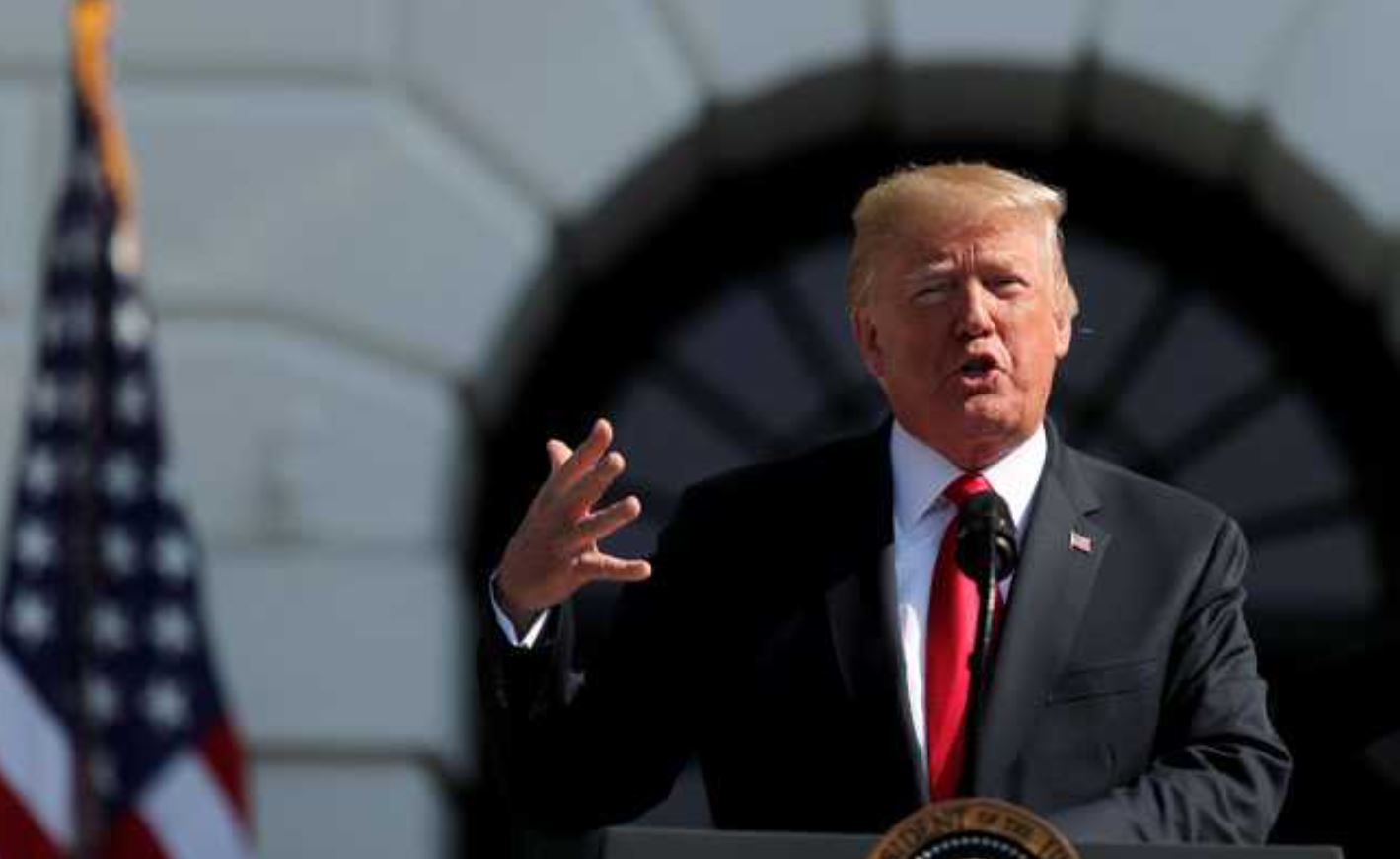
Washington: US President Donald Trump will travel to China on May 14 and 15 for a rescheduled summit with his Chinese counterpart Xi Jinping, the White House announced on Wednesday.
Trump, who was earlier scheduled to travel to Beijing by the end of this month, postponed his trip due to the war in Iran.
Announcing Trump’s “long-awaited” trip to China, White House Press Secretary Karoline Leavitt said the US president and First Lady Melania will also host President Xi and his wife, Peng Liyuan, for a reciprocal visit to Washington DC at a later date this year.
Responding to a question if the two leaders spoke about the conclusion of the war as a precondition to reschedule this meeting, she answered there was no discussion about the rescheduling of the meeting between the president and Xi.
“President Xi understood that it’s very important for the president to be here throughout the region right now. He understood, obviously, the request to postpone and accept it, which is why we have a meeting,” Leavitt said.
Asked if the war would conclude by the time of the meeting in May, Leavitt said, “Again, as I’ve said, we’ve always estimated approximately four to six weeks.” Trump and Xi last met in person in October on the sidelines of the APEC summit in Busan, South Korea.
Trump said last week while meeting with Irish Prime Minister Michel Martin in the Oval Office that he would be going to China in five or six weeks’ time instead of at the end of the month. He said he would be rescheduling his trip to China.
“We’re working with China, they were fine with it,” Trump said. “I look forward to seeing President Xi. He looks forward to seeing me, I think,” he added.
The US-Israel launched a joint attack on Iran on February 28 and the retaliation by the Islamic nation extended the war to the entire Gulf region.
The US and Israel attack killed Iran’s Supreme Leader Ayatollah Ali Khamenei. The joint strikes came after days of build-up, with Trump ramping up the pressure on Tehran to agree to a new deal on its nuclear programme.
The conflict has also taken a major toll on energy supply chains, especially across the Strait of Hormuz.