
In an illegal move that goes beyond all international norms, the President of the United States has announced, by setting a bold deadline, that if the situation in the Strait of Hormuz does not change, Iran’s vital electricity infrastructure will be targeted by military attacks. This threat, which clearly constitutes aggression and a war crime against an independent country and a member of the United Nations, is considered a dangerous step toward expanding insecurity in West Asia.
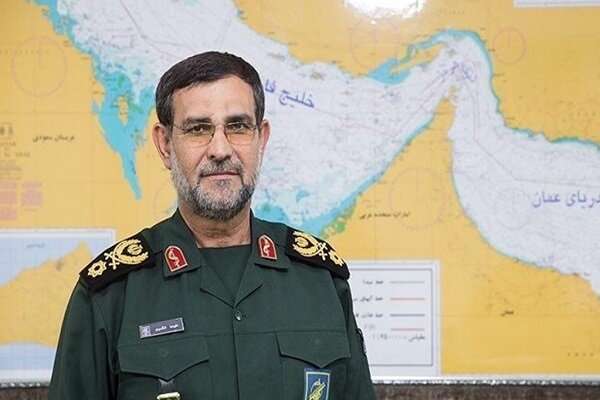
The Islamic Republic of Iran has always demonstrated that while remaining committed to regional stability, it will never remain silent in the face of threats and violations against its national interests. The firm and timely response of the spokesperson for Khatam al-Anbiya Central Headquarters to this threat reflects an undeniable reality: any attack on Iran’s fuel and energy infrastructure will be met with a symmetrical, intelligent response many times beyond the enemy’s red lines. This strategic warning emphasized that as soon as the country’s vital facilities are attacked, all energy infrastructure, information technology facilities, and desalination plants belonging to the United States and the Zionist regime in the region will fall within the range of Iran’s crushing response.
This confrontation establishes a new strategic balance in regional equations. A precise analysis of this warning shows that the Islamic Republic of Iran, relying on its indigenous capabilities and unparalleled deterrent power, has made its enemies understand that the era of one-sided threats and the immunity of the enemy’s sensitive centers in the region has come to an end.
America in the Trap of Miscalculation
History has shown that reliance on threats and deadlines against the Iranian nation has always been the most unsuccessful option. If the United States and its regional allies believe they can bring the country to its knees by bombing Iran’s infrastructure facilities, they have fallen into the greatest strategic mistake in their contemporary history. Iran today ranks among the world’s leading powers in terms of defense capability, intelligence in the cyber battlefield, and drone and missile power.
The field reality is that the infrastructure of the United States and the Zionist regime in the region is highly vulnerable due to its dispersion and non-public nature. The countries of the Persian Gulf region, some of which are in one way or another known as bases or strategic partners of the United States, must understand that becoming a platform for aggression against Iran will expose them to irreparable losses. Massive oil and gas facilities, solar farms, vital data centers and desalination plants that sustain the economic life and livelihoods of several Arab countries all fall within the range of Iran’s precise and advanced weapons.
Iran; Architect of Active Deterrence
One of the key points in Iran’s response is intelligence in target selection. Declaring readiness to target “information technology” infrastructure demonstrates the depth of transformation in Iran’s defense strategy. In today’s world, paralyzing communication networks and data centers is far more crippling than conventional attacks. By demonstrating this level of readiness, Iran proves that in hybrid and cyber warfare it possesses capabilities that can fundamentally disrupt the enemy’s digital economy and urban management in the region.
The Islamic Republic of Iran has always emphasized the principle of “sustainable regional security,” but this principle does not mean that it will bear the cost of regional stability alone. Any destabilization by the United States is equivalent to pouring gasoline on a fire that will also engulf its own allies. Iran’s response to aggression will not be limited to a specific time or place, and the enemy must understand that any calculation for a limited and controlled war with Iran is a dangerous illusion.
The Heavy Costs of Infrastructure War
If the United States repeats its miscalculation and commits such a crime, not only Iran but the entire global energy market will face an unprecedented shock. The Strait of Hormuz, as the world’s main energy artery, will be the center of this confrontation. In such a scenario, the United States and its European allies will suffer more than any other actor, because the energy supply chain and the fragile Western economy are heavily dependent on the stability of this region.
On the other hand, world public opinion and even American citizens know well that launching an all-out war against Iran means opening the door to a catastrophe for which no endpoint can be imagined and no boundary can be defined. Iran, relying on the experience of the eight years of Sacred Defense and remarkable progress in military and technological fields, has shown that under the harshest conditions of sanctions and threats, it not only does not retreat but also retains the power of maneuver and initiative.
Overall, the Islamic Republic of Iran has clearly declared through its official military and diplomatic channels that its non-negotiable red line is its vital facilities and national infrastructure. Any attack on these red lines will be met not with warnings and threats, but with a practical, precise, and reciprocal response.
The explicit statement by Khatam al-Anbiya Central Headquarters is a crushing response to those who believe they can weaken the will of the Iranian nation through assassinations and threats against infrastructure. The future course of the region depends on the United States correctly understanding the new equations of power. The Iranian nation is united and prepared to defend its sovereignty, and its response will be so painful, extensive, and regret-inducing that the United States and its regional agents will remember this fatal mistake for generations.
MNA