
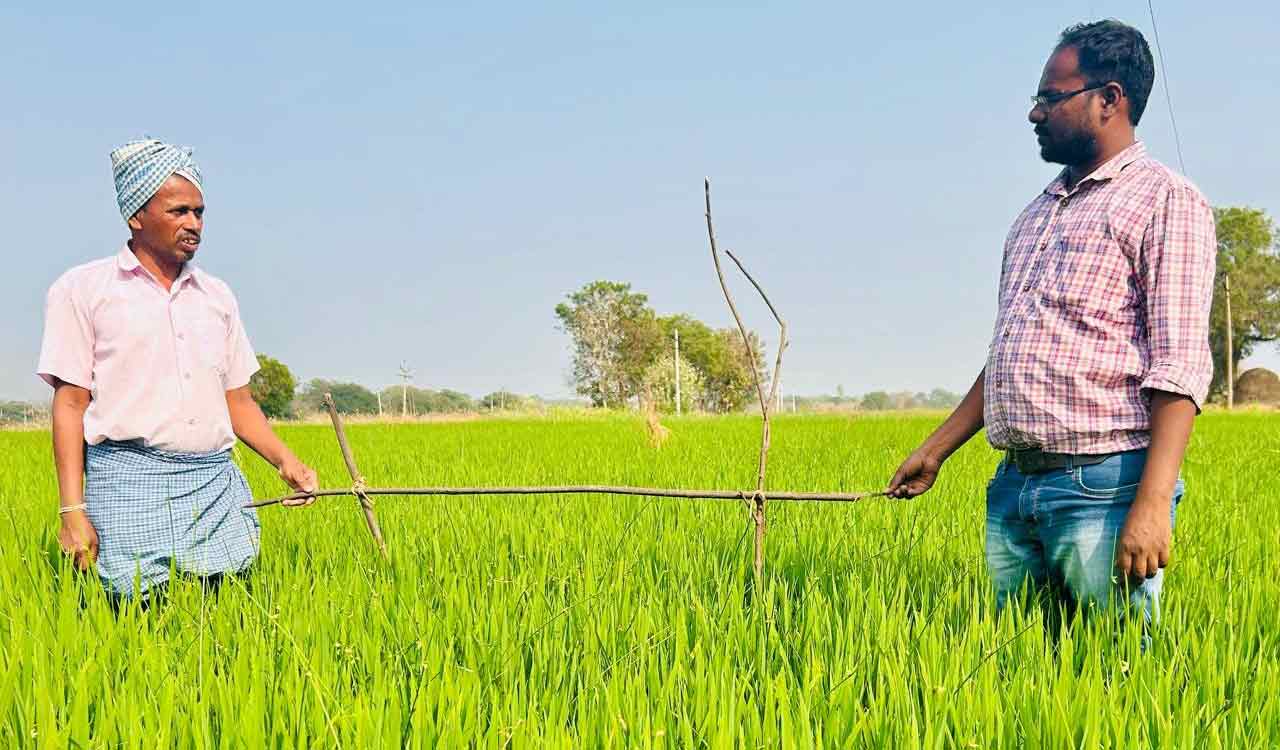
Farmers in Telangana are installing wooden perches in paddy fields to attract birds that feed on crop pests. The practice, encouraged by agriculture officials and highlighted in a viral farming vlog, could reduce pesticide use and promote eco-friendly farming.
Published Date – 12 March 2026, 04:27 PM
Siddipet: Birds once played a significant role in naturally controlling pests in crop fields. However, indiscriminate felling of trees has driven birds away from farmlands, contributing to a rise in pest attacks on crops.
Monoculture practices have also added to the problem, with paddy becoming the dominant crop in most areas. While farmers earlier retained a few trees in dryland crop fields, most trees in paddy fields were cut down as tree cover was believed to affect crop growth. In the absence of trees, birds found few places to perch in paddy fields except overhead electric lines. As a result, only crows, Indian rollers and a few raptors were commonly seen sitting on them.
To address the issue, some farmers have begun erecting wooden sticks in the middle of paddy fields, providing birds with convenient perches from which they can feed on pests. The installation of more such low perches is expected to attract a wider variety of birds into the fields.
Agriculture Extension Officer of Yellareddypet in Thoguta mandal, Talari Nagarjuna, has encouraged several farmers to install these perches in their paddy fields. Since birds may also feed on paddy grains, Nagarjuna advised farmers to remove the perches during the final month of the crop cycle. Apart from paddy fields, the agriculture officer has also urged farmers to install perches in fields of green gram and other pulse crops.
Farmer Suresh from Yadadri-Bhongir district, who runs a farming vlog, recently posted a video explaining the practice. The video went viral on social media and has attracted over four million views. Suresh said the practice can reduce the use of pesticides and limit farmers’ exposure to harmful chemicals. According to him, birds feeding in the fields prey on pests such as stem borers, brown plant hoppers, leaf folders, gall midges and several others.