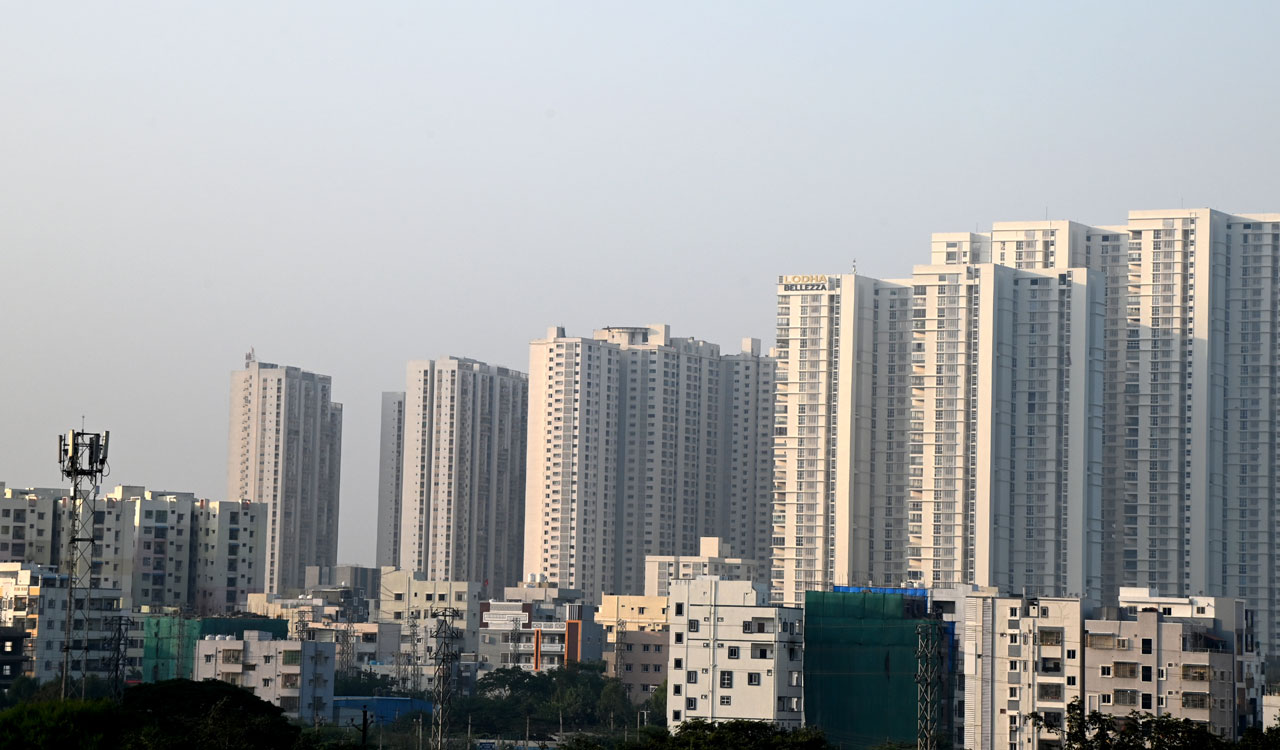
Telangana’s real estate sector, especially in Hyderabad, has faced a prolonged slowdown over the past two years. Industry stakeholders cite policy uncertainty, administrative decisions and global headwinds as key reasons behind declining housing sales, new launches and office space demand.
Published Date – 4 March 2026, 06:16 PM
Hyderabad: Over the last two years, the real estate sector across Telangana, particularly in Hyderabad, has been under pressure. Industry stakeholders say the slowdown in the State has been compounded by administrative decisions and policy reversals of the Congress government, which have unsettled both developers and buyers.
While factors such as the broader economic slowdown, weak demand, uncertainty in the IT sector and global headwinds have affected sales in some other major cities as well, builders argue that in Telangana, governance-related uncertainties have added to the strain. More than two years after the Congress assumed office, the sector is yet to regain the momentum it enjoyed earlier.
From the outset, developers contend, confidence was dented by a series of actions and announcements. The HYDRAA demolitions in several areas, demolitions along the River Musi banks, land acquisition notifications and the protests that followed created apprehension in the market. Enquiries began to decline and sales slowed, as prospective buyers adopted a cautious approach.
The cancellation of the proposed Pharma City further added to the uncertainty, with stakeholders claiming that repeated changes in stance kept the market on edge. Chief Minister A Revanth Reddy’s announcement of constituting a committee on districts reorganisation, followed by a clarification that the government was neither abolishing existing districts nor creating new ones, fuelled confusion. The initial proposal had drawn sharp reactions from various sections, particularly over employment concerns, prompting the subsequent clarification.
Soon after, the government announced the division of the Greater Hyderabad Municipal Corporation into three corporations. The decision triggered opposition and the High Court issued notices to the State government after writ petitions challenged the move. Though such measures may not have an immediate, direct bearing on property transactions, they influence buyer sentiment. “Many prefer a wait-and-watch approach and take decisions only after assessing the implications. Ultimately, transactions slow down,” a member of CREDAI Telangana said.
At a time when global conditions were not encouraging, NRIs were deferring investment decisions and IT employees were facing job uncertainty, the government ought to have adopted a proactive and reassuring approach, the member added.
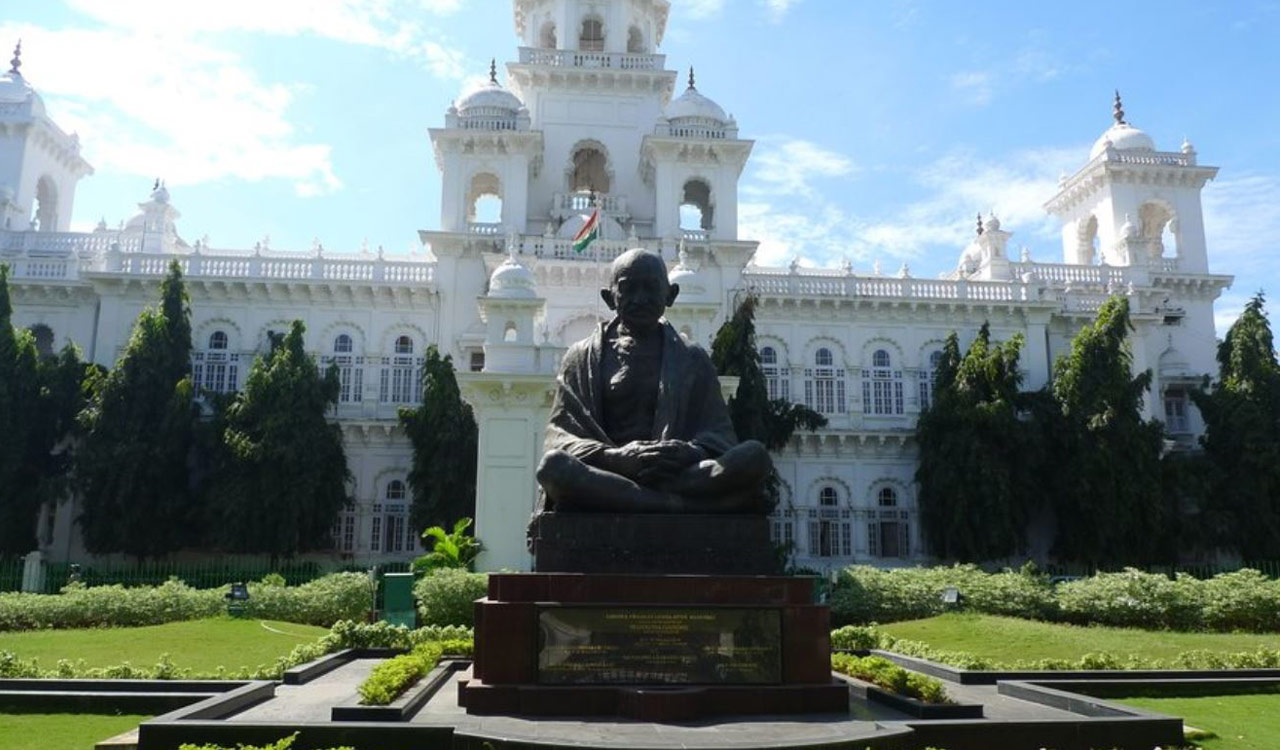
The controversy surrounding the proposed Gandhi Sarovar project and stiff opposition from apartment owners near Madhu Park Bridge is seen by some as reflective of the prevailing uncertainty. The government has proposed establishing a towering statue of Mahatma Gandhi and developing allied facilities by demolishing certain structures and acquiring land, at an estimated cost of Rs.5,000 crore. The project has drawn criticism, including from Mahatma Gandhi’s great grandson Tushar Gandhi.
Data released by leading real estate consultancies underscore the slowdown. According to Anarock Group’s Q3 2025 overview, Hyderabad added approximately 8,630 housing units in the third quarter of 2025, compared to 13,890 units during the same period in 2024, marking a 38 per cent year-on-year decline in new supply. In December 2025, Anarock reported that housing sales across India’s seven major cities fell 14 per cent in 2025 to 3.96 lakh units, even as total sales value rose 6 per cent to Rs.6 lakh crore. In Hyderabad, residential sales declined 23 per cent to 44,885 units from 58,540 units.
On the commercial front, Hyderabad recorded the highest office space vacancy rate among the top seven cities. Anarock noted that Mumbai Metropolitan Region and Hyderabad were the only cities to witness a drop in new office supply in 2025, by 35 per cent and 39 per cent respectively. Hyderabad added around 9 million square feet of new office space in 2025, compared to 12.88 million square feet in 2024.
Knight Frank India reported in August 2025 that residential property registrations in Hyderabad fell 30 per cent year-on-year, with 6,128 sales registered in July 2025 against 8,781 in July 2024, although it attributed part of the decline to a high base effect. The trend persisted, with Knight Frank stating in February 2026 that registrations in January 2026 declined 14 per cent year-on-year and the total value of homes registered fell 16 per cent, largely driven by a dip in transactions in the above Rs.1 crore segment.
JLL’s Hyderabad Mass Residential Market Dynamics Q4 2025 report showed that sales declined quarter-on-quarter, with around 8,300 homes sold in Q4 2025, while launches fell 30.8 per cent year-on-year in 2025. Capital values continued to rise, though at a relatively moderate pace.
Despite these headwinds, sections of the developer community maintain that market conditions are stabilising and express confidence that the sector will return to growth. Yet, for now, a combination of external pressures and policy uncertainty appears to have cast a long shadow over Telangana’s real estate landscape.