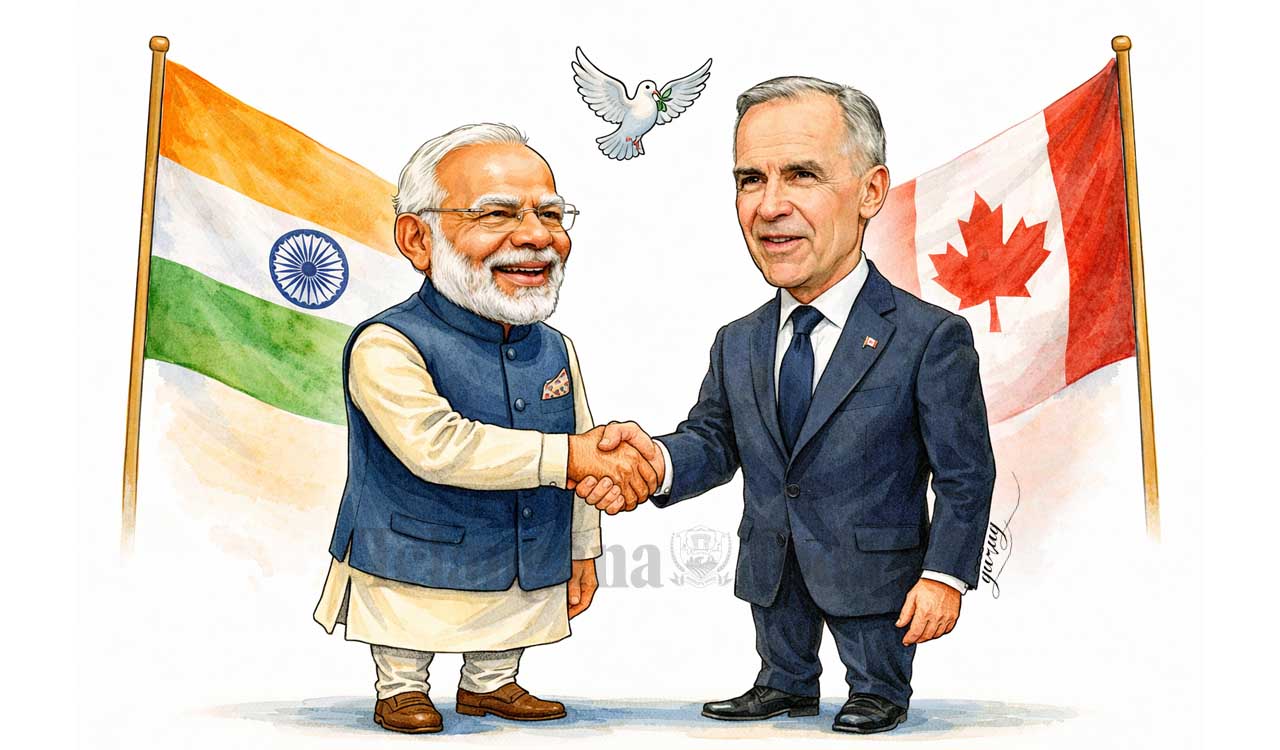
Mark Carney’s India visit stood out for both symbolism and substance, particularly against the backdrop of diplomatic tensions in the recent past
Published Date – 5 March 2026, 12:32 AM
Putting the bitterness of the past firmly behind them, India and Canada have brought the bilateral ties back on track and set their eyes on what looks like a bright future for both countries. Canadian Prime Minister Mark Carney’s recent visit to India gave a boost to the bilateral efforts to move beyond the acrimony that had crept into the relationship during his predecessor Justin Trudeau’s tenure. Carney and Prime Minister Narendra Modi had fruitful talks that culminated in the signing of a landmark $2.6-billion uranium deal, a win-win proposition for both. The two leaders have reaffirmed their commitment to seal the Comprehensive Economic Partnership Agreement by the year-end. Carney’s visit was remarkable in terms of both optics and substance, particularly against the backdrop of diplomatic tensions in the recent past. There has been a sincere effort to reset the ties that have been strained since 2023 when Trudeau made unsubstantiated allegations linking Indian agents to the killing of a Sikh separatist leader Hardeep Singh Nijjar on Canadian soil. However, under Carney, Ottawa has sought to rebuild engagement with India amid tariff pressure from its largest trading partner, the United States. Modi and Carney have agreed to cooperate in areas like critical minerals, clean energy, space and higher education. The uranium supply deal is expected to bolster India’s energy security as it comes under pressure from America. The expanded economic partnership could also boost trade and investment between the two nations.
The uranium pact comes over five decades after the May 1974 peaceful nuclear explosion, which used fissile material from Canada’s reactors, following which the Western world had imposed sanctions on India. Bringing the focus back on strengthening economic relations, the two Prime Ministers have laid out an ambitious roadmap to increase bilateral trade from the current $13 billion to over $50 billion by 2030. They have also agreed to ramp up collaboration in cutting-edge sectors like artificial intelligence, small modular nuclear reactors and defence. It is clear that both countries are striving to safeguard their economic and strategic interests amid geopolitical uncertainties. This pragmatic approach is even more significant against the backdrop of the ongoing crisis in West Asia. Bilateral ties have taken a positive turn ever since Carney took charge a year ago. In a significant shift in its position ahead of Carney’s visit, the Canadian government has said that it believes India is no longer linked to violent crimes in Canada. Carney’s pragmatic approach towards India has helped in sending across an unambiguous message to anti-India elements that they cannot take Canadian freedom for granted to malign India. This is a welcome departure from the past when Trudeau kept peddling a false anti-India narrative. The first signs of a diplomatic thaw had surfaced in August last year with the two countries appointing new high commissioners in Ottawa and Delhi.