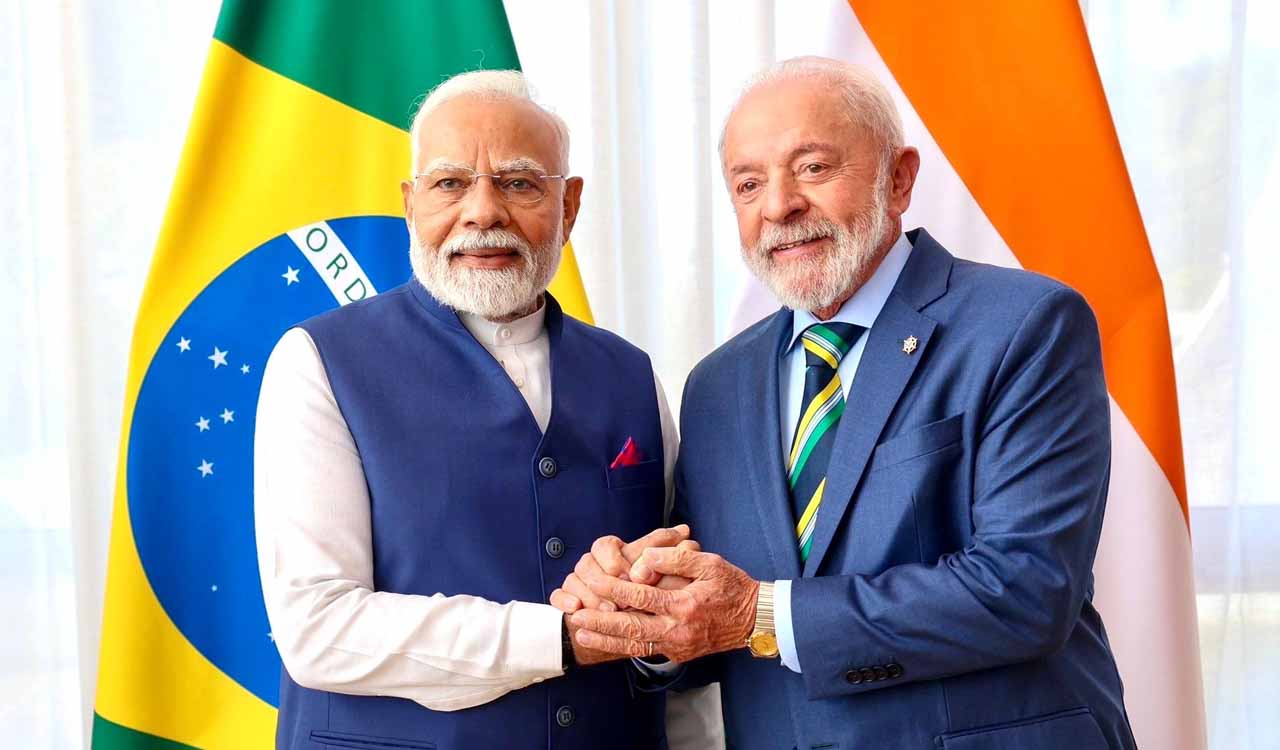
Brazilian President Lula da Silva’s visit to New Delhi underscored a strong commitment by two of the largest democracies in the Global South to strengthen bilateral trade, critical minerals cooperation, and long-term strategic ties beyond symbolic diplomacy
Published Date – 3 March 2026, 12:19 AM
Brazilian President Luiz Inácio Lula da Silva’s recent visit to India marked a key moment in the evolution of bilateral ties that went beyond optics. The substantive outcome of the trip, which saw a string of bilateral agreements signed, reflected a commitment by two of the largest democracies in the Global South to move beyond rhetorical solidarity and craft a structured, forward-looking partnership. The signing of a Memorandum of Understanding (MoU) on rare earths and critical minerals is a very significant development at a time when India is looking to reduce dependence on China. The India-Brazil joint statement, following a meeting between Lula da Silva and Prime Minister Narendra Modi, made it clear that the two countries were keen to work together across the full mineral value chain, including exploration, mining, processing, recycling, and refining. New Delhi is seeking new suppliers of rare earths to not only curb dependence on China but also to support capacity expansion amid a global race for raw materials. Brazil is the second-largest producer and exporter of iron ore and holds large reserves of minerals critical for making steel, demand for which is growing in India amid rapid infrastructure expansion. Bilateral cooperation is expected to focus on attracting investment in exploration, mining and steel sector infrastructure. Brazil is estimated to have 21 million tonnes of rare-earth oxide equivalent, 2.7 billion tonnes of bauxite, 270 million tonnes of manganese, and 0.4 million tonnes of lithium. The latest agreement with Brazil on critical minerals follows recent supply chain engagements with the United States, France and the European Union.
The timing of the Brazilian President’s visit is crucial, as it came in the midst of geopolitical uncertainties with developing countries navigating the aftershocks of aggressive tariff regimes imposed by the Trump administration. Both India and Brazil have faced tariff pressures, exposing the vulnerability of export-dependent sectors and the risks of overreliance on traditional Western markets. In this context, the decision to set an ambitious bilateral trade target of $30 billion by 2030 is strategically significant. Bilateral trade, which crossed $15 billion in 2025 with a notable growth rate, is now being framed as a pillar of economic resilience. By committing to reduce non-tariff barriers, expand the India-MERCOSUR Preferential Trade Agreement, and facilitate electronic certificates of origin, both sides are signalling seriousness about structural trade reform. A total of nine MoUs, covering digital infrastructure, micro, small and medium enterprises and the steel sector, were signed. Brazil, the largest trading partner in Latin America, is a major iron ore producer, with reserves of manganese, nickel and niobium. The agreement on rare earths and critical minerals could help Brazil attract Indian capital and buyers into Brazilian projects, which can make new mines and processing plants easier to finance. It suits Brazil’s goal to move up the value chain rather than just explore raw ores.