A key risk arising from the current political vacuum in Iran is that the militant Islamic Revolutionary Guards Corps may take over
Published Date – 2 March 2026, 01:12 AM
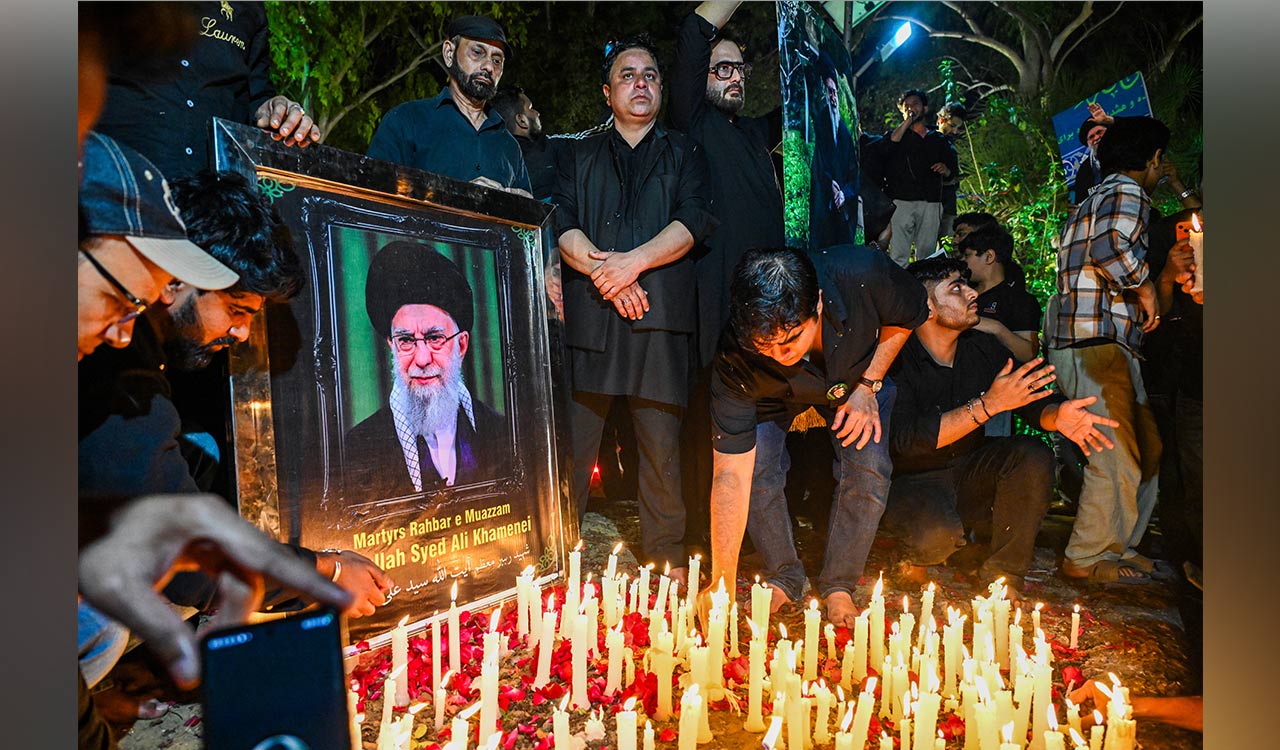
An already volatile Middle East region has waded into an uncharted territory of utter chaos and political vacuum following a joint blitzkrieg by the United States and Israel targeting Iran. The death of Ayatollah Ali Khamenei, the Iranian supreme leader who ruled the theocratic country with an iron fist for nearly 37 years, in the military strikes marked a seismic political shift that raises disturbing questions over the future of not just Iran but of the wider region caught in turbulence. Along with Khamenei, a hard-line cleric who turned Iran into a symbol of brutal state repression and ruthlessly crushed mass uprising, the country’s defence minister, chief of the armed forces and several senior leaders were killed in the attacks. The retaliatory strikes that followed have been massive and unprecedented in scale, spreading across at least six neighbouring countries, including the United Arab Emirates, Qatar, Bahrain, Jordan and Kuwait — all of which host American military bases. The Dubai International Airport, too, has been targeted in a wave of ballistic missile attacks. The fighting effectively shut down shipping through the Strait of Hormuz, the conduit for one-fifth of the world’s oil supply, raising fears over an imminent rise in oil prices. Major airports in the region have been closed. The sudden escalation of the conflict means that the recent nuclear diplomacy, brokered by Oman and Switzerland, has totally collapsed. By targeting symbols of government alongside military assets, the US-Israeli coalition is signalling a shift from containment toward active regime change.
A section of Iranians may have hit the streets celebrating the fall of Khamenei, but such a fallout is no justification for the military campaign against a sovereign country. It is ironic that US President Donald Trump, who had vowed in the past not to attack any country, opted for a military campaign to effect regime change in a country that did not pose any immediate threat to America. Iran was nowhere close to ‘weaponising’ its nuclear material so as to justify the US attack. It was an act of recklessness on the part of Trump to make an appeal to Iranians to “take back their country”. When Trump ran for president in 2024, he boasted of starting “no new wars”. Barely a year later, Trump is racing to topple foreign regimes. The self-declared ‘President of peace’ has now chosen to become the President of war after all, unleashing the full power of the US military on Iran with a clear goal of toppling its government. It is clear that American leaders have not learnt any lessons from their past military misadventures in Iraq, Afghanistan and Libya. A key risk arising from the current political vacuum in Iran is that the militant Islamic Revolutionary Guards Corps may take over. The Middle East region has a turbulent history of periods of political instability, becoming a breeding ground for terrorism.