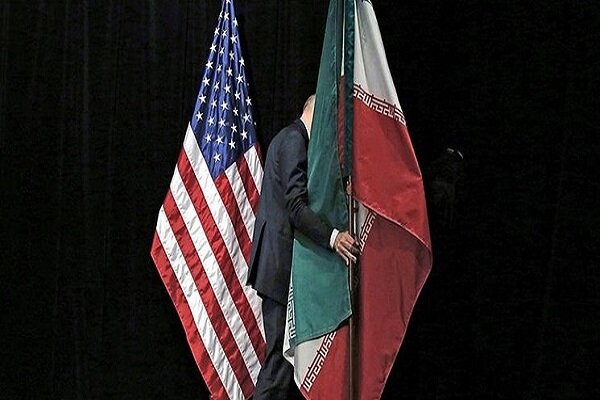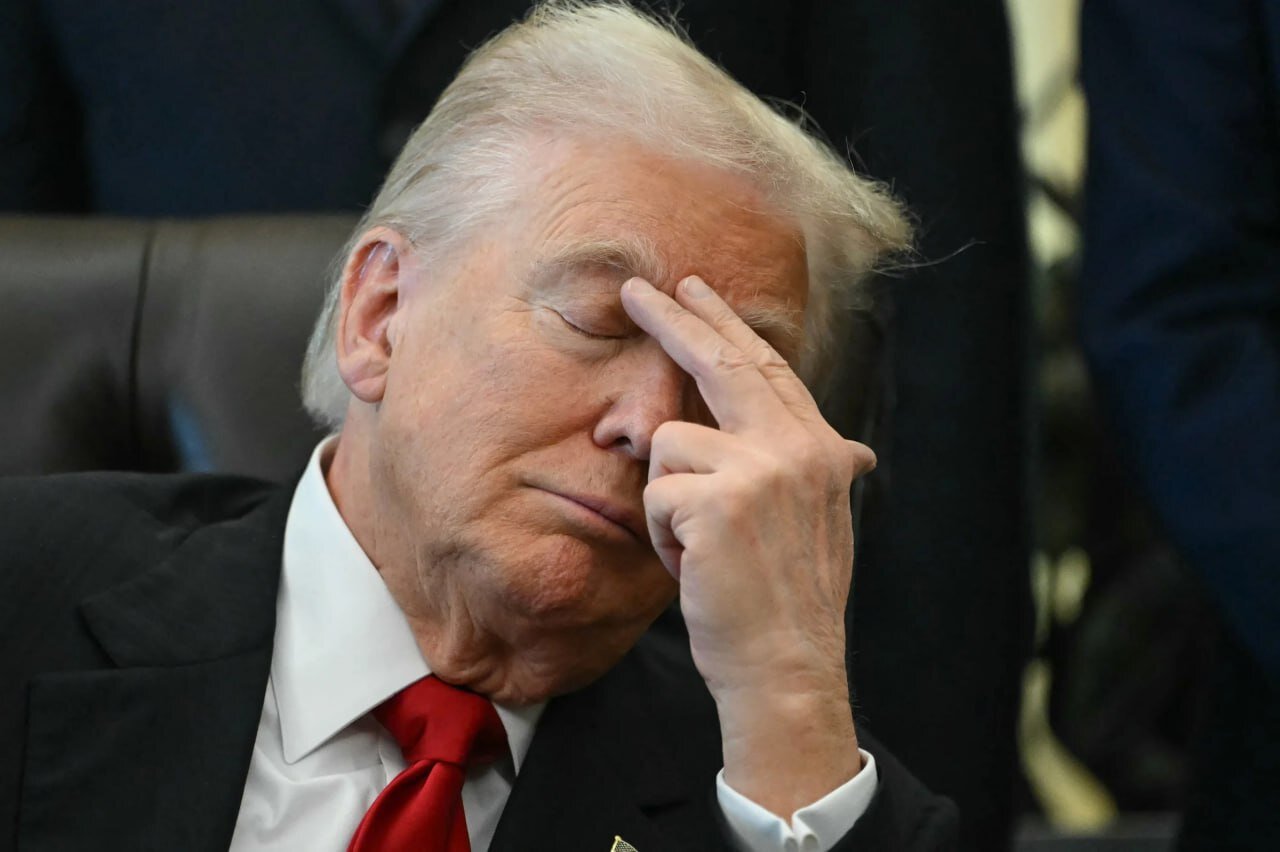
He positioned himself against the former politicians who dragged America into the quagmire of Iraq and Afghanistan, promising voters weary of the human and financial costs of war that his priority would be America’s national interests, not foreign adventures. Now, the same president, with the same social base, has threatened a military attack on Iran. The important point is that the demands of Trump’s war-mongering team are at odds with the main demands of public opinion in the United States. The latest polls in the United States show that the people of this country strongly oppose the option of war against Iran, and this opposition is so deep that it has even engulfed the traditional Republican base.
To understand the depth of the American public’s opposition to a war against Iran, we need only look back. According to a Gallup poll, when then-President George W. Bush invaded Iraq in 2003, 72 percent of Americans supported that war. The Bush administration’s extensive propaganda about weapons of mass destruction and the threat of Saddam Hussein was able to sway public opinion. Now, if Trump wants to start a war with Iran, he will have a very complicated situation at home. The latest poll by the SSRS Institute and the University of Maryland, conducted between February 5 and 9, 2026, shows that only 21 percent of Americans support a military attack on Iran, and 49 percent are clearly opposed. 30 percent have no clear opinion. These figures, compared to 72 percent support for the Iraq war, show an unprecedented drop in American public opinion and indicate that the bitter memory of past wars has not yet been erased from people’s minds.
Even among Republicans, the backbone of Trump’s vote, there is no consensus for war. According to the same poll, only 40 percent of Republicans support attacking Iran, while 25 percent oppose and 35 percent are undecided. This means that Trump’s social base is deeply divided on the issue. This aversion to war among Republicans suggests that even Trump’s most loyal supporters are unwilling to pay the price for a new military adventure.
The results of the Associated Press-NORC Public Affairs Research Center (AP-NORC) poll conducted between February 19 and 23, 2026, show that about half of American adults, 48 percent, are “very” or “extremely” concerned about Iran’s nuclear program as a direct threat to their country. This statistic shows that Iranophobia still exists among Americans and that they take Iran’s nuclear program seriously. But the important point here is that the same poll emphasizes that only about 30 percent of people trust Trump’s judgment in using military force. More than half of Americans trust him “only a little” or “not at all” in this area. This distrust is even seen among young Republicans under 45, where only about half of them trust Trump’s decision-making to use military force, while the figure is about two-thirds among older Republicans. These statistics show that the new generation of Republicans, like Democrats, are skeptical of the judgment of their leaders.
The Economist and YouGov poll, conducted between January 30 and February 2, found that 48 percent of Americans oppose military action against Iran, while only 28 percent support it. That is, 72 percent of Americans either oppose it or are undecided. The results of a Quinnipiac University poll conducted between January 8 and 12 also showed that 70 percent of Americans believe that the United States should not interfere in Iranian affairs, while only 18 percent support intervention. The poll was conducted a week after Trump said that the United States would be “ready and armed” if Iran killed peaceful protesters, but people did not agree even with the justification that the intervention was being carried out in support of the protesters.
In addition to the polls, prominent figures in Donald Trump’s base have also explicitly opposed any attack on Iran and any foreign military adventurism in general. Steve Bannon, Trump’s former adviser and one of the main architects of the MAGA movement, has explicitly stated that one of MAGA’s core principles is opposition to endless wars. Marjorie Taylor Greene, a Republican representative and one of the popular figures in this movement, wrote on the social network X that foreign wars are putting America last, killing innocent people and bankrupting the country. She emphasized that millions of Americans voted on the promise of “America First” and that this is not our fight. Charlie Kirk, founder of the right-wing youth organization Turning Point, also warned that Trump voters, especially young people, supported him because he was the first president in their lifetime who did not start a new war and the last thing America needs is a new war.
On the other hand, Trump has also faced many challenges in the economic field. On February 21, 2026, the US Supreme Court ruled 6-3 that the extensive tariffs known as retaliatory tariffs against trading partners were illegal, ruling that the president had exceeded his authority. Chief Justice John Roberts emphasized that the president cannot unilaterally impose such tariffs. The ruling dealt a heavy blow to Trump’s economic plan and his promises to revive American industry. Trump, who had promised to bring factories back to America by imposing tariffs, has now lost his trump card in the run-up to the midterm elections.
There are also midterm elections in November 2026. According to the latest polls, Democrats have a better chance of winning the House of Representatives than Republicans. A February 9 Economist-YouGov poll showed 39 percent of voters favoring Democrats and only 31 percent of voters favoring Republicans. Prediction platforms such as PlayMarket also put the Democrats’ chance of winning the House of Representatives at 83 percent. Trump himself has warned Republicans that if the party loses control of Congress, he could be impeached. The average poll shows Trump’s approval rating at 42 percent and disapproval at 55 percent.
If Trump, ignoring public opinion and the warnings of his base, starts a war against Iran, the wave of public anger will be uncontrollable with the first heavy casualties and the return home of the coffins of American soldiers. The experience of the wars in Iraq and Afghanistan has shown that Americans take a strong stance against the government when they see images of the returned coffins. In such circumstances, not only will the midterm elections turn into a complete disaster for the Republicans, but Trump will spend the last two years of his presidency with a Democratic Congress and repeated impeachment campaigns. Democrats will use the opportunity to weaken Trump and face him with endless investigations and corrosive hearings.
Trump’s base (MAGA), which came to the polls with the slogan “No to War,” will never forgive an adventure that results in the deaths of young Americans. Public opinion, which today in the polls has declared its opposition resolutely, will take to the streets if war breaks out, exposing Trump to a wave of protests that could lead to his overthrow.
In addition to this domestic situation in the US, Iran has issued a stark warning that this time any attack will lead to a regional war and the aggressors will receive severe blows. Iranian officials have emphasized that Iran’s defense strategy is based on a reciprocal and regrettable response and that any miscalculation by Trump will be met with a swift and painful response. Trump is now faced with a situation where, in the event of any miscalculation, he will be taking a losing gamble not only with his political future but also with the future of the Republican Party.
MNA