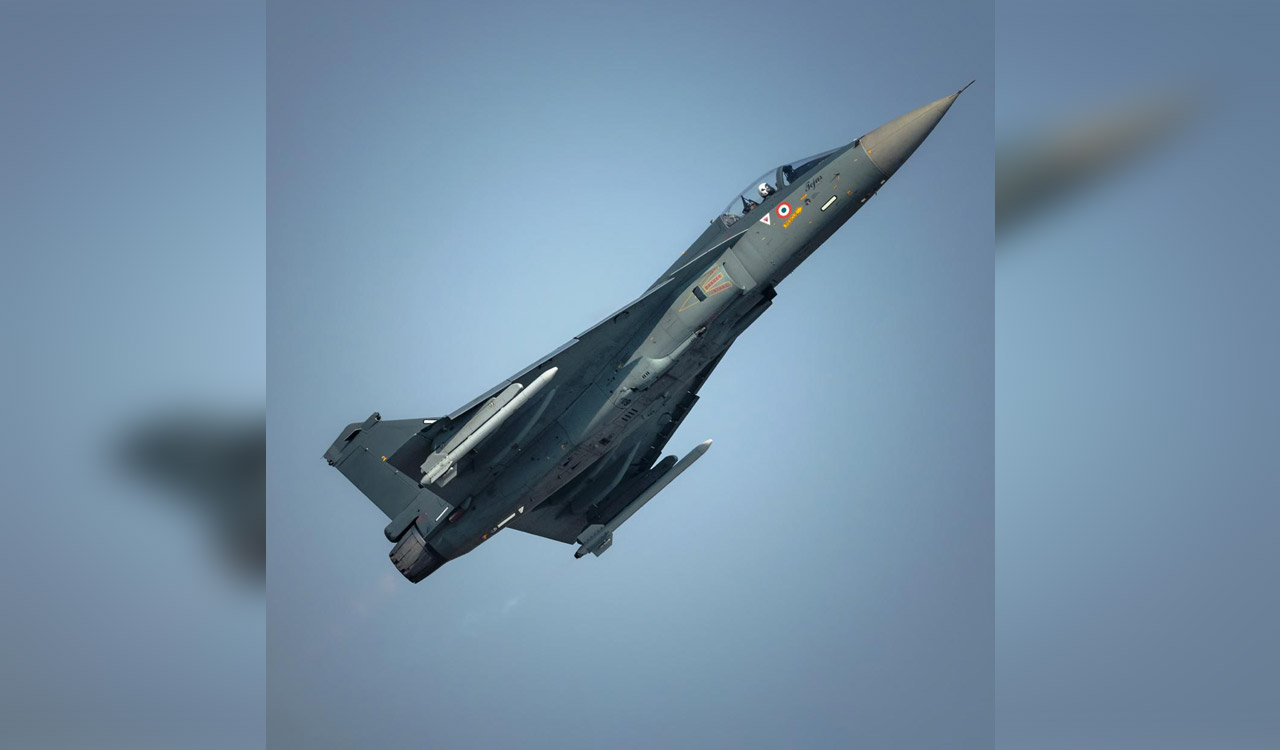
Grounding of the entire fleet of Tejas by IAF following a mishap is a sign of vulnerability of the indigenous fighter jet
Published Date – 26 February 2026, 12:12 AM
First came the inordinate delays in production and delivery, and now the technical vulnerabilities. There seems to be no end to the woes of Tejas Light Combat Aircraft, India’s indigenous fighter programme. A jet that took more than 40 years to make and repeatedly failed to meet the delivery timelines is bound to come under scrutiny. Now, the entire fleet of Tejas, a single-engine, multi-role fighter aircraft manufactured by public sector Hindustan Aeronautics Limited (HAL), has been grounded by the Indian Air Force (IAF) following a mishap earlier this month in which an aircraft overshot the runway at a frontline airbase. This is a sign of vulnerability of the indigenous fighter jet and needs to be thoroughly checked before putting the fleet back into action. The Tejas, inducted in 2016 to replace ageing MiG-21s, was meant to showcase India’s technological self-reliance in defence manufacturing. Yet this is the third accident in less than two years. A fighter jet crashed near Jaisalmer in March 2024; there was no fatality as the pilot ejected safely. In November 2025, a pilot lost his life after the Tejas he was flying went down during the Dubai Airshow. At a time when the IAF’s squadron strength has fallen well below the sanctioned 42, even a temporary grounding hampers operational readiness. The delivery of Tejas Mk-1A light combat aircraft — 180 of which have been ordered so far — is running way behind schedule, largely due to engine supply constraints.
HAL’s claim that the latest incident involving Tejas was a ‘minor technical issue’ is a reflection of complacent attitude. The fact that the IAF has ordered exhaustive checks — covering metallurgy, braking systems and onboard software — shows this is not a routine matter. Currently, there are 30 operational Tejas aircraft in service. If India’s quest to build a self-reliant aerospace ecosystem is to succeed, the latest setback must be treated as an opportunity to ensure timely delivery, tighten quality control and rebuild trust between manufacturers and operators. There should be no room for complacency, particularly in the present geopolitical environment where India is edged between two hostile neighbours. Attempts to downplay mishaps cannot eclipse the need for rigorous accountability and transparency. The future of indigenous air power depends on it. The string of setbacks came at a time when the HAL was making a foray into the international market, having convinced buyers in Africa, Southeast Asia and Latin America. The Parliamentary Standing Committee on Defence, in its report submitted in December 2024, wanted the Defence Ministry to sensitise HAL to augment production of Tejas so that the operational role of the Air Force is not affected due to depletion in squadron strength. The LCA saga holds hard lessons for the defence PSUs, which need to pull up their socks and step up their efficiency levels to meet the growing requirements of the armed forces.