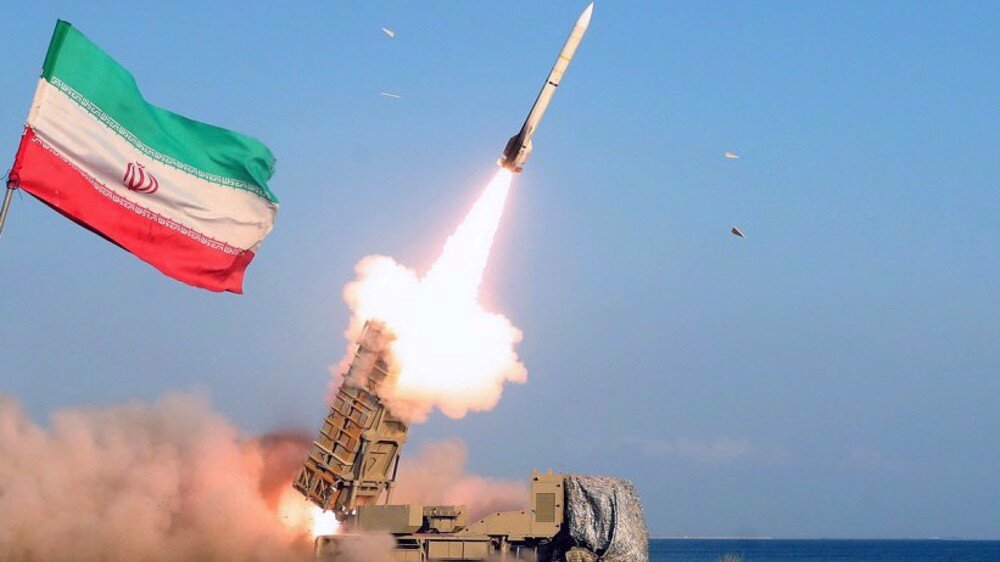
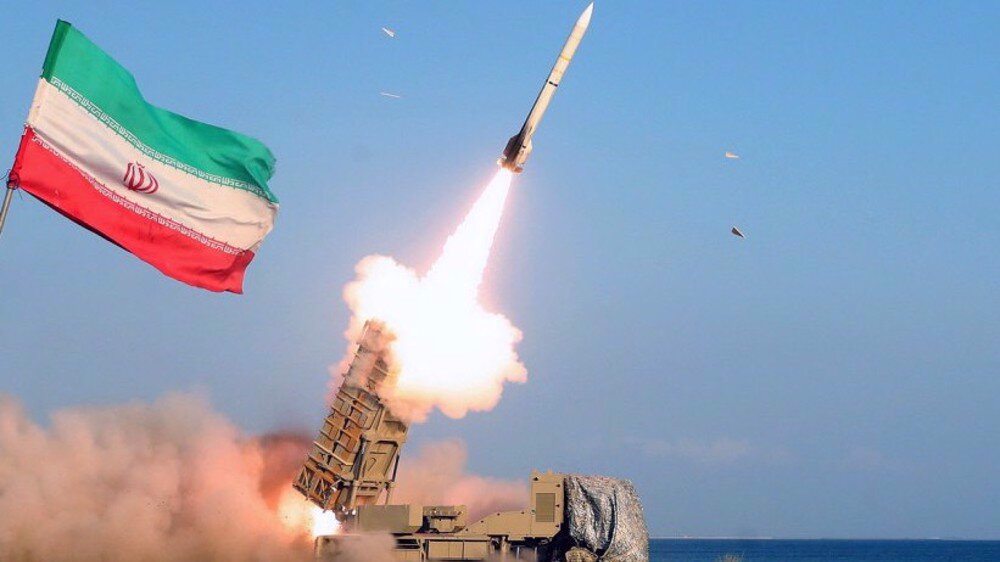
The issue of Iran’s missile capability and Tehran’s insistence that it is “non-negotiable” has become one of the most important topics of disagreement between Iran and the West in the recent years; ranging from the pressures of the Trump administration to the coordinated positions of the three European countries (UK, France and Germany). The main question is: “Why is Iran so resolutely unwilling to enter into negotiations about its missile capability?” The answer must be sought in the nature of the international system, Iran’s historical experiences, and the logic of survival in an unstable environment.
- The world without support and self-help system
In a realistic view of international relations, the world system is “anarchic”; i.e. there is no neutral and powerful authority that can guarantee a country’s security in the event of an attack. The United Nations and the UN Security Council (UNSC) have also shown in many crises that their decisions are subject to the will of powers with veto power. In such an environment, each country has to be responsible for its own security and survival.
Based on this logic, relying solely on the security promises of others can be costly and even deadly. The experience of countries that have relied on the political guarantees of great powers have been left alone at historical junctures and this issue has been a lesson for many governments. From this perspective, reducing military capabilities in an environment where threats are real and persistent is not seen as a sign of peace but as a form of strategic naivety.
- The Experience of War and Formation of Missile Doctrine
Iran’s insistence on maintaining its missile capability is deep rooted in a concrete and historical experience: the eight-year war with Iraq. During that period, Iran faced the most severe arms restrictions, while Saddam’s regime enjoyed widespread arms support. The barrage of missiles on cities, chemical attacks, and the silence of the international community left Iran with a bitter and lasting experience.
In those years, Iran did not have effective means of deterrence and counter-response. This defense vacuum changed the country’s strategic outlook. Decision-makers came to this conclusion that in the context of sanctions and distrust of foreign suppliers, it was necessary to move towards defense self-sufficiency. Since extensive modernization of the air force by purchasing advanced fighter jets was practically impossible due to sanctions and heavy costs, the development of indigenous missile capabilities was chosen as a practical, accessible, and less expensive option.
Missiles had several advantages from a strategic perspective: less dependence on foreign countries, lower maintenance costs than modern air forces, and the possibility of creating an effective deterrent. Thus, Iran’s missile program was a response to a serious security vacuum. A return to the defenselessness situation of the 1960s was not an option for Iran.
- Asymmetric deterrence in an unequal environment
Iran is located in one of the most tension regions in the world. The widespread military presence of the United States around Iran, huge arms purchases by some Persian Gulf littoral states, and Israel’s advanced military capabilities have created an unequal balance. Many of Iran’s regional rivals are equipped with the most advanced fighter jets, defense systems, and modern equipment.
In such circumstances, symmetric competition with this volume of weapons requires an astronomical budget and free access to the global arms market, which has not been possible for Iran due to sanctions. As a result, Iran has resorted to a strategy of “asymmetric deterrence”; i.e. the use of tools that can create an acceptable deterrent at a lower cost.
Missile power makes sense in this context. This power is designed to provide a counter-attack in the event of an attack, greatly increasing the cost of any military action against Iran. In the logic of deterrence, the goal is not to start a war, but to prevent it. The message of this approach is clear: any attack will be faced with a response.
From Tehran’s perspective, negotiating about the limitation of this capability, while the threats and weapons advantages of the other side remain intact, means tipping the balance to Iran’s disadvantage. In an environment of deep distrust, unilateral disarmament or severe limitation could lead to dangerous vulnerability.
- The issue of sovereignty and double standards
Iran insists that its missiles are conventional defensive weapons, not weapons of mass destruction. Under the international law, countries have the right to be equipped with conventional weapons for self-defense. As major powers and some regional countries have extensive missile and even nuclear arsenals, Iran sees the call to limit its missile capabilities as a case of double standards.
This sense of discrimination is tied to the issue of national sovereignty. Iran considers itself an independent country that has the right to decide on its defense structure. Accepting imposed limitations in the defense field means degrading the country’s status and accepting a kind of structural inequality in the international system.
In other words, the issue is not merely technical or military; it is linked to national dignity and political independence. Hence, missile capability is considered in official Iranian literature not just as a military tool, but also as a symbol of self-reliance and independence.
- The nuclear deal experience and concerns about slippery slope
One of the main arguments against missile negotiations is the experience of the nuclear deal. In that nuclear agreement, Iran accepted extensive restrictions, but with the US withdrawal from Iran’s nuclear deal, aka known as JCPOA, and the return of sanctions, deep distrust developed. This experience sent a message to many Iranian decision-makers that even major concessions do not guarantee the other side’s commitment.
From this perspective, there is concern about a “slippery slope”: if Iran negotiates today about the range or number of its missiles, tomorrow new demands will be raised: further reductions in defense capabilities, limiting regional influence, or changing political behavior. Thus, setting a clear red line is seen as a barrier to increasing pressure.
In such a framework, the negotiation of missile capabilities is seen not as a limited conversation, but rather as the beginning of a process that could lead to the gradual weakening of the country’s deterrent capability.
- Hard power as a support for diplomacy and economy
Realistically, diplomacy without the backing of hard power is not very effective. Negotiation is effective when the other side knows that you have the tools to pressure and respond. Missile power, from Iran’s perspective, strengthens the country’s bargaining position and prevents negotiations from being conducted solely from a position of weakness.
Moreover, security is a prerequisite for economic development. In a tense region, if critical infrastructure such as refineries, ports, and power plants are under direct and unaddressed threat, investment and economic growth will be severely damaged. Effective deterrence can reduce the likelihood of costly attacks and provide relative stability. Hence, defense spending, from the perspective of advocates of this approach, is a form of insurance for a country’s existence and economy.
Conclusion
Iran’s insistence on the non-negotiable nature of its missile capabilities must be analyzed within the logic of survival in a fragile international system. The experience of war, prolonged sanctions, distrust of external guarantees, and the unequal regional balance have all played a role in shaping this approach.
In this sense, missile capability is not merely a military tool; it is considered the backbone of deterrence and a guarantee of preventing possible adventures against the country. From Tehran’s perspective, reducing or limiting this capability in a situation where threats and military advantages of others persist is a major strategic risk.
Accordingly, the declared red line is the result of a security calculation: in a world where power is the ultimate determinant and moral guarantees have given way to the balance of power, maintaining defensive capability is the first condition for survival. In this analytical framework, missile capability for Iran is not a negotiable option, but an integral part of the national security architecture.
MNA