
A white paper released at the India AI Impact Summit 2026 states that 16 per cent of the world’s AI talent is of Indian origin. It adds that India could contribute nearly 20 per cent of incremental global GDP growth over the next 15 years
Published Date – 17 February 2026, 06:53 PM
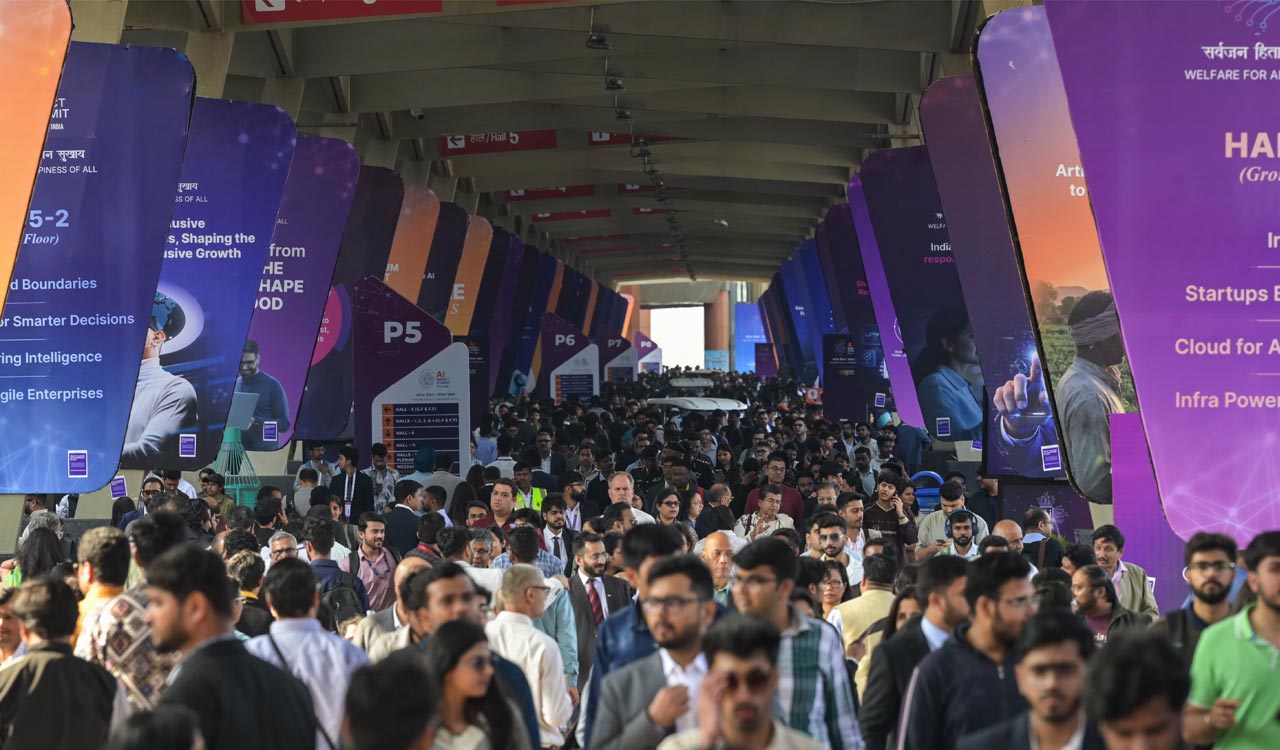
New Delhi: Almost 16 per cent of the world’s AI talent is of Indian origin, giving India an edge in global AI capability, a white paper showed on Tuesday. It added that India is projected to contribute nearly 20 per cent of incremental global GDP growth over the next 15 years.
The white paper, launched at the ‘India AI Impact Summit 2026’ here, marks a strategic effort to shift the national AI narrative from a narrow focus on automation and displacement to one centred on productivity expansion, institutional strengthening and equitable participation in the digital economy.
The white paper underscores a central idea: the next phase of growth will not be defined by access to AI, but by disciplined execution and large-scale institutional adoption. Based on a series of pre-summit multi-sector consultations with policymakers and key stakeholders, it presents a blueprint to power the next phase of jobs, productivity and inclusive growth, positioning India as a model for the Global South.
Titled “AI for All: Catalysing Jobs, Growth, and Opportunity,” the white paper was launched here by Prosus, a global technology company, in partnership with knowledge partner BCG and MeitY.
“India has built strong digital public infrastructure and nurtured one of the world’s largest pools of AI talent. The next phase of our journey is about translating these strengths into institutional capacity and measurable outcomes,” said Abhishek Singh, Additional Secretary, MeitY and CEO, IndiaAI Mission.
Analysing India’s Digital Public Infrastructure, including Jan Dhan, Aadhaar, UPI, Account Aggregator and ONDC, the white paper explains how AI can be institutionalised responsibly and scaled across emerging economies, positioning India as a model for the Global South.
“AI must be institutionalised within agriculture markets, classrooms, clinics, factories and financial systems. If deployed responsibly, AI can catalyse net employment while strengthening trust, governance and long-term productivity,” said Rentala Chandrashekhar, Chief Mentor, AI for All Project, Chairman, Centre for the Digital Future.
According to Sehraj Singh, Managing Director, Prosus India, India’s next phase of growth will not be defined by access to AI, but by execution at scale.
Vipin V, MD and Partner, BCG, said the defining challenge of the next phase is institutionalisation and AI must be treated as a strategic capability explicitly linked to outcomes, economics and long-term system performance.