
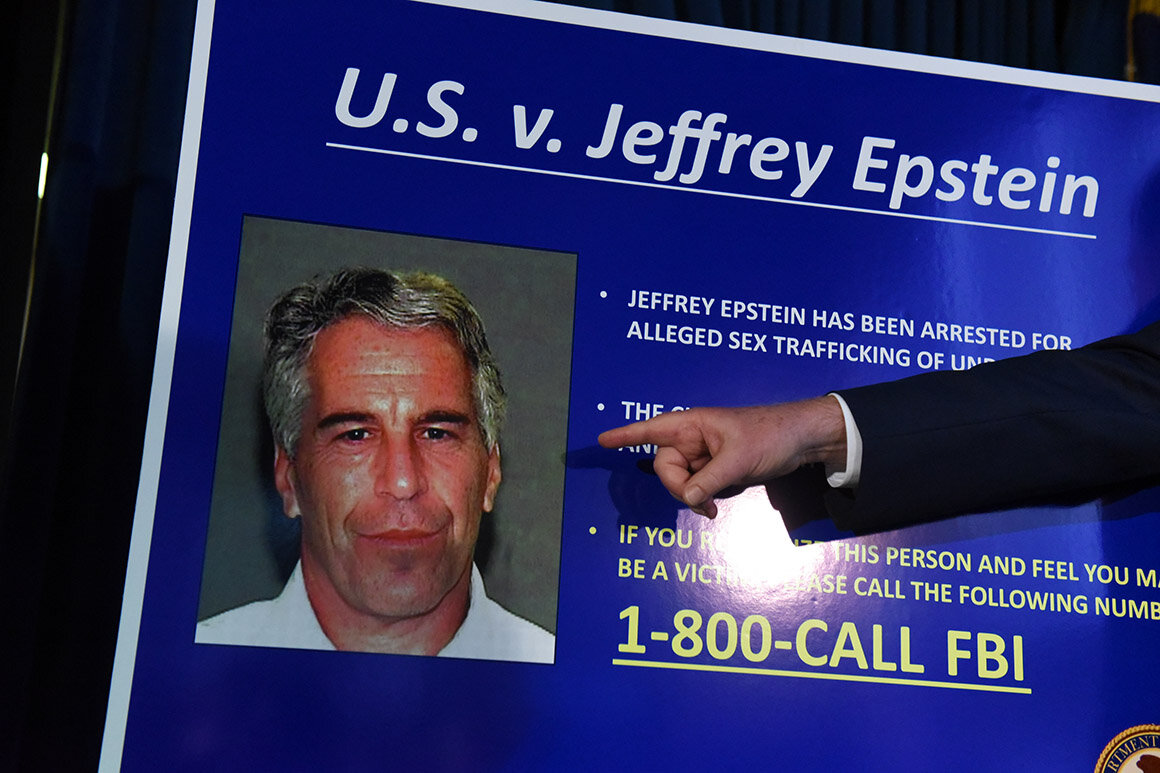
Jeffrey Edward Epstein was an American financier whose name emerged in New York’s financial and political circles in the 1980s. Despite lacking a completed university degree, he moved from teaching mathematics to managing the assets of billionaires, quickly becoming an influential figure on Wall Street.
Through connections with prominent political, academic, and economic figures, Epstein built an extensive network of relationships. Yet his global notoriety stemmed not from finance but from serious allegations of sex trafficking involving underage girls.
In 2019, U.S. federal prosecutors announced that Epstein had for years operated a network that exploited minors, using his wealth and influence to facilitate abuse. The case was widely seen as a potential test of the American judicial and political system, given the high-profile figures associated with him.
The Night of His Death and the Official Narrative
On the morning of August 10, 2019, officials at the Metropolitan Correctional Center in Manhattan announced that Epstein had been found unresponsive in his cell. The official medical examiner ruled his death a suicide, stating that he had hanged himself using a bedsheet.
Formally, the case appeared closed. Yet questions arose immediately. Weeks earlier, Epstein had reportedly attempted suicide and, under standard procedure, should have remained under close monitoring. Nevertheless, on the night of his death, he was alone, and two guards assigned to conduct regular checks failed to do so.
Subsequent investigations revealed that certain surveillance cameras in the facility were malfunctioning, and complete footage from that night was unavailable. The two guards faced charges for falsifying records but later avoided severe penalties through a legal agreement.
The accumulation of security lapses led many observers to question whether the suicide ruling fully explained the circumstances.
Surveillance Footage and Renewed Speculation
In the years that followed, public pressure and transparency measures led to the release of additional documents related to the case. Media attention was reignited by reports concerning a review of surveillance footage.
According to those reports, at 10:39 p.m. on August 9, 2019, a figure with a distinct appearance was seen in the corridor leading to the special housing unit. Previously, officials had stated that no one entered that section during the relevant timeframe.
The U.S. Department of Justice indicated that the image could have depicted a staff member or another inmate, yet uncertainty regarding the identity of the individual persisted. The timing between the appearance captured on camera and the estimated time of death intensified public doubt.
While no conclusive evidence has emerged proving third-party involvement, the discrepancy between earlier statements and later findings further eroded public trust.
Institutional Failures and Oversight
A report by the Justice Department’s Office of the Inspector General confirmed serious management failures at the facility. Epstein had been removed from suicide watch despite earlier concerns. Required half-hour checks were not conducted, and some log entries were later determined to be inaccurate.
Staff shortages and mandatory overtime were cited as structural issues within the prison system. However, critics argue that labeling these lapses as mere negligence fails to account for the significance of the inmate involved. Epstein was one of the most high-profile federal detainees at the time, and the sensitivity of his case suggested the need for heightened safeguards.
The gap between the case’s importance and the level of supervision became a central source of suspicion.
Release of New Documents and Political Fallout
In late 2025 and early 2026, under new transparency legislation, the U.S. Department of Justice released millions of pages of documents related to the Epstein case. The materials included emails, internal notes, and portions of court records.
The disclosure once again brought the names of political and economic figures into media discussions and revived debate about what certain individuals may have known. Although many of these documents had previously been available to courts in limited form, their broader public release renewed attention to unresolved questions surrounding Epstein’s death.
The central issue resurfaced: was his death solely a suicide, or did broader networks have an interest in preventing further revelations?
Political and Social Implications
The Epstein case has evolved into a symbol of mistrust toward institutions of power in the United States. For some, his death before trial represents a failure of accountability. For others, the absence of definitive proof of homicide supports acceptance of the official ruling, though concerns about systemic negligence remain.
Beyond its political dimension, the case also drew global attention to sex trafficking and the exploitation of minors. Civil society organizations and human rights advocates have emphasized that the focus on political intrigue should not overshadow the experiences of victims. Dozens of women who were abused as teenagers sought recognition and justice, and Epstein’s death complicated their legal path forward.
Conclusion
Years after Jeffrey Epstein’s death, the case continues to generate scrutiny. Each new wave of document releases has produced fresh questions rather than definitive closure.
The official determination of suicide remains the legal foundation of the case. Yet the combination of security failures, inconsistencies in reporting, and the political sensitivity of Epstein’s relationships has left a significant portion of the public unconvinced.
Until all ambiguities are addressed with full transparency and documented clarity, the Epstein case is likely to remain not only a criminal matter but also a lasting symbol of institutional credibility under strain.
MNA/6747664