The fading threat of a US strike on Iran signals a fragmented, deterrence-driven regional order where crises simmer rather than explode
Published Date – 8 February 2026, 11:58 PM
By Brig Advitya Madan (retd)
The past few weeks have seen a perceptible cooling of tensions between the United States and Iran after a brief but intense spike. While rhetoric remains sharp and mistrust deep, the immediate risk of American military action appears to be receding. This de-escalation, however, should not be misread as reconciliation. Instead, it reflects the hard strategic, political, and regional constraints that make a US military option against Iran increasingly unattractive.
The most visible signal of American preparedness was the redeployment of the USS Abraham Lincoln carrier strike group from the South China Sea to the Middle East, bringing it under the area of responsibility of US Central Command. Such movements are often interpreted as preludes to war. In reality, they more often serve as strategic posturing — demonstrations of capability intended to deter adversaries, reassure allies, and preserve bargaining leverage. In the present context, the carrier’s movement appears less a prelude to imminent conflict and more a reminder of American reach in a situation that Washington itself is reluctant to militarise.
Reasons for Reluctance
The reasons for this reluctance are structural rather than tactical.
First, there is the problem of the end-state. Unlike limited punitive strikes, which rarely alter political behaviour, any serious US operation against Iran would immediately raise the question: what does “success” look like? Regime change would imply long-term occupation or at least sustained coercion. Containment would require indefinite military pressure. Deterrence has already been in place for decades. None of these offers a politically or strategically clean exit.
Second, Iran is not Iraq 2003. It is a large, mountainous country with a population of nearly 90 million, a strong nationalist identity, and a security architecture designed precisely to absorb and outlast external pressure. Its military infrastructure is dispersed, hardened, and deeply embedded within civilian environments. Air and missile strikes could degrade specific capabilities, but they are unlikely to deliver decisive outcomes. A ground campaign — the only way to impose structural change — would be extraordinarily costly, both materially and politically.
An underappreciated brake on US military action is the Gulf states’ clear reluctance, knowing they would be the first targets of retaliation
Third, geography and logistics heavily favour the defender. Iran’s distance from the US mainland, its depth of territory, and its proximity to vital maritime chokepoints make any sustained campaign operationally demanding. American bases in the Gulf are within range of Iranian missiles and drones. Energy infrastructure, shipping lanes, and partner militaries would all be exposed. Even a limited confrontation could rapidly escalate into a multi-theatre conflict involving Iraq, Syria, Lebanon, and Yemen.
Fourth, escalation control is deeply uncertain. Iran’s network of allied militias gives it the capacity to retaliate asymmetrically and indirectly. Any US strike risks triggering a regional cascade rather than a bilateral exchange. Beyond the region, Iran’s strategic ties with Russia and China introduce the possibility — even if remote — of great-power entanglement. In today’s polarised international system, Washington must weigh not only Tehran’s response but how others might exploit a widening conflict.
Gulf Shift
Yet perhaps the most under-appreciated brake on American military action has been the clear reluctance of the Gulf states themselves.
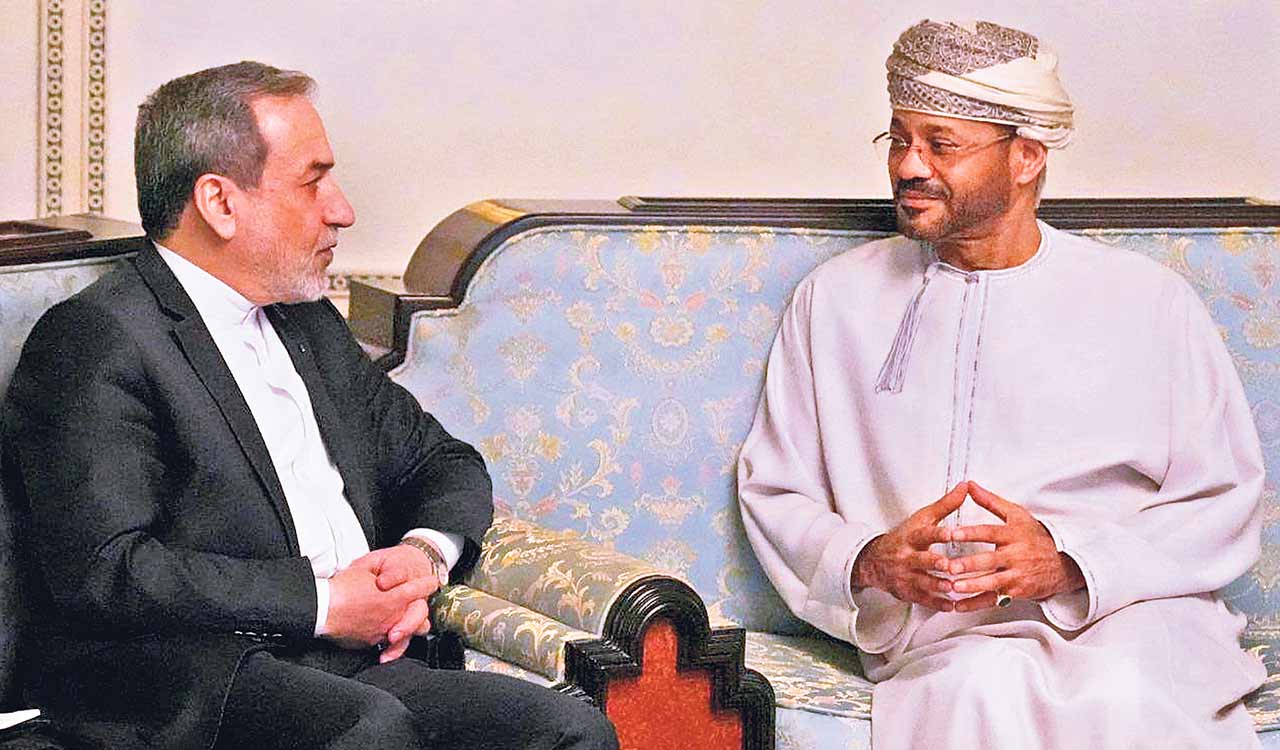
For decades, Saudi Arabia’s rivalry with Iran — rooted in ideology, geopolitics, and competing regional visions — led many to assume Riyadh would welcome US pressure on Tehran. That assumption no longer holds. Saudi Arabia has explicitly conveyed that it will not permit its airspace or territory to be used for attacks on Iran. Qatar and Oman have similarly urged restraint. Turkey has cautioned against destabilisation. Behind closed doors, even those capitals most wary of Iran have lobbied Washington against military escalation.
This shift is not born of affection for Tehran, but of sober self-interest.
Gulf states are acutely aware that they would be the first theatres of retaliation. Their cities, energy infrastructure, ports, and desalination facilities lie within easy reach of Iranian capabilities. Even limited conflict could disrupt global energy markets and derail domestic development agendas. For Saudi Arabia in particular, the Vision 2030 economic transformation project depends on stability, investment confidence, and predictable regional conditions — all of which war would undermine.
There is also the weight of historical memory. The interventions in Iraq and Libya demonstrated how swiftly military action can fracture state authority and unleash long-term disorder. Gulf rulers watched the rise of militias, the spread of extremism, and the erosion of borders. These experiences have generated a strong preference for de-escalation, even with adversaries.
But there is a deeper, newer anxiety shaping Gulf calculations: the changing regional balance of power after the most recent Israel-Iran confrontation.
The conflict last year — which saw Israel strike Iran-aligned actors across multiple theatres — has altered threat perceptions across West Asia. Israel’s demonstrated reach, technological superiority, and willingness to operate across borders have unsettled not only Iran’s partners but also Arab capitals. While Gulf states share concerns about Iranian influence, they are equally wary of a regional order in which Israel emerges as the uncontested military hegemon.
From this perspective, a US attack on Iran would not necessarily enhance Gulf security. It could weaken Tehran, but it would simultaneously amplify Israeli dominance. For states seeking strategic autonomy and regional multipolarity, that outcome is hardly reassuring. It is no coincidence that Saudi Arabia has accelerated efforts to diversify its security relationships — strengthening ties with Pakistan, deepening engagement with Turkey and Qatar, and recalibrating relations with Egypt — while signalling that exclusive dependence on Washington is no longer sufficient.
Undercurrents
This quiet realignment is one of the most consequential undercurrents in today’s West Asian geopolitics. It reflects a recognition that American power, while still formidable, is increasingly selective, transactional, and domestically constrained. Gulf states are preparing for a future in which US intervention is neither automatic nor unconditional.
Those domestic constraints are real. After two decades of wars in the Middle East, American public opinion shows little appetite for new large-scale military entanglements. Economic pressures, political polarisation, and strategic competition with China have narrowed the space for discretionary conflict. Even leaders inclined toward confrontation face institutional, fiscal, and electoral limits.
Taken together, these factors explain why the recent spike in US–Iran tensions has produced movement of assets, strong statements, and diplomatic signalling — but not mobilisation for war.
Impact on Middle Powers
For India and other middle powers, this moment carries important implications. India’s interests in West Asia are wide and deep: energy security, maritime trade, diaspora welfare, counter-terrorism cooperation, and connectivity initiatives. A regional war would endanger all of them. The relative cooling of tensions is, therefore, welcome. But it does not resolve the structural instabilities that produced the crisis.
Iran’s internal stresses, its contested regional role, unresolved questions around sanctions and nuclear constraints, and the evolving posture of Israel all remain active variables. Meanwhile, the Gulf’s strategic diversification and reduced confidence in external security guarantees are reshaping regional diplomacy.
For Indian policymakers, the task is not to bet on permanent de-escalation, but to operate in an environment of managed rivalry. This requires sustained engagement across competing blocs, support for dialogue mechanisms, and resistance to zero-sum alignments. India’s ability to speak with Tehran, Riyadh, Tel Aviv, and Washington is an asset — but only if deployed with strategic consistency.
The fading likelihood of a US strike on Iran does not herald stability. It signals the emergence of a more complex regional order in which power is fragmented, deterrence is multidirectional, and crises are more likely to simmer than explode. For all concerned, diplomacy is not merely preferable to war; it is increasingly the only workable option.
(The author is a retired Army officer)